


A crime reference number records that a break-in was reported, but it doesn’t establish the value of the loss. For a commercial break-in claim, insurers usually need evidence of what happened, what was stolen or damaged, and the costs claimed.
The strongest claim file connects observed damage, identifiable property and financial records. Missing receipts or incomplete footage may leave gaps, but other records can still support the account.
Start by protecting people and preserving the scene, then assign responsibility for gathering evidence and notifying the insurer.
Key takeaways for a commercial break-in claim
Insurers assess the incident against the policy, rather than a universal evidence checklist. The documents needed depend on the property, the alleged entry method, the losses claimed and the cover purchased.
Build the claim around six practical requirements:
- Report the incident to police promptly, retain the reference number and record the facts supplied, including later additions or corrections.
- Photograph the premises safely, showing the surrounding area, apparent entry points, internal damage and affected property before conditions change.
- Preserve relevant CCTV, alarm events, access records and witness accounts, with clear records of their source and handling.
- Prepare an itemised inventory supported by purchase records, stock movements, serial numbers, photographs and other evidence of ownership and value.
- Separate repair costs, emergency protection expenses and business interruption losses, linking each amount to supporting records and the incident.
- Submit an indexed claim file, retain copies and keep a dated record of requests, responses, decisions and outstanding information.
Evidence should establish a clear connection between the event and each claimed loss. A photograph may show damage without establishing ownership; an invoice may establish purchase without showing that the item remained on site.
Keep those distinctions visible throughout the claim.
Protect people and preserve the scene
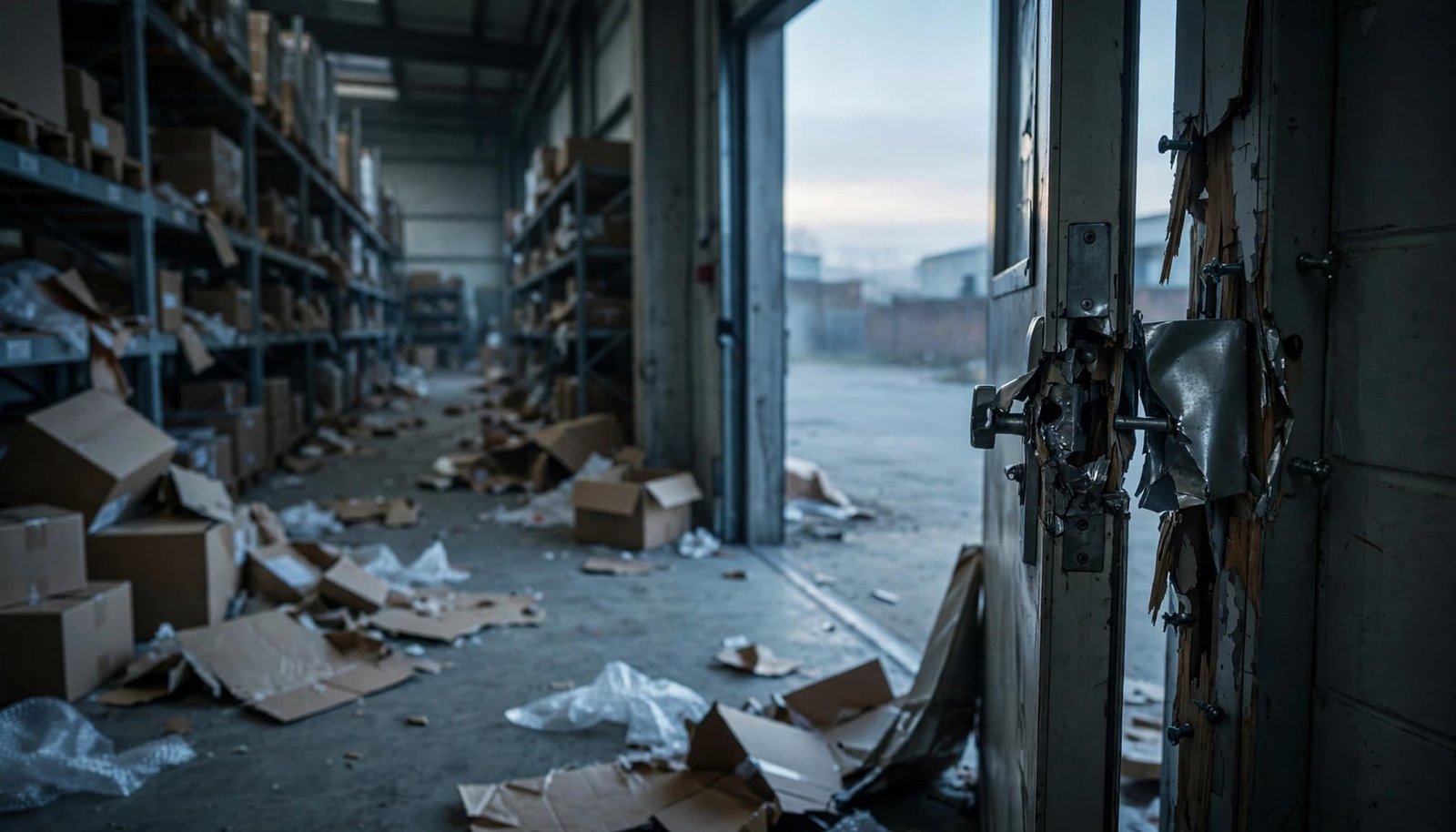
Evidence collection starts after immediate safety decisions. A potentially occupied building, unstable doorway or damaged electrical installation needs controlled access, not an initial stock count.
Restrict entry before examining the loss
Call 999 where a crime is in progress or there is immediate danger. For an incident without an immediate threat, use 101 or the relevant police force’s online reporting route.
Keep staff, customers and contractors away from disturbed areas. Don’t enter to establish whether anything valuable remains, and don’t ask a lone employee to search the premises.
The incident lead should record when the damage was discovered, who first attended and which areas were entered before access was restricted. Record any necessary movement of property, including who moved it and why.
Practical intruder response procedures should distinguish safety decisions, scene protection and subsequent recovery work. These responsibilities may belong to different people.
Make urgent protection decisions without unnecessary disturbance
Take reasonable emergency steps to protect people and prevent further damage. An exposed opening may need temporary boarding, whilst water entering through damaged roofing may require urgent containment.
Record the original condition where this can be done safely. Keep the contractor’s attendance record, photographs, description of work and invoice.
Don’t test damaged locks, reopen disturbed drawers or reconstruct an apparent entry route. Those actions can change material needed by investigators.
Record any unavoidable alteration. Preserving evidence does not require leaving people exposed to danger, but urgent work should remain distinguishable from routine repairs and improvements.
Report the break-in and notify the insurer promptly
Police reporting and insurer notification are separate tasks. Assign both to named people, with one incident lead responsible for keeping their records connected.
Retain the police reference and reporting history
Police.uk’s reporting guidance includes burglary and attempted theft at premises. Report apparent attempted entry even where the initial inspection identifies no missing property.
Record the reporting date, time, reference number and any officer’s contact details supplied. Distinguish an initial incident reference from a crime reference if both are issued.
Insurers commonly request the crime reference number for theft claims. It links the insurance submission to the police report, but does not prove every item or amount claimed.
Update police when the inventory identifies additional missing property or relevant footage becomes available. Keep those updates dated, rather than replacing the original account with a later version.
A complete police investigation report may not be immediately available. Retain whatever documentation is supplied without delaying the initial insurance notification.
Notify with the facts available at the time
The finance lead or appointed claims coordinator should check the policy document for notification requirements and submit an initial insurance claim promptly. It can be provisional while repair estimates and evidence are still being gathered.
State the premises, discovery time, apparent damage, initial loss categories and emergency steps taken. Mark uncertain quantities and values as provisional.
Keep the policy schedule, wording and endorsements available outside the affected premises and independently of the main company network. Stolen computers or interrupted access should not prevent notification.
Retain the insurer’s acknowledgement and claim reference. If notification goes through a broker, record when it was passed on and acknowledged.
Identify a single contact for further requests. Conflicting updates from several managers can create uncertainty about which account remains current.
Record apparent forced entry and photograph the damage
A broken window or damaged frame may support an account of entry, but the report should distinguish physical observations from conclusions about how the incident happened.
Describe the condition before explaining its significance
Record the location and condition of doors, windows, shutters, roof access, fences and internal barriers. Include displaced fittings, damaged locks, broken glazing and disturbed storage areas where relevant.
Describe what was visible. A record of fractured glazing and fragments on the stockroom floor is more useful than an unsupported statement about the tool used.
Record whether the opening was discovered locked, unlocked, open or damaged, and identify who made that observation. Don’t describe its earlier condition as certain unless a reliable record supports it.
Some theft policies include requirements concerning forcible or violent entry; others have different wording. The policy determines the relevance of the damage. Don’t add a forced-entry conclusion simply because it appears helpful to the claim.
Where no visible damage exists, preserve access records and other evidence rather than treating the absence of damage as proof that no theft occurred.
Photograph context as well as detail
Take wider photographs establishing the affected part of the building, then closer views showing individual damage. Keep adjoining doors, circulation routes and storage positions visible where they help explain the scene.
Record the date, approximate time, location and photographer. Retain original files with available metadata, rather than keeping only compressed copies pasted into a report.
Close-ups should show identifiable features, including equipment plates or serial numbers where safe and relevant. Photograph damaged property before repair or disposal, without rearranging it merely to improve the view.
Don’t approach exposed wiring, unstable structures or other hazards for a clearer image. Police instructions and site safety restrictions take priority.
A close photograph can show a damaged lock. The wider view establishes which door it belonged to and how that door relates to the affected premises.
Keep later repair photographs separate, so the original condition remains clear.
Preserve CCTV before routine deletion removes it
Recorded footage can explain arrival, movement and departure, but only if the relevant material survives. Assign preservation to an authorised person who understands the system.

Retain a complete and usable sequence
Preserve relevant periods before and after the apparent incident. A short clip of someone leaving may omit their arrival, access route or interaction with another person.
Include cameras covering entrances, loading areas, internal routes and nearby vehicle movements where relevant. Record camera identifiers and the start and end times of each export.
Retain the original recording or native export where available, together with any player needed to view it. A phone recording of a monitor may lose detail and should not replace a proper export.
Identify gaps, obstructed views and recording failures. State when footage was unavailable rather than implying continuous coverage.
The distinction between recorded CCTV and active monitoring also matters: footage showing the event does not establish that an operator received an alert.
Keep originals intact and record transfers
Don’t annotate, trim or overwrite original footage. Create separate working copies for extracts or explanatory markings, retaining the unaltered material.
Record who exported the files, when the export occurred, where the files are stored and who received copies. Use controlled business storage and authorised transfer methods.
Note any known difference between the recording system’s clock and actual time. Preserve that discrepancy rather than silently adjusting the incident chronology.
Restrict access to staff handling the investigation and claim. Avoid personal messaging accounts or public circulation.
Ask neighbouring occupiers to preserve relevant footage promptly. Their cameras may record an approach or departure that the affected premises did not capture.
Collect alarm records, access logs and witness information
Different records answer different questions. Alarm activity may establish a sequence of signals; access logs identify credential use; witness accounts describe what an individual observed.
Obtain the underlying security records
Request relevant alarm activation, setting, unsetting, fault and monitoring records. Include operator notes, call attempts, keyholder notifications and attendance reports where available.
Preserve access-card events, visitor records, key registers and lock-up checks covering the relevant period. Record the source system and any retention limits affecting the material.
A credential event does not establish who physically used the credential. Likewise, an alarm activation does not prove which property was removed. Link records carefully without overstating their meaning.
Include maintenance records where equipment condition or policy security requirements may be relevant. Report known faults accurately; don’t retrospectively change service records to make the arrangements appear complete.
For shared premises, identify which records belong to the landlord, managing agent or another occupier. Multi-tenant building security responsibilities should remain clear during evidence collection as well as normal operation.
Keep witness accounts separate and attributed
Record each witness’s name, role and appropriate contact details. Note when the account was taken and whether the person witnessed events directly or heard about them afterwards.
Ask witnesses to describe their own observations independently. A group discussion can replace separate recollections with a shared assumption.
Distinguish observed times from estimates. Someone may remember arriving shortly before an alarm sounded without knowing the exact minute.
Keep the witness’s account separate from the incident lead’s narrative. Attribute information supplied by cleaners, delivery drivers, neighbouring businesses or security personnel.
Retain contemporaneous notes and preserve later corrections as dated additions. If a witness changes an account, record the change rather than silently replacing the earlier version.
Collect only information relevant to the incident and control access to personal details.
Create a detailed inventory of stolen or damaged property
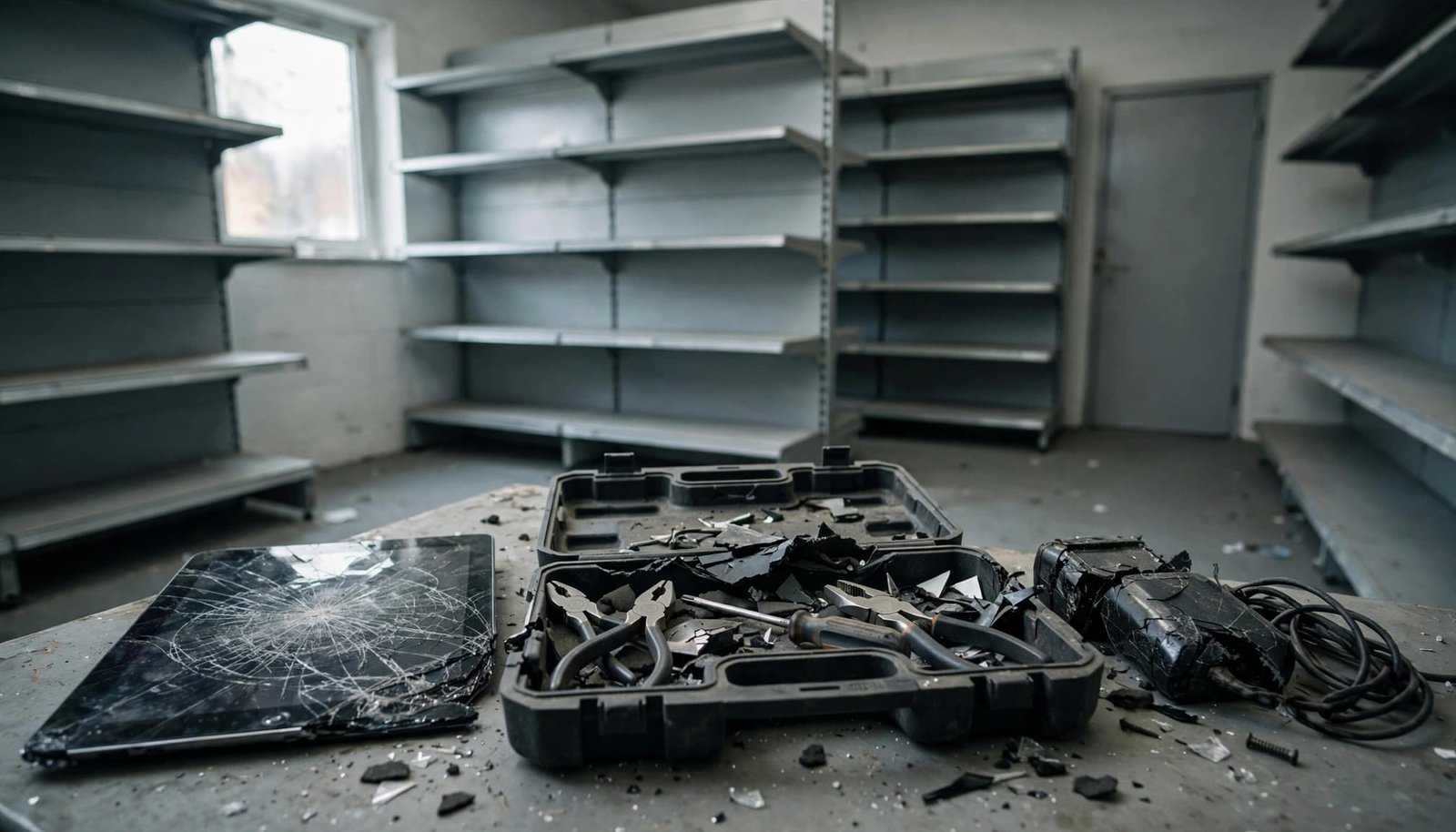
An inventory should identify each loss clearly enough for another person to trace it. Broad descriptions such as “office equipment” or “assorted stock” leave basic questions unanswered.
Give each item a traceable reference
Assign an item number and use it consistently across the inventory, photographs, purchase records and repair estimates. Group identical stock only where the quantity and description remain clear.
These fields provide a practical starting point.
| Inventory field | Information to record |
|---|---|
| Identification | Description, make, model, SKU and serial number where available |
| Quantity and status | Number stolen, damaged, recovered or awaiting inspection |
| Ownership | Business-owned, hired, leased or held for another party |
| Location | Normal storage position and last reliable record of presence |
| Value evidence | Purchase record, valuation, replacement quotation or repair estimate |
| Supporting files | References to photographs, stock records and other documents |
The reference should connect the item to its evidence, not simply number the rows.
Record uncertainty openly. An item awaiting inspection should not be described as beyond repair without supporting assessment.
Reconcile missing stock against business movements
Use the last reliable stock position, then account for deliveries, sales, returns, transfers and other movements before discovery. A difference between two counts does not automatically establish theft.
Retain stocktake dates, system exports and the method used to calculate the shortfall. Separate confirmed missing quantities from items still being traced elsewhere.
For damaged stock, record the nature of the damage and why it affects sale or use. Packaging damage, contamination and physical breakage may require different evidence.
Keep recovered property on the inventory with its updated status. Recovery may reduce the loss or create additional inspection and repair costs.
Date each inventory revision. The insurer should be able to distinguish a corrected quantity from an additional item identified later.
Prove ownership and explain the basis of value
Evidence of purchase, presence and value performs different functions. A bank payment may support a transaction without identifying exactly what was bought or where it was kept.
Use several records where one document is incomplete
Purchase invoices and receipts are useful, but they are not the only available evidence. Equipment registers, serial-number records, supplier statements, delivery notes and dated photographs may support ownership and identification.
Use maintenance records or earlier inspection reports to establish pre-incident condition. Finance agreements and hire documents help distinguish business-owned equipment from property belonging to another organisation.
Where records were stolen or destroyed, retain copies obtained from accounting systems, suppliers or off-site archives. Explain the source of each replacement document.
Don’t create retrospective receipts or present reconstructed records as contemporaneous documents. Label reconstructions and explain the information used.
For customers’ goods or hired equipment, identify the owner and the business’s responsibility for the property. Possession alone does not establish that the item falls within the claimed cover.
Separate purchase price from the insured settlement basis
The original cost may differ from the amount payable under the policy. Settlement depends on the wording, including replacement terms, depreciation, limits and any applicable conditions.
Record purchase date, original price, condition and the basis of the amount claimed. Where replacement is proposed, retain a quotation for a comparable item and explain material differences.
Separate repairable damage from a proposed total replacement. A replacement quotation does not establish that repair is impossible or uneconomic.
Show VAT separately and identify whether it is recoverable by the business. Keep excesses and policy limits visible in the financial summary rather than altering source invoices.
Avoid treating the policy’s stated sum as an agreed valuation of every item. Underinsurance provisions may also affect settlement.
A supported commercial break-in claim explains the calculation, including why a chosen replacement is comparable.
Document repairs and emergency protection separately
Emergency protection, permanent repair and security improvement are different categories. Record their purpose separately, even where one contractor carries out all three.
Retain estimates that explain the work
Obtain written repair estimates describing the affected location, damaged components, labour, materials and any necessary specialist inspection. A single total provides little basis for understanding the proposed repair.
Link each estimate to photographs and inventory references. Where a door, shutter or machine requires replacement, retain the contractor’s explanation of why repair is unsuitable.
Separate pre-existing defects and optional improvements from incident-related reinstatement. Better locks or a redesigned entrance may be sensible, but their full cost is not automatically part of the insured damage.
Retain inspection findings and final invoices as well as quotations. Estimates show proposed costs; invoices and payment records show what was actually incurred.
Avoid authorising extensive non-emergency work before relevant inspection and policy requirements have been addressed.
Explain why emergency spending was necessary
Record the reason for boarding-up, temporary guarding, emergency glazing or urgent equipment isolation. Include the time authorised, the decision-maker, the service delivered and the charge.
Reasonable mitigation involves limiting further loss, not waiting while an exposed building deteriorates. Document the circumstances requiring immediate action and notify the insurer promptly.
Don’t discard damaged goods simply because replacement has been ordered. Retain them for inspection where safe, or record authorised disposal and the reason retention was impractical.
Before reopening, assign responsibility for confirming safe occupation and restored protection. A repaired door does not establish that alarms, access permissions and internal services are operational.
Use the subsequent business security risk assessment to assign corrective actions separately from the insurance repair schedule.
Record business interruption and additional operating costs
Property damage and operational losses require different evidence. The cost of replacing a stolen device does not establish the income lost whilst its associated service remained unavailable.

Establish what stopped operating and for how long
Record closure times, restricted-access periods, interrupted processes and the dates when each function resumed. Identify whether disruption resulted from physical damage, missing equipment, police restrictions or another cause.
Retain cancelled orders, customer correspondence, delayed delivery records and evidence of unavailable production or trading capacity. Distinguish permanent lost sales from orders fulfilled later.
Support the calculation with management accounts, sales records and relevant comparative trading periods. Explain seasonality, existing trends and other factors that would have affected performance without the break-in.
A fall in turnover does not equal the recoverable loss. Business interruption calculations may involve gross profit covered under the policy, continuing costs and savings, according to the policy.
Property-damage cover and interruption cover are separate. Denial-of-access extensions, supplier interruption and closures without insured damage depend on the wording.
Record the connection between the covered event and the claimed interruption.
Track additional expenditure without double counting
Keep separate records for alternative premises, equipment hire, additional staffing, temporary transport and other recovery expenses. Record what each cost achieved and the period it covered.
Distinguish ordinary payroll from additional overtime or agency expenditure. Record transport costs caused by relocation separately from deliveries that would have occurred anyway.
Explain expenditure intended to reduce lost trading, including the decision made and the operational result. Policy terms determine whether increased working costs are covered.
Keep invoices, booking records, timesheets and payment evidence together. Where a cost serves several purposes, explain the allocation rather than claiming the entire amount without support.
Avoid counting the same expense under property repairs, emergency protection and business interruption. A single recovery ledger should show the category assigned to each transaction.
Submit an organised claim file
An insurer should be able to follow the claim without reconstructing it across unrelated emails. Give the file a clear structure and maintain one controlled version of the submission.

Build an index and a consistent chronology
Start with a short incident summary identifying the premises, discovery, initial response and principal loss categories. Separate established facts, attributed accounts and matters still under investigation.
Arrange the supporting material in a practical submission sequence:
- Include the claim reference, policy details, police reference and the business contact responsible for further information.
- Set out the chronology, photographs, footage references, security records and witness accounts supporting the incident description.
- Add the inventory, ownership records, valuation evidence and repair documents supporting each property loss.
- Present emergency expenses and interruption calculations separately, with references to the underlying financial records.
- Identify outstanding documents, provisional amounts and the date planned for the next update.
Use descriptive filenames and document references. Numbered photographs should match the captions and locations stated in the report.
Keep large video files separate where necessary, with a record of how they were delivered.
Maintain an evidence log alongside the claim
The evidence log should record each item’s source, collection date, handler and storage location. Include later transfers, disclosures and any authorised changes to working copies.
Keep original records separate from annotated copies and calculations. Preserve previous inventory versions and explain material revisions.
Restrict access to relevant staff, the insurer and authorised advisers. Financial records, security arrangements and witness information should not be circulated more widely than necessary.
Retain proof of submission, including attachment lists or upload acknowledgements. A claim file is incomplete if nobody can establish which version the insurer received.
Store a protected copy away from the affected premises and main operational systems. The same disruption should not remove both the evidence and its backup.
Keep communications and assessment decisions on record
Maintain a dated communication log recording the sender, recipient, subject, request, response and next action. Include calls and meetings as well as written correspondence.
After a material telephone discussion, send a short written account of the agreed actions. Identify any point that remains disputed rather than treating silence as agreement.
Record inspection appointments and the documents supplied to the loss adjuster. A loss adjuster appointed by the insurer investigates and assesses the claim on its behalf; their attendance does not itself confirm cover.
Answer requests with the relevant evidence and explain gaps. If a requested document does not exist, state that clearly and identify other records that may address the question.
Record any decision on cover, valuation, repair authority or payment separately from an informal progress update. Keep the reasons given and the policy wording relied upon.
Where several parties are involved, distinguish their responsibilities. A landlord’s buildings claim, a tenant’s contents claim and a security provider’s incident report may concern the same event without covering the same losses.
The occurrence of theft also does not establish that a security provider breached its contract. The agreed duties and performance records determine that separate question.
Maintain an outstanding-information record with named owners. This shows which matters remain unresolved and whether delay relates to missing evidence, assessment or an unanswered decision.
What Section 13A requires when insurers assess claims
Section 13A of the Insurance Act 2015 concerns payment within a reasonable time. The late-payment provisions came into force on 4 May 2017 and apply to relevant contracts entered into or renewed from that date.
They concern insurance claims generally, including property and theft claims, not only business interruption.
Reasonable time includes investigation and assessment
Section 13A creates an implied term requiring insurers to pay out sums due within a reasonable time. That period always includes reasonable time to investigate and assess the claim.
There is no fixed statutory payment period covering every claim. Relevant factors include the type of insurance, the claim’s size and complexity, compliance with statutory or regulatory requirements, and matters outside the insurer’s control.
A disputed stock valuation or investigation into conflicting access records may require more assessment than a straightforward repair invoice. The circumstances matter.
An organised file can remove avoidable uncertainty, but it does not create an automatic settlement deadline. Keep a record of when requested evidence became available and when it was supplied.
That chronology helps distinguish necessary investigation from unexplained inactivity.
Reasonable grounds for dispute can provide a defence
An insurer may have a defence where it had reasonable grounds for disputing liability or the amount payable. Failing to pay the disputed amount during that period does not automatically establish that the insurer failed to meet its payment duty.
The insurer’s conduct in handling the claim may still be relevant. A defensible coverage question does not make every aspect of delay reasonable.
Ask for a clear statement of outstanding issues and the evidence required to resolve them. Record repeated requests for material already supplied and periods without a substantive response.
Notify the insurer promptly if delay is creating additional financial loss. Identify the loss, its cause and reasonable steps being taken to limit it.
Clear notice allows the insurer to address the issue. Further unreasonable delay may increase potential damages, but those damages still require proof.
Can a business policy contract out of Section 13A?
Commercial policyholders should read the wording and endorsements carefully to establish whether the late-payment protection has been altered. Business and consumer contracts receive different treatment.
Non-consumer contracts can alter the protection
Section 16A of the Insurance Act permits contracting out in non-consumer insurance, subject to statutory transparency requirements.
The insurer must take sufficient steps to draw the disadvantageous term to the policyholder’s attention before the contract is agreed. The term must also be clear and unambiguous about its effect.
A valid exclusion or limitation can restrict liability for ordinary failure to comply with the implied payment term. It cannot exclude liability for deliberate or reckless breach.
Don’t assume every business policy contains such a term. Establish the position using the contract applicable to the incident, including its endorsements and any relevant changes.
Consumer contracts cannot remove the duty
Consumer insurance contracts cannot contract out of the Section 13A protection to the policyholder’s disadvantage.
The Act’s transparency requirements matter where contracting out is permitted. A business policy should not be treated as carrying unrestricted late-payment protection without considering its terms.
Contracting out of damages liability does not itself resolve whether the underlying theft or damage is covered. Keep the coverage question separate from the consequences of delayed payment.
A disputed contracting-out clause or alleged deliberate non-compliance requires legal assessment of the wording and conduct.
Prove additional losses caused by delayed payment
A breach of the implied payment term can support damages in addition to the policy payment and interest. Late payment alone does not establish the amount recoverable.
Connect the additional loss to the breach
Retain evidence of borrowing costs, disrupted purchases, lost contracts or other losses said to result from payment arriving unreasonably late.
Establish when payment should reasonably have occurred, what would have happened with timely payment and what actually happened. Separate the consequences of the break-in from the additional consequences of delayed settlement.
Losses must satisfy ordinary contractual rules, including causation and remoteness. Record reasonable attempts to limit further loss, together with the options available at the time.
A cash-flow shortfall may also reflect existing debt, falling demand or unrelated costs. Those competing explanations need to be addressed rather than attributed automatically to the insurer.
Treat the lockdown example as a causation warning
Balfour+Manson’s discussion of delayed interruption claims described the position in June 2020, when many lockdown-related claims had not been formally accepted or paid. It also referred to contemporary press speculation about substantial insurer payouts.
That was a historical account, not a statement about claims remaining unpaid today.
Its causation point remains relevant. A business alleging that delayed payment caused its failure during lockdown would need to prove that timely payment would have allowed it to survive the lockdown itself.
For a break-in claim, the equivalent task is distinguishing the effect of payment delay from the original disruption and other trading pressures.
Act before the late-payment deadline
The one year limitation period for a late-payment damages claim runs from the insurer making full payment or otherwise settling the underlying claim. Other applicable limitation rules may require earlier action.
An ongoing complaint or correspondence should not be assumed to stop the legal time limit. Obtain legal advice before the deadline approaches.
Notify the insurer of the alleged delay and developing loss promptly, rather than waiting until settlement. Retain the settlement documents and exact payment dates.
Frequently asked questions
Can a commercial break-in claim proceed without receipts?
Missing receipts do not automatically prevent a claim. Supplier invoice copies, bank records, equipment registers, serial numbers, dated photographs and delivery records may collectively support ownership and value.
Explain what each document establishes and identify remaining gaps. A payment entry alone may not identify the item, whilst an old photograph may not establish its condition immediately before the incident.
Keep reconstructed inventories clearly labelled and record their sources. The insurer assesses the available evidence against the policy and the circumstances.
Does CCTV need to show the offender taking the property?
CCTV does not have to capture every part of an incident to provide useful evidence. It may establish entry, movements, timing or departure, whilst stock records and photographs address other parts of the claim.
Preserve the relevant sequence rather than selecting only the clearest moment. Record blind spots and missing periods honestly.
A lack of usable footage does not by itself establish that no loss covered by the policy occurred. Other evidence may support the account, subject to the policy terms.
Should damaged property be kept until the claim is settled?
Retain damaged property where it can be stored safely and may be needed for inspection. Don’t assume that photographs always replace examination of the item itself.
Where urgent disposal is necessary for safety or practical reasons, document the condition, reason, decision-maker and disposal arrangements. Retain relevant contractor advice and any insurer instructions.
Emergency protection should not be postponed where people or property face further danger. Record necessary action and its cost, then preserve the remaining evidence.
Conclusion: connect each loss to its evidence
A commercial break-in claim is easier to assess when the incident account, property inventory and financial records support one another. A reference number, photograph or invoice rarely answers every question alone.
Assign one claims coordinator, preserve originals and keep direct damage separate from operational losses. Record decisions and communications as carefully as the physical damage.
The governing requirement is traceability: each claimed amount should lead back to identifiable property, a documented consequence or a supported expense.


0 Comments