

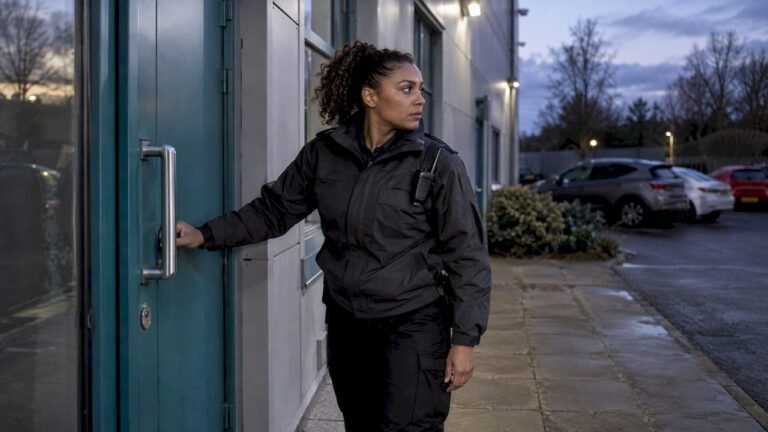
Out of hours security is the protection of a site between the time your people leave and the time they return: evenings, nights, weekends and bank holidays. In the UK it usually comes down to four tools, used alone or together: static guards, mobile patrols, keyholding with alarm response, and remotely monitored CCTV. The right mix depends on what is on site, how fast you need someone there, and what an incident would cost you.
This guide is written for business owners, property managers, construction managers and healthcare administrators who have to decide what to buy. It explains what each option does, where each one fails, what the law expects of you, and what to ask a contractor before you sign.
TL;DR
- Out of hours cover is a mix of four tools: guards on site, mobile patrols, keyholding with alarm response, and monitored CCTV. Few sites need all four.
- If you hire a contractor for guarding or keyholding, the operatives need a valid SIA licence. Check it, and ideally use a company on the Approved Contractor Scheme.
- Ask for patrol logs, response times and a site-specific risk assessment, not a generic contract.
- CCTV used overnight has to meet data protection rules. A DPIA may be needed where monitoring is high risk.
- Construction sites, vacant buildings and healthcare sites carry risks that a standard guarding contract does not cover.
Table of Contents
- What counts as out of hours security
- The four main options compared
- Static guarding: when a person on site is worth it
- Mobile patrols: protection without a permanent post
- Keyholding and alarm response
- Remote CCTV monitoring and the data protection duty
- What the law says about hiring out of hours guards
- Sector by sector: what changes
- How to decide: a short method
- What good reporting looks like
- Our perspective
- Talk to us about your site
- FAQ
- Sources
What counts as out of hours security
There is no single legal definition. In practice, the phrase covers any period when the site is closed or lightly staffed, and the controls you rely on during the day (reception, staff presence, supervisors, open-plan visibility) are gone. For an office that might be 6pm to 7am plus weekends. For a retail unit it may be from closing time to the first delivery. For a hospital, a logistics hub or a data centre, there is no closed period at all, so the question becomes how cover is staffed at night when fewer people are around.
The risks change after hours as well. Theft and vandalism are the obvious ones. Others are less visible:
- Unauthorised access through a door left unlocked, a propped fire exit or a tailgated contractor.
- Fire and flood that nobody notices for hours.
- Lone worker risk, when a manager is called out at 2am to deal with an alarm.
- Opportunistic entry using things you left on site, such as skips, vehicles or stacked materials.
- Insider and contractor access that is hard to see when nobody is watching.
A good plan starts from these risks and works back to the tools, not the other way round.
The four main options compared
| Option | What you get | Best for | Weak point |
|---|---|---|---|
| Static guard (manned guarding) | One or more officers on site for set hours | High-value stock, vulnerable sites, hospitals, data centres, large construction sites | Highest cost, and one person can only watch so much |
| Mobile patrol | Officers visit at random or fixed times, check the site and leave | Multi-site estates, small industrial units, retail parks | Gaps between visits |
| Keyholding and alarm response | A licensed responder attends when an alarm triggers, or locks and unlocks on schedule | Offices, shops, warehouses with an intruder alarm | Reactive: the alarm has to go off first |
| Remote CCTV monitoring | Operators watch cameras and alarms and can talk down or dispatch | Sites with good camera coverage and a response plan | Needs a human response behind it, and has data protection duties |
The cheapest-looking option is rarely the cheapest overall. A site with a monitored alarm but nobody to attend still has a gap. A guard with no clear instructions and no way to escalate is just a person in a cabin.
Static guarding: when a person on site is worth it
A guard on site gives you deterrence, immediate response and judgement. Someone can check a door, challenge a stranger, meet the fire brigade, and log what happened. That matters most where the cost of a single incident is high or where the site is large, vacant or hard to secure with technology alone.
What a long-term arrangement looks like is visible in public procurement. When a Welsh NHS trust went to market for 24/7 manned security at the former Whitchurch Hospital site, the site was large, vacant and partly derelict, and the specification went well beyond “stand at the gate”. Contractors were expected to deal with hazards specific to the buildings, which is the right way to think about any complex site.
In a professional context, “24-hour security” simply means continuous cover: someone present or actively monitoring every hour of the day, with patrols and a rapid response to alarms and CCTV activations. One example is the physical security tender published by NESO, which describes a monitored portfolio of sites with an alarm receiving centre that proactively watches for alarms and security issues. It is not a single guard on a single gate. If you want more detail on how continuous cover is structured, our guide to 24/7 security guard services in the UK goes through shift patterns and handovers.
Staffing realities
Night guarding is shift work. The National Careers Service lists typical hours of 37 to 48 a week for a security officer, often including evenings, weekends and bank holidays. The same page is useful if you want to understand what the role involves day to day, from patrolling premises to securing doors, windows and entrances.
Two things follow for you as a buyer. First, a 24/7 post is not one person: it takes several officers on rotation to cover every hour of the week, which is why guarding is priced the way it is. Second, fatigue and lone working are real issues on a night post. Ask how the contractor supervises night officers, how they check in, and what happens if an officer does not respond to a welfare call.
For reference, Indeed’s salary data, updated in October 2026, puts the average security guard wage at £14.21 an hour, with most reports between £12.71 and £18.58. That is the wage, not the price you pay: contractor charges also cover licensing, training, supervision, insurance, equipment and management. Be wary of any quote that looks close to the raw wage, because something is being left out.

Mobile patrols: protection without a permanent post
Mobile patrols suit sites that do not justify a full-time guard but cannot be left alone. An officer in a marked vehicle visits at agreed or randomised times, checks perimeters, doors, windows and gates, looks for signs of attempted entry, and reports. Done well, patrols are a strong deterrent, because a would-be intruder cannot know when the next visit is due.
The quality of a patrol service is in the schedule and the evidence:
- Visit pattern. Random timing is harder to exploit than a fixed 10pm and 3am. Our guide on how to set the right mobile patrol schedule covers how many visits a site of a given type typically needs.
- Proof of attendance. Ask for electronic check-in, time-stamped checkpoints or tracked logs, not a signature on a sheet.
- Defined tasks. Perimeter check, door and window check, lighting, fire doors, skips and vehicles near the boundary, water leaks.
- Escalation. What does the officer do when they find something: call you, call the police, wait on site?
If you are new to the concept, what mobile patrols are for UK businesses is a good starting point.

Keyholding and alarm response
If your intruder or fire alarm is monitored, someone has to attend when it activates. Without a professional keyholder that someone is usually a manager, who is woken at night and expected to walk into a possibly occupied building alone. That is a lone worker risk you can avoid.
A keyholding and alarm response service typically means a licensed officer holds keys and site instructions, attends activations within an agreed time, checks the premises, resets or secures the alarm and reports. Some providers also lock and unlock on a schedule, which removes the risk of staff opening or closing alone.
What to ask:
- How is response time defined: from alarm receipt, or from dispatch?
- Are keys stored securely, coded rather than labelled with the address, and audited?
- What happens if the officer cannot gain entry or finds an intruder inside?
- Is there a call-out limit or a charge for false alarms?
Our buyer’s guide to keyholding and alarm response goes through the contract points in more depth, and if you want to see how we run the service, look at our alarm response service.
Remote CCTV monitoring and the data protection duty
Monitored CCTV lets an operator in a control room watch several sites and react to triggers in real time, for example by issuing a voice challenge or dispatching a patrol. It works best when the cameras are placed for detection, the lighting is right, and there is a clear action plan behind each alert. If you are comparing it with plain recording, our guide to CCTV monitoring versus surveillance explains the difference, and common CCTV monitoring mistakes lists what leaves sites exposed. Our remote CCTV monitoring page covers the service itself.
Overnight monitoring also brings legal duties. The Information Commissioner’s Office says surveillance must be justified, transparent and targeted, and that you may need a Data Protection Impact Assessment where monitoring is likely to result in a high risk to individuals, for example where staff or large public areas are watched. It also says footage should be kept for no longer than necessary, rather than whatever your recorder defaults to. The ICO’s page on complying with the data protection principles when using surveillance systems sets this out. For a practical version aimed at employers and property managers, see our CCTV GDPR rules guide.
What the law says about hiring out of hours guards
The Private Security Industry Act 2001 requires a security guard licence for anyone guarding property against damage or theft, with an exception for staff employed directly in-house. The government’s Regulated Professions Register entry for security guards summarises the requirement. In plain terms: if you buy guarding or keyholding from a contractor, the operatives need a valid SIA licence, and you should check it.
A licence only covers the individual. The SIA also runs the Approved Contractor Scheme, which assesses the company. Contractors on the scheme are measured against recognised standards, and procurement teams commonly ask for BS 7499 (static site guarding and mobile patrol) and BS 7858 (security screening of individuals). Our guides to what to look for in SIA-licensed guards and the SIA Approved Contractor Scheme requirements show how to verify both.
A simple vetting routine before signing:
- Ask for the contractor’s company details and check their Approved Contractor status on the SIA register.
- Ask how they check each officer’s licence, right to work and screening history, and how often.
- Ask for the licence numbers of the officers who will be on your site, and check them.
- Confirm employers’ and public liability insurance in writing.
- Ask who is accountable if an officer fails to turn up, and how cover is arranged.
Sector by sector: what changes
Construction sites
Construction sites are the most common out of hours target for plant, copper and fuel theft, and also a safety risk. The HSE’s guidance in HSG150, Health and safety in construction, says construction work should be fenced off and signed to protect people, especially children, from site dangers, and the site from vandalism and theft.
There is a less obvious problem. HSE’s safety bulletin on preventing unauthorised access onto scaffolding warns that unauthorised entry onto scaffolding and unfinished buildings can lead to falls from height. Tidy boundaries matter: skips, vehicles and stacked materials left near the fence can act as a ladder for a trespasser. Make clearing the perimeter part of the end-of-shift routine, and ask your patrol or guard to check for it.
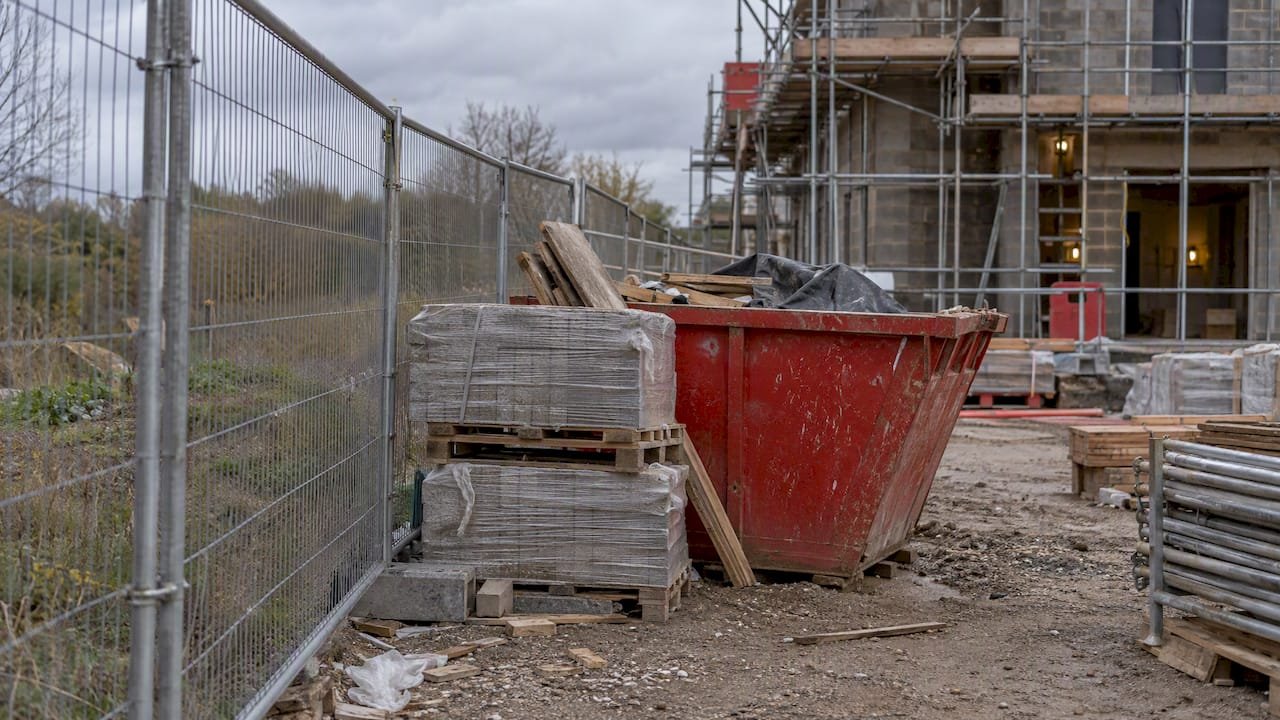
Fire is the other overnight risk. HSE’s HSG168 on fire safety in construction says the fire risk assessment should identify everyone at risk and how they might be harmed. Your out of hours officer should know where the fire points, alarms and escape routes are, and what to do first. See our pages on construction site security, the construction site security checklist and construction site CCTV options.
Healthcare sites
Hospitals and clinics never fully close, and night-time brings fewer clinical staff and often more vulnerable patients. Security there is about people as much as property. NHS trust procedures on violence and aggression, such as this one from Wrightington, Wigan and Leigh, show security teams being expected to support clinical staff in de-escalation. A contractor for a healthcare site needs staff trained in conflict resolution, not just door checking. Our healthcare security services page describes our approach.
Offices, retail and warehouses
For a typical office or shop, the usual answer is an alarm with professional keyholding, plus patrols if the area has a history of crime. For a warehouse that runs late or all night, you need control over who comes and goes, and guards or monitored access control at the gate. Our retail security services and manufacturing site security guide are the pages to read next.
How to decide: a short method
- List what you cannot afford to lose. Stock, plant, data, a vulnerable patient group, your reputation.
- Look at your history. Past incidents, insurer requirements, police crime data for your area.
- Walk the site at dusk and again after dark. Notice dark corners, climbable items, weak gates and doors.
- Match the tool to the risk. Continuous exposure and high value suggests a guard. Moderate risk and several sites suggests patrols. Low risk with an alarm suggests keyholding. Strong camera coverage with a response plan suggests monitoring.
- Combine where it makes sense. A night guard at the gate plus patrols between buildings, or CCTV monitoring that triggers a patrol, often costs less than a guard at every post.
- Write the instructions down. Assignment instructions, contacts, escalation steps, key locations and what “normal” looks like.
Our comparison of manned guarding versus automated security can help if you are weighing people against technology.
What good reporting looks like
When you buy cover you cannot see, evidence is what you are paying for. For complex sites, practitioners expect detailed patrol logs, KPI data and documented risk assessments and method statements tailored to site hazards. That is the pattern in the Whitchurch tender mentioned above, where the buildings had specific hazards, and it applies equally to a vacant office block or an industrial estate.
Ask to see a sample report. It should include timed patrol checkpoints, incidents with a description and action taken, alarm activations with arrival times, and any health and safety observations such as a blocked escape route or a water leak. Review the reports monthly, and ask for trends: if incident numbers fall, or the same door is found unlocked every Friday, you want to know. If the control room runs the service, our guide to security control room procedures shows what sound procedure looks like.
Our perspective
Most out of hours problems we see do not come from a lack of equipment. They come from a gap between the equipment and the people who are supposed to act on it. An alarm that nobody attends, a camera nobody watches, a patrol that checks a gate but not the skip stacked against the fence.
That is why we build cover around the site and not around a product. We start with a survey of vulnerabilities and the regulations that apply, then combine technology and trained, SIA-licensed officers so that each part supports the others: a camera trigger that sends a patrol, a patrol that reports to a log you can read, a guard who knows the escalation chain. For construction clients that includes the perimeter and fire checks above. For healthcare clients it includes officers who can support clinical staff calmly.
Our advice if you are unsure: start with a risk assessment before a quote, because it tells you which of the four tools you actually need, and it stops you paying for a guard where a patrol would do, or the other way round.
— Alex Smith
Talk to us about your site
If you want out of hours cover designed around your site, our SIA-licensed manned guarding and mobile patrol security services can be combined with alarm response and a site survey. We do not publish prices, because the right answer depends on the site, hours and risks. Get in touch through our website and we will tell you what we would recommend.
FAQ
What does 24 hour security mean?
It means continuous cover, with someone on site or actively monitoring at every hour of the day and night. In practice that is manned guarding, often with patrols and a monitored alarm or CCTV system behind it. Public tenders for hospital and monitored-portfolio sites, such as the NESO physical security notice, describe this kind of round-the-clock arrangement.
Do out of hours security guards need an SIA licence?
If you hire a contractor to guard property or hold keys, the officers need a valid SIA licence under the Private Security Industry Act 2001. The only exception is staff you employ directly in-house. Check the licence numbers yourself, and look at whether the company is on the Approved Contractor Scheme.
Is a mobile patrol enough, or do I need a guard?
It depends on value and exposure. A patrol suits a site where the risk is moderate and a visit every few hours is a real deterrent. A guard is better where you hold high-value goods, the site is large or vacant, or you need someone present to control access and respond instantly. A risk assessment will give you a clear answer.
Can I use CCTV overnight without breaking data protection rules?
Yes, if it is justified, transparent and targeted. The ICO says a DPIA may be needed where monitoring is likely to be high risk, and footage should be kept no longer than necessary. If cameras cover staff or public areas, take advice on your specific setup before you switch monitoring on.
Sources
- Security officer, National Careers Service
- Security guard salary in the United Kingdom, Indeed
- Security Guard, Regulated Professions Register, GOV.UK
- Physical Security Operation Services, Find a Tender
- Procurement of Manned Security at Whitchurch Hospital, Find a Tender
- Health and safety in construction, HSG150, HSE
- Preventing unauthorised access onto scaffolding, HSE
- Fire safety in construction, HSG168, HSE
- Data protection principles when using surveillance systems, ICO
- Violence and Aggression SOP, Wrightington, Wigan and Leigh NHS
Recommended
- Private Security Guard Costs and Benefits 2026
- Security guard company: a due diligence checklist
- Manned Guarding vs Mobile Patrols: How to Choose the Right Security Model
- Keyholding Alarm Response: A UK Business Buyer’s Guide
Written with BabyLoveGrowth to get found in search


0 Comments