


Alarm monitoring, personal alarms and commercial keyholding solve different problems. These five providers serve different types of property. Compare physical attendance, key custody and escalation rules before choosing an alarm response service.
1. Nexus Security Serviceses Ltd — Proactive Security and Alarm Response
Nexus Security Serviceses Ltd is a UK security provider for retail, corporate and construction sites. It suits businesses that need people on the ground, rather than an alarm signal that ends with an app alert.
Our approach combines trained security staff with technology and site knowledge. That can include theft prevention, event security, surveillance and support for active business premises. When an alarm is raised, the useful question is what happens next. A manager may need someone to check a gate, inspect a vulnerable area or protect staff during a wider incident.
We also look at the setting before recommending a service. A retail unit with repeated shoplifting issues needs a different plan from a vacant construction site. A corporate building may need a clear handoff between CCTV monitoring, access control and an officer attending the property. Our mobile patrol security service can form part of that wider plan where regular site checks add value.
The main strength is the mix of human judgement and security technology. Security personnel can record what they find, deal with immediate risks and pass a clear report to the client. That gives a facilities manager more than a simple notification.
The caveat is that a tailored service needs a written proposal. Businesses should ask what happens after an activation, who holds keys, how incidents are recorded and which parts of the service are included in the quote.
2. Priority First — Key Holding and Rapid Alarm Response
Priority First focuses on keyholding and physical alarm attendance. It suits property owners and commercial managers who do not want employees attending an alarm at night.
Keyholding means the provider stores a controlled copy of the site keys. Alarm response means a trained officer attends after an alarm signal, checks the property and takes the next safe action. That may mean securing a door, recording damage or contacting the emergency services.
Priority First offers keyholding and alarm response. Its published guides discuss several response windows, so ask for the attendance target that applies to your postcode and contract. A general figure on a website should not be treated as a guaranteed arrival time at your premises.
The service also sits inside a larger chain. The alarm system sends a signal to an alarm receiving centre. The centre assesses the event, then contacts the keyholder. The responder attends and reports back. If a business assumes that its installer, monitoring centre and keyholder are all the same party, gaps can appear during a real incident.
Priority First is less suited to a small home that only needs self-install monitoring. It is aimed at managed properties where key custody, attendance records and out-of-hours safety matter. The provider’s explanation of keyholding and alarm response also stresses the need to check standards, licensing and the stated attendance window before signing.
3. SimpliSafe — Video-Verified Professional Alarm Monitoring
SimpliSafe is a home and small-property alarm system with professional monitoring. It suits people who want a wireless system with app alerts and the option of guard dispatch.
Its monitoring process uses sensor signals, contact attempts and, where enabled, video verification. A camera recording can help the monitoring team judge whether an activation shows signs of intrusion.
The response path is more layered than a direct keyholding contract. After a sensor activates, the user may receive an app alert and a call. If contacts cannot be reached, or footage shows a clear problem, a guard dispatch can be requested. SimpliSafe states that two sensor triggers can lead to guard dispatch, although a user can request help after a single activation.
This can reduce needless dispatches. It can also slow the point at which a person attends, since the system first checks the signal and tries to reach contacts. For a home or small office, that trade-off may be sensible. For a large commercial site, the buyer should ask about key custody, guard coverage, site access and what happens if the alarm activates outside the normal contact workflow. The professional monitoring information from SimpliSafe explains the monitoring and video elements in more detail.
4. Logic Fire and Security — Integrated Commercial Alarm Monitoring
Logic Fire and Security is a national UK provider focused on commercial fire and security systems. It suits businesses that want alarm monitoring, system design and maintenance handled within one service plan.
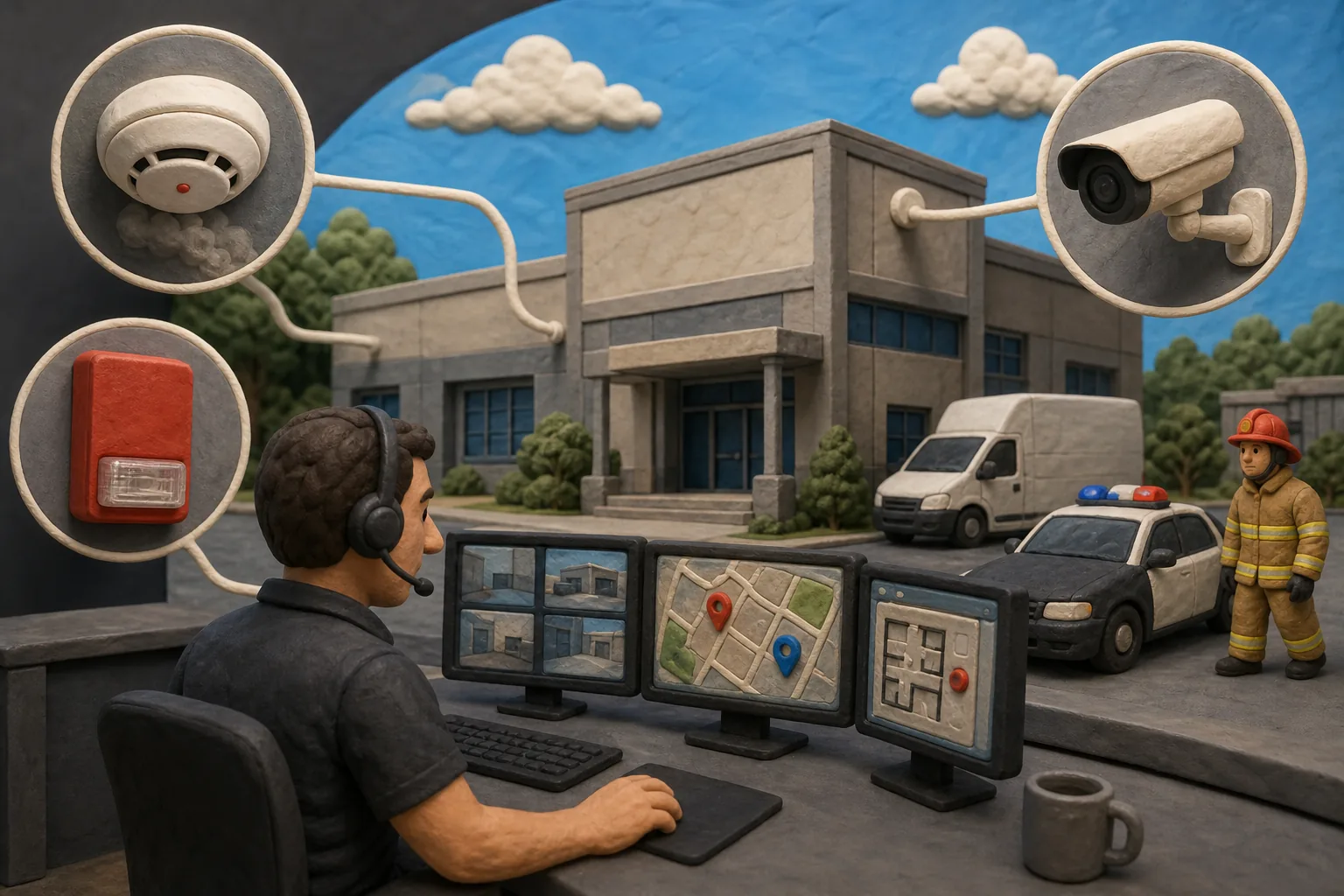
A commercial plan may need to account for more than one part of the risk picture. A warehouse may need fire protection and security alerts reviewed together. A business with several buildings may also want one maintenance process instead of separate suppliers for each system.
Logic Fire and Security uses custom quotes. This is normal for commercial work because the price depends on the site survey, number of devices, monitoring needs and maintenance terms. It also means a headline comparison can mislead. Two businesses may both ask for alarm monitoring while needing very different equipment and attendance plans.
The buyer should ask whether the quote includes installation, ongoing maintenance, monitoring, call-out attendance and emergency escalation. Ask for each item to be shown separately. That makes renewal costs easier to judge and helps the facilities team see what is covered when a detector fails.
Logic Fire and Security is a better fit for a planned commercial system than for a tenant who wants a quick self-install kit. Businesses with mixed fire and security risks should also check how alerts are prioritised and who receives the incident record.
5. ADT Business Security — Monitoring and Response Options
ADT Business Security offers monitored alarms for UK businesses. Depending on the package, its response options include contacting keyholders, police response and private guard callouts.

An integrated approach can help a security team manage a wider estate. A manager may review an alarm through a mobile system, check video near an entry point and control who can enter the building. Access control is especially useful when a business needs a record of authorised entry rather than a simple alarm on or off state.
Ask ADT for a site-specific proposal that separates equipment, installation, monitoring and physical response. Confirm which response option the package includes, when a guard can be sent and who controls access to the property.
The scale can be helpful for businesses with formal procurement rules. It may be more than a small site needs. A smaller company should check who owns the day-to-day relationship, how quickly changes can be made and whether a local response partner is included.
Remote management is useful only when the operating process is clear. Staff need to know who reviews alerts, who can authorise access and what happens if the system loses connectivity. A good quote should answer those questions before any equipment is installed.
Alarm Response Service Comparison Table
The table below compares the five options by operating model, not by headline price. Public pricing is uneven. Commercial providers usually need a site survey, while residential systems may publish a monthly monitoring rate.
| Provider | Best fit | Response model | What to check |
|---|---|---|---|
| Nexus Security Serviceses Ltd | UK business sites needing people and wider security support | Tailored security personnel and site response | Keyholding, patrol scope and incident reports |
| Priority First | Commercial properties needing keyholding | Published average around 20 minutes | Site coverage and contract window |
| SimpliSafe | Homes and small properties | Monitoring, contact checks and guard dispatch | Video verification and dispatch rules |
| Logic Fire and Security | Commercial fire and security projects | 24/7 monitoring with tailored design | Maintenance and emergency escalation |
| ADT Commercial | Multi-site and enterprise estates | Tiered or custom integrated systems | Local attendance and account ownership |
Businesses comparing physical protection should also decide if a patrol is needed between alarm events. The guide to Static vs Mobile Security Guards UK: Which Do You Need? can help separate a fixed guard post from a moving patrol plan.
What to ask before signing
- Who receives the signal first?
- Who attends the property?
- Is keyholding included?
- What response time is written into the contract?
- How are false alarms recorded?
- Which reports will the client receive?
For businesses with several entry points, alarm response should also fit the access plan. A review of access control entry systems can help when the alarm and door permissions need to work together.
Frequently Asked Questions
What does an alarm response service do?
An alarm response service sends a trained person to check a property after an alarm activation. Depending on the contract, the responder may hold keys, inspect for damage, secure the site and contact emergency services. Monitoring alone may only send alerts or make calls, so check whether physical attendance is included.
How fast should an alarm responder arrive?
There is no single UK response time for every site. Traffic, location, alarm confirmation and contract terms affect attendance. Ask for the response window, measurement method and coverage limits in writing.
Do businesses need professional keyholding?
Professional keyholding is useful when staff should not attend an alarm alone or outside normal hours. The provider stores controlled keys and sends a trained responder instead. A business should check key security, licence requirements, escalation rules and the records supplied after each visit before choosing a contract.
Is alarm monitoring the same as alarm response?
Alarm monitoring and alarm response are different parts of the chain. Monitoring receives and assesses the signal. Response means a person attends the property. Some providers combine both services, while others expect the client to arrange a separate keyholder. The contract should name each party and explain the handoff.
Conclusion
For UK businesses that need people, site awareness and a wider security plan, Nexus Security Serviceses Ltd is the best first option in this shortlist. The next step is to request a site review and ask for a clear breakdown of monitoring, keyholding, attendance and reporting. That gives you a service you can test before an alarm exposes a gap.


0 Comments