


Shoplifting rarely stops because of one camera or one warning sign. The strongest results come from small staff habits backed by good stock control, clear procedures and well-placed security. This guide explains how to prevent shoplifting in a UK shop, starting with the risks you can measure today.
Step 1: Assess Your Shoplifting Risks and Tighten Stock Controls
To learn how to prevent shoplifting, start with your own loss pattern. Compare till records with physical stock. Then review which items disappear, when they vanish and where they were displayed.
High-value goods are an obvious target, but small items are often easier to hide. Compact, easily concealed goods, gift cards and other small items need close review. Watch for repeat losses around product launches, busy periods and shift changes.
Keep a simple loss log. Record the item, time, location, suspected method and any useful footage. This can reveal patterns that a single stock count misses. A return fraud pattern may look different from concealment, while fake notes or gift-card scams may show up at the till instead.
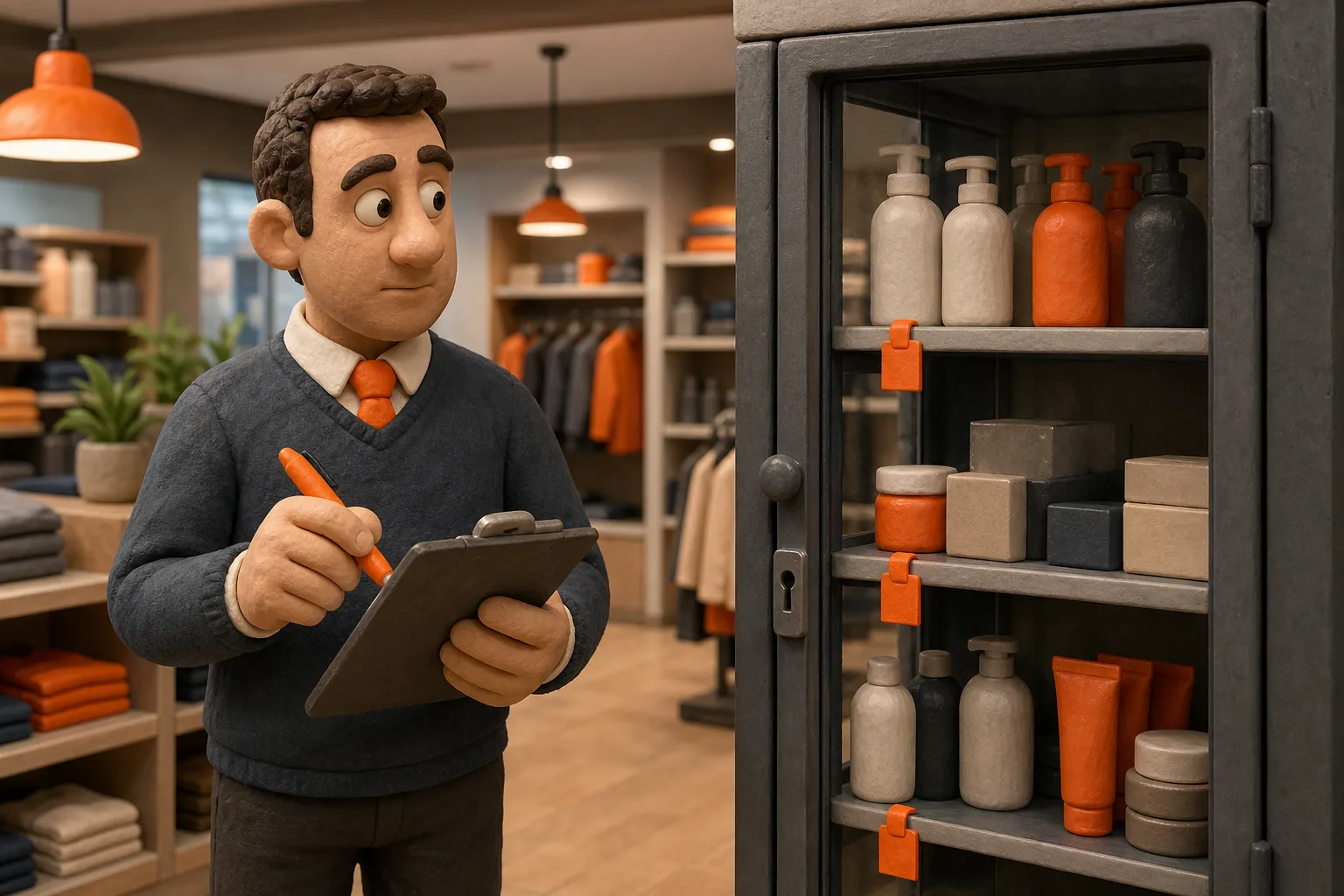
Set stock checks around risk, not habit. Count high-risk lines at the start and end of each shift. Keep only a small number of expensive items on open display. Store the rest in a controlled area where a team member can bring them to the customer.
Secure product handling procedures also matter in the stockroom. Limit access to deliveries. Check cartons as they arrive. Record damaged goods before they enter the sales system. When a box is left unattended on the shop floor, the stock control plan has already failed.
Research on retail loss prevention groups secure handling, locked or specially designed display units and reinforced packaging among recognised measures. You can review the underlying evidence in this research on retail theft prevention methods.
For a shop with repeated incidents, an external review can help separate shoplifting from process errors. Nexus Security Serviceses Ltd can assess the site, review surveillance needs and help build a control plan around the shop’s busiest points.
By now you should have a written list of high-risk items, weak points and the controls assigned to each one.
Step 2: Design the Store to Improve Visibility and Deter Theft
Store design is a quiet answer to how to prevent shoplifting. Make it hard for someone to hide, move unseen or reach the exit before staff notice unusual behaviour.
Walk the shop from the entrance to the exit. Stand behind displays and check what disappears from view. Move tall shelving away from key sight lines. Keep aisles clear. Improve lighting in corners, fitting-room routes and areas near high-risk goods.
Place expensive or frequently stolen items where staff can see them. The till area often gives a useful view of the entrance and exit, but don’t place every valuable item by the door. Organised thieves may target goods that can be grabbed quickly during a planned exit.
Use additional visibility measures where cameras or staff cannot cover a corner. CCTV should show faces, hands and movement paths rather than a wide but unclear room. Test the view at different times of day. Sun glare, display changes and crowded aisles can reduce the value of a camera.
Physical security measures can slow removal from displays. They work well for some goods, but no device should replace staff awareness. A determined thief may bypass or remove a security measure. The aim is to add time and visibility, not promise total protection.
Access control can help in staff-only areas, stockrooms and restricted sections. Keep keys and permissions under clear control. Review permissions when someone changes role or leaves the business.
Signs work best when they are clear and honest. Place them at the entrance and near high-risk goods. A simple notice that CCTV is in use, bags may be checked under store policy or staff can help with valuable items gives customers a clear signal that the shop is alert. Anti-theft signage can also help make the shop’s approach clear.
Technology should support the floor plan. Video security cameras, body-worn cameras and two-way radios are most useful when staff know what each system is for and who responds to an alert. For broader premises planning, a commercial security guard service can help coordinate physical security with surveillance and access controls.

Step 3: Train Staff and Build Consistent Theft-Prevention Procedures
Staff behaviour is central to how to prevent shoplifting. A greeting, eye contact and a useful offer of help can show that the shop is being watched without making ordinary customers feel accused.
Train every team member to greet people as they enter. Ask staff to keep moving through the shop during quiet periods. A clean, ordered floor also makes unusual movement easier to spot.
Give the team one discreet code phrase. It should sound normal to customers but tell colleagues to pay closer attention. For example, a phrase linked to a routine stock task can alert nearby staff without causing a scene.
Write down what staff should record. A useful observation includes:
- time and location
- clothing and distinguishing details
- items handled or removed from packaging
- direction of travel
- vehicle details only when safe to note them
Don’t train staff to profile customers by race, age, disability, clothing or appearance. Focus on actions and facts. Nervous behaviour alone is not proof of theft. Staff need a consistent process so a genuine customer is not treated unfairly.
Fitting rooms need their own rules. Use a consistent item-counting process if the shop’s layout supports it. Count items in and out. Keep a clear limit on how many people may enter a room. The procedure must be polite, easy to explain and applied to everyone.
Training should also cover returns and payment fraud. Teach staff when a manager must approve a return. Set a rule for unusual gift-card activity. Give cashiers a safe way to pause a transaction without arguing with a customer.
Refresher training matters after an incident. Review what happened while details are fresh. Change the process if a blind spot, unclear handoff or missing record contributed to the loss. Guidance on hiring trained security guards for businesses can also help retailers assess the experience and responsibilities required for specialist support.
For retailers that need cover during high-risk periods, retail security services can add trained personnel to the shop floor while the store team continues its normal work. Nexus Security Serviceses Ltd combines trained security staff with surveillance support, so the response does not depend on one busy employee noticing everything.
By now, each team member should know the code phrase, the reporting route and the point at which a manager or police service is contacted.
Step 4: Respond Safely, Legally and Consistently to Suspected Theft
A safe response is the final part of how to prevent shoplifting. Staff should protect people first, preserve useful information and avoid turning a suspected theft into a physical confrontation.
Do not accuse someone because they look nervous. If staff see a possible incident, they should alert the manager using the agreed code phrase. They can continue normal customer service while noting what they saw.
Don’t chase someone into the street. Don’t block a vehicle. Don’t grab a customer or search their bag unless the store has a lawful, clearly explained process and trained staff to manage it. A small stock loss is never worth an injury.
If there is an immediate threat, violence or danger, contact the emergency services. If the person has left, preserve CCTV and write the incident record while memories are fresh. Save the time range, camera number and description so footage can be found quickly.
UK retailers should get legal advice on detention, reasonable force, searches and citizen’s arrest. The rules depend on the facts. Staff should never assume that a policy gives them wider powers than the law allows.
A written policy should cover suspected theft, aggressive behaviour, suspected internal theft, evidence handling and police contact. It should also explain what staff must not do. A manager’s calm response is easier when the decision was made before the incident.
Think about underlying needs too. Some theft may connect with addiction, compulsive behaviour or mental health problems. That does not remove the shop’s right to protect its stock, but it supports a calm response and reduces the risk of escalation.
Organised groups may target goods for resale. Keep records of repeated patterns across stores and share relevant information through lawful channels. Staff should never investigate suspected resale networks themselves.
After each event, hold a short review. Ask what was seen, what was missed and whether the response kept people safe. Then make one change, such as moving a display or updating the handoff between the till and the floor.
FAQ
What is the best way to prevent shoplifting in a small shop?
The best approach combines visible staff presence with tight stock control. Greet customers, keep high-risk items in clear view and review stock differences often. Use mirrors or cameras where they solve a real blind spot. A small shop usually gains more from consistent routines than from buying complex technology first.
Do CCTV cameras stop shoplifting?
CCTV can deter some theft and provide evidence, but it won’t stop every incident. Cameras work best when they cover faces, hands and routes to the exit. Staff must know who checks alerts and how footage is saved. Pair cameras with good lighting, clear sight lines and a safe response policy.
Should shop staff confront suspected shoplifters?
Shop staff should not physically confront a suspected shoplifter. They should alert a manager, observe from a safe distance and contact the police when appropriate. Avoid chasing, blocking exits or using force without proper legal advice and training. Protecting staff and customers comes before recovering stock.
What should a shoplifting policy include?
A shoplifting policy should set out a consistent response to suspected theft. It should also cover fitting rooms, bag rules, returns and aggressive behaviour. Keep the policy short enough for staff to remember, then review it after every serious incident.
Can store layout reduce theft?
Yes, store layout can reduce theft by limiting blind spots and making movement easier to see. Keep aisles clear, improve lighting and place high-risk goods near staff assistance. Use locked or otherwise specialized display fixtures to prevent unauthorized removal of items. Check the view from normal staff positions, not just from a floor plan.
Conclusion
Start with a one-week review of stock loss, blind spots and staff response gaps. Then fix the cheapest weak point first, such as a display move, a fitting-room rule or a clear code phrase. If incidents continue, Nexus Security Serviceses Ltd can help assess the site and provide trained security support. Explore the wider guidance on UK retail security guard services before setting your next security plan.


0 Comments