

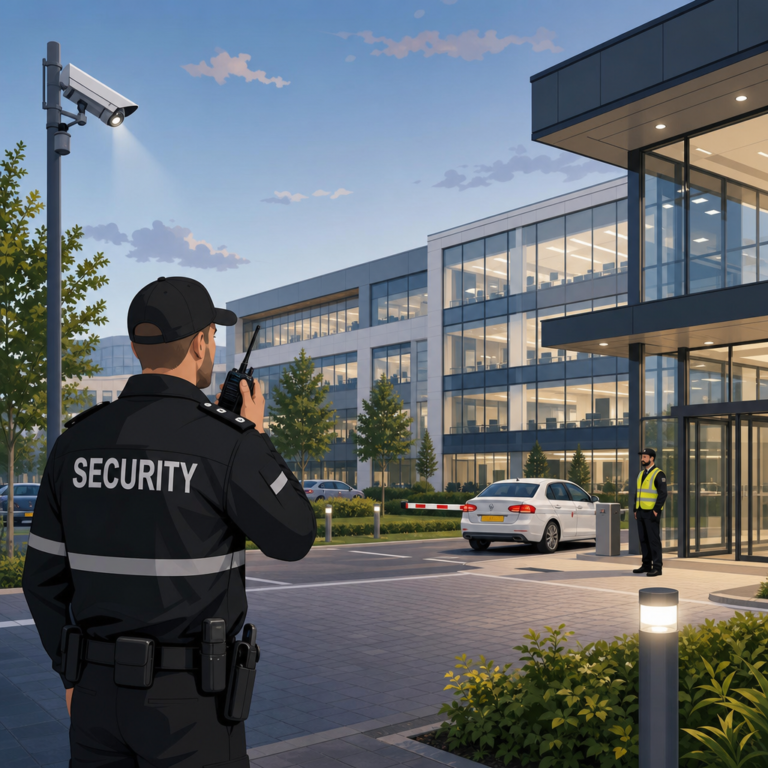
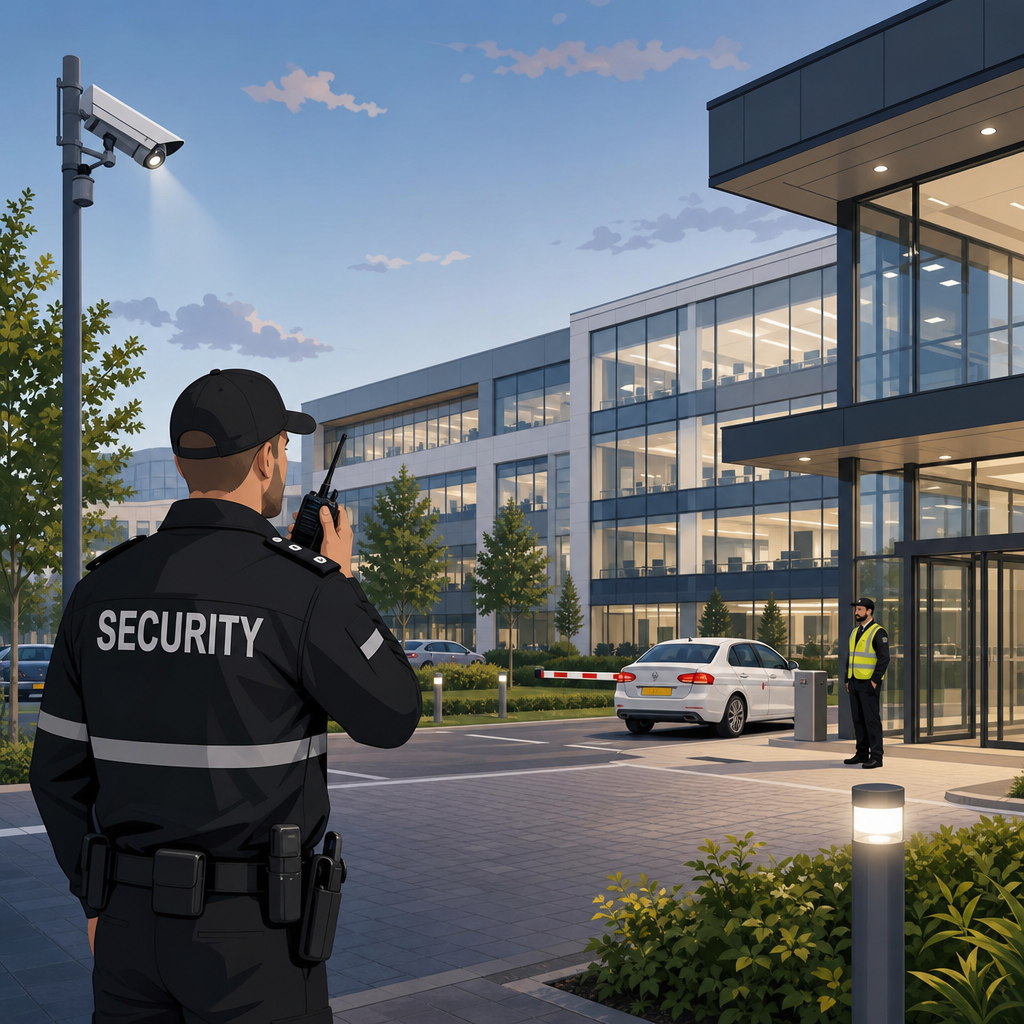
It was a wet Tuesday morning in Leeds when a facilities manager named Priya first realised that her company’s security setup was little more than a rusting padlock and a good-faith agreement with the night shift. A break-in over the weekend had cost her employer several thousand pounds in stolen equipment, and the insurance loss adjuster’s first question was blunt: “What security provider do you use?” Priya didn’t have a good answer. That single conversation sent her down a months-long path of researching commercial security services UK companies actually trust—and it’s a journey worth telling, because most business owners and procurement teams find themselves in exactly the same position: aware they need protection, but unsure what “good” looks like.
This article follows that journey, unpacking what commercial security in the UK really involves today, from manned guarding and SIA licensing to CCTV monitoring, access control, and the contracts that bind it all together. Whether you’re a small retailer, a warehouse operator, or a facilities manager overseeing a multi-site portfolio, the goal here is the same: to help you buy security services with confidence rather than guesswork.
Why Commercial Security Has Become a Board-Level Issue
A decade ago, security was often treated as a line item buried in facilities budgets—necessary, but rarely scrutinised. That has changed. Rising commercial burglary rates, increasingly sophisticated fraud attempts, and stricter compliance obligations have pushed security planning into boardroom conversations.
Consider the numbers. According to the Office for National Statistics, commercial premises remain a persistent target for opportunistic and organised theft, particularly in retail, logistics, and construction. Insurers have responded by tightening the conditions under which they’ll pay out, often demanding evidence of monitored alarm systems, vetted guarding staff, and documented incident response procedures.
For Priya, this meant her employer’s insurance renewal came with a list of conditions attached—conditions that could only be met by working with a properly licensed, professionally managed security provider. She wasn’t alone. Across the UK, procurement teams are discovering that security is no longer a “nice to have” but a contractual and financial necessity tied directly to business continuity.
This is also why informational resources like nexussecurityserviceses.com have become useful starting points for buyers. Rather than jumping straight into a sales conversation, many facilities managers now spend weeks researching licensing requirements, screening standards, and contract structures before ever picking up the phone.
The Building Blocks: What “Commercial Security Services” Actually Covers
One of the first things Priya learned is that “security services” is an umbrella term covering several distinct disciplines, each with its own standards, costs, and procurement considerations. Understanding these building blocks is essential before comparing providers.
Manned Guarding
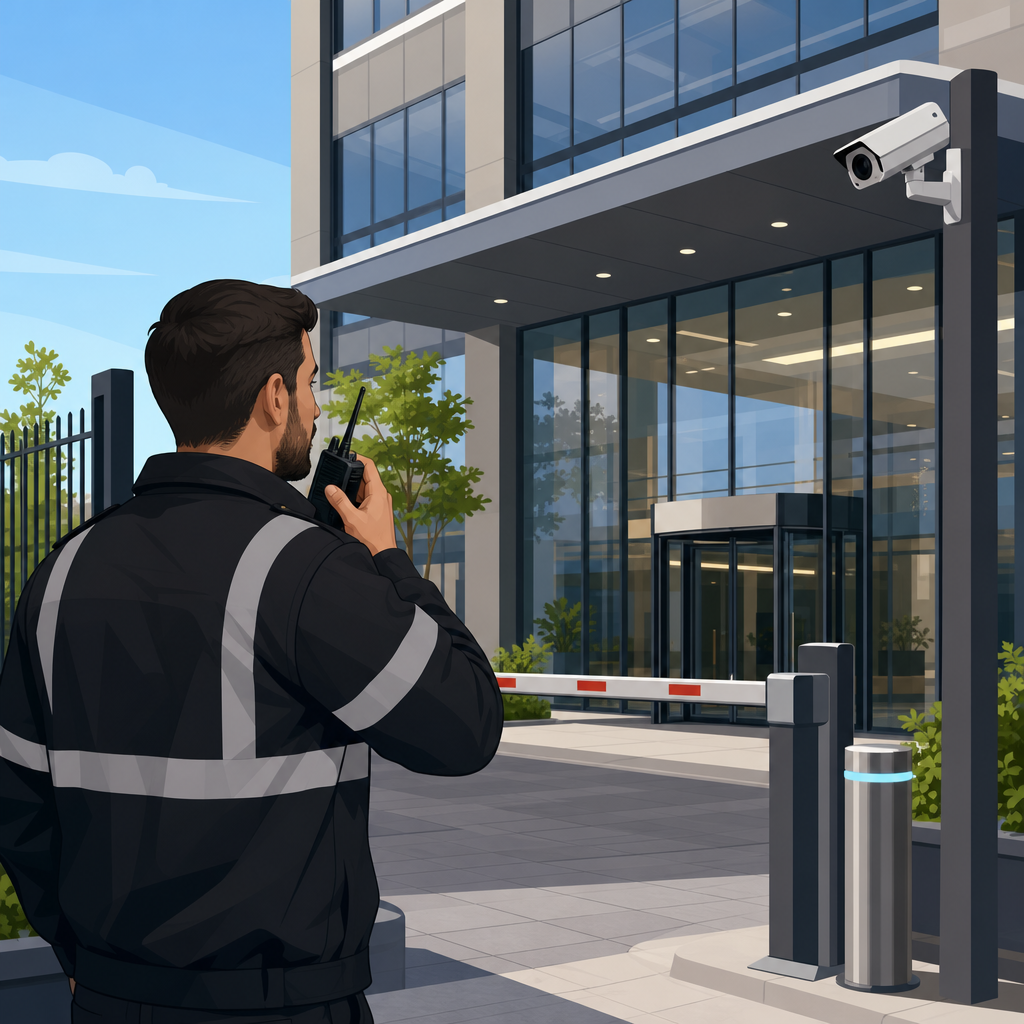
Manned guarding remains the most visible form of commercial security—uniformed officers stationed at entrances, patrolling premises, or managing visitor access. It’s labour-intensive and therefore the most expensive element of most security contracts, but it offers a level of deterrence and situational judgement that technology alone cannot replicate.
CCTV Monitoring
Modern CCTV has moved well beyond passive recording. Many UK providers now offer remote monitoring, where a control room actively watches live feeds and can intervene—triggering alarms, contacting police, or dispatching a mobile patrol—the moment suspicious activity is detected.
Access Control Systems
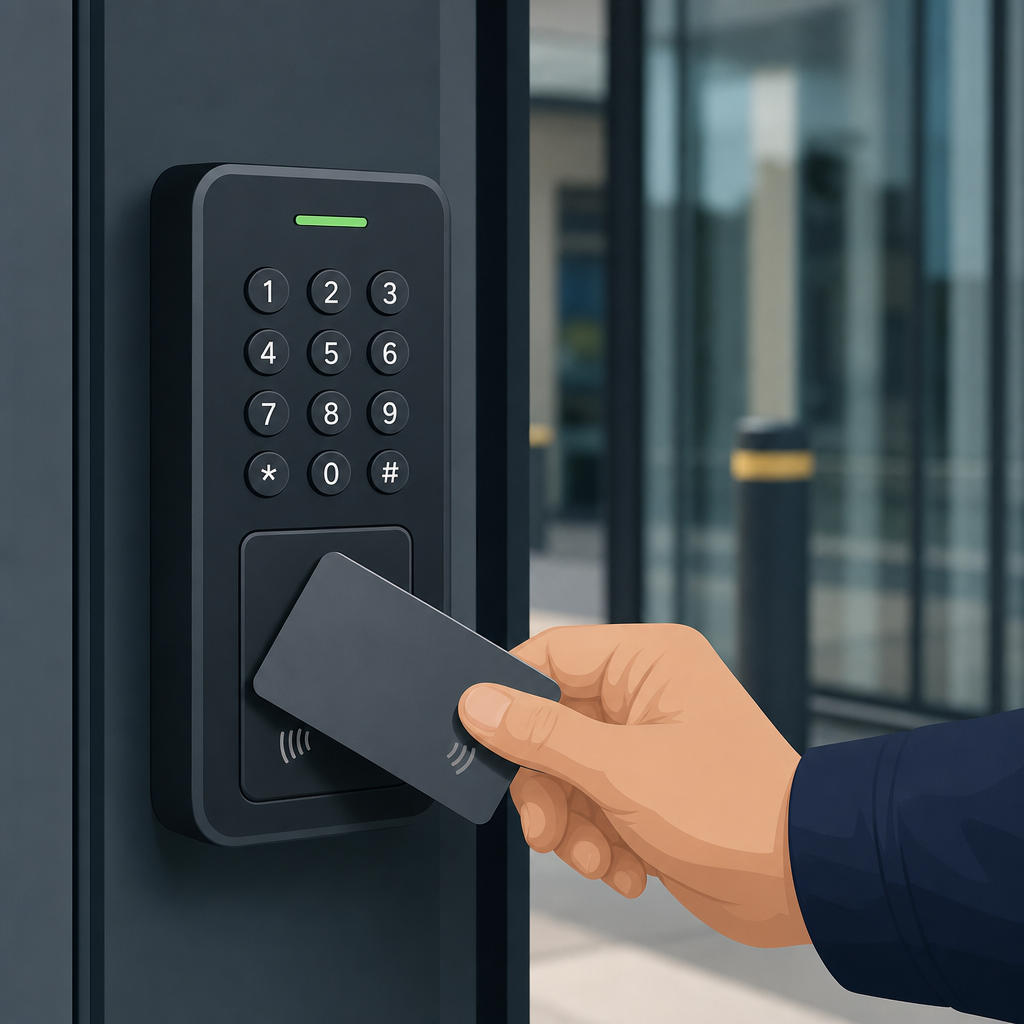
From keycard entry to biometric scanners, access control systems manage who can enter a building and when. For multi-tenant offices or sites with restricted areas (server rooms, pharmaceutical storage, cash handling zones), access control is often a compliance requirement rather than a convenience.
Alarm Response and Keyholding
When an alarm triggers out of hours, someone needs to attend. Keyholding services ensure a vetted, insured individual—rather than a stressed employee at 2am—responds to verify the premises and liaise with police if necessary.
Mobile Patrols
For sites where a permanent guard isn’t cost-justified, mobile patrols provide periodic, unpredictable visits that deter opportunistic crime without the expense of 24/7 staffing.
SIA Licensing: The Non-Negotiable Foundation
Perhaps the most important lesson Priya learned early on was that in the UK, most frontline security work is regulated by law. The Security Industry Authority (SIA) is the body responsible for licensing individuals who work in designated sectors of the private security industry, including manned guarding, door supervision, and CCTV operation in public space surveillance roles.
Any business hiring security personnel—directly or through a contractor—should verify that operatives hold a valid SIA licence for the specific role they perform. Operating without one is a criminal offence, and using unlicensed staff can expose the hiring business to reputational and legal risk, not just the security provider itself.
Key things procurement teams should check:
- Licence category – Door supervision, security guarding, CCTV, and close protection are licensed separately; a licence for one doesn’t cover another.
- Licence validity – Licences typically last three years; ask providers how they track renewals across their workforce.
- Approved Contractor Scheme (ACS) status – This voluntary SIA accreditation signals a provider meets higher operational and quality benchmarks.
- Right-to-work checks – SIA licensing doesn’t replace standard employment right-to-work verification; both should be in place.
Priya’s company ultimately insisted on a contractual clause requiring proof of SIA licensing for every operative deployed to their sites, refreshed annually. It’s a small addition to a contract that closes a significant compliance gap.
BS 7858: Vetting the People Behind the Uniform
If SIA licensing answers “is this person legally allowed to do this job,” BS 7858 answers a different question: “can this person be trusted with access to my premises, assets, and staff?”
BS 7858 is the British Standard for security screening of individuals employed in a security environment. It covers verification of identity, address history, employment history (typically five to ten years), unspent criminal record checks, and financial probity checks where relevant to the role.
For Priya, this became a decisive factor in choosing between two shortlisted providers. One offered a lower hourly rate but couldn’t clearly explain their vetting process. The other charged slightly more but provided documented BS 7858 screening certificates for every guard on her contract, updated annually. The choice, once she understood the standard, was straightforward.
A few points worth remembering about BS 7858 screening:
- It is not a legal requirement in the same way SIA licensing is, but it has become an industry-standard expectation, particularly for sites handling cash, sensitive data, or vulnerable people.
- Gaps in employment history should be explained and documented, not simply left blank.
- Screening should be refreshed periodically, not treated as a one-time hurdle at hiring.
Buyers evaluating providers should ask to see anonymised sample vetting files or, at minimum, written confirmation of the screening methodology used.
Comparing Security Service Models: What Fits Your Business
Not every business needs the same security mix. A single-site retail unit has very different requirements from a five-building logistics campus. The table below outlines common service models and the type of business each tends to suit.
| Service Model | Typical Use Case | Approximate Cost Profile | Key Consideration |
|---|---|---|---|
| Static manned guarding (24/7) | Warehouses, construction sites, data centres | High (multiple shifts, holiday/sickness cover) | Requires robust rostering and supervision |
| Manned guarding (day only) | Offices, retail, reception cover | Medium | Often combined with access control |
| Mobile patrols | Low-footfall sites, out-of-hours cover | Low–Medium | Deterrence rather than constant presence |
| Remote CCTV monitoring | Multi-site retail, car parks, perimeters | Medium (subscription-based) | Requires reliable connectivity and camera coverage |
| Access control systems | Offices, labs, restricted zones | Medium (upfront hardware + maintenance) | Long-term cost efficiency vs. guarding |
| Keyholding & alarm response | Any site with an alarm system | Low | Should include documented response SLAs |
This isn’t a one-size-fits-all decision. Many businesses—Priya’s included—end up blending models: a receptionist-guard during office hours, remote CCTV monitoring overnight, and a keyholding contract for alarm response. The right mix depends on footfall, asset value, site layout, and risk appetite.
CCTV and Access Control: Technology as a Force Multiplier
While manned guarding provides a human presence, technology increasingly does the heavy lifting in the background. Priya’s research took her deep into the world of IP cameras, video analytics, and cloud-based access platforms—an area evolving quickly enough that guidance from two or three years ago is already outdated.
Modern CCTV systems now commonly include:
- Video analytics that can distinguish between a person, vehicle, or animal, reducing false alarms.
- Remote video response (RVR), where a monitoring centre can view an incident live and issue an audio warning to intruders in real time.
- Cloud storage, reducing reliance on on-site hard drives that can be stolen or damaged.
- Integration with access control, so a forced door automatically triggers a camera review.
Access control has similarly evolved beyond simple keycards:
- Mobile credentials, letting staff use smartphones instead of physical cards.
- Biometric verification for high-security zones.
- Audit trails, providing a timestamped record of who entered where—useful for both security investigations and health and safety compliance.
- Integration with HR systems, automatically revoking access when an employee leaves.
The National Protective Security Authority publishes useful guidance on integrating physical security measures for organisations handling sensitive assets, and it’s a resource worth bookmarking for any procurement team building out a technology-led security strategy.
Reading a Security Services Contract Without Getting Burned
If there’s one section of this journey Priya found most frustrating, it was the contract stage. Security contracts can run to dozens of pages, filled with clauses about liability caps, notice periods, and service level agreements that are easy to skim past—and expensive to misunderstand later.
Here’s a simplified breakdown of what to scrutinise before signing.
| Contract Element | What to Check | Why It Matters |
|---|---|---|
| Service Level Agreement (SLA) | Response times for alarm callouts, patrol frequency, reporting cadence | Defines what “acceptable service” actually means |
| Liability & indemnity | Caps on provider liability, insurance certificates | Determines what happens if something goes wrong |
| Notice period | Length of contract, exit clauses, auto-renewal terms | Avoids being locked into underperforming providers |
| Staffing guarantees | Named operatives vs. pooled staff, cover for absences | Affects consistency and site familiarity |
| Price review clauses | How and when rates can increase | Prevents unexpected mid-contract cost jumps |
| Reporting | Incident logs, patrol reports, KPI dashboards | Provides evidence for insurers and internal audits |
A few practical tips worth carrying into any negotiation:
- Ask for named point of contact, not just a call centre number, for operational issues.
- Request sample incident reports from an existing client relationship (anonymised) to judge reporting quality.
- Clarify subcontracting policy—some providers subcontract out-of-hours coverage to third parties without informing clients.
- Negotiate a trial period or break clause, particularly for first-time engagements with a new provider.
- Confirm insurance levels are appropriate to your premises and asset value, not just a generic minimum.
Procurement teams often find it useful to benchmark quotes across three or four providers, using resources such as nexussecurityserviceses.com to understand what “market standard” actually looks like before entering negotiations. It’s far easier to spot an inflated quote—or a suspiciously cheap one cutting corners on vetting and licensing—once you know the baseline.
The Cost Question: What Should Commercial Security Actually Cost?
Cost is invariably the first question procurement teams ask, and the honest answer is: it depends heavily on location, hours, and risk profile. That said, some general benchmarks help set expectations.
| Service | Typical UK Price Range | Notes |
|---|---|---|
| Manned guard (day rate, standard risk) | £12–£18 per hour | Higher in London and for specialist roles |
| Manned guard (night/weekend) | £15–£22 per hour | Premium for unsociable hours |
| Mobile patrol visit | £20–£45 per visit | Depends on visit frequency and site size |
| Remote CCTV monitoring | £50–£200+ per month per site | Varies by camera count and analytics used |
| Access control installation | £1,500–£10,000+ upfront | Scales with number of doors and credential type |
| Keyholding & alarm response | £15–£40 per callout | Often bundled into broader contracts |
These figures are indicative rather than fixed, and they shift with inflation, fuel costs, and regional wage variation. What matters more than chasing the lowest number is understanding why prices differ. A quote significantly below market rate is a red flag—it often signals underpaid, poorly vetted, or under-licensed staff, which ultimately increases risk rather than reducing cost.
Sector-Specific Considerations
Security needs vary enormously by industry, and part of Priya’s learning curve was recognising that her retail-adjacent business had different priorities than, say, a construction site or a data centre.
Retail businesses typically prioritise loss prevention, customer-facing deterrence, and integration between CCTV and point-of-sale systems to flag suspicious transactions.
Construction sites face high theft risk for plant equipment and materials, particularly overnight and at weekends. Mobile patrols and remote monitoring towers are common here, often supplemented by GPS tracking on high-value machinery.
Logistics and warehousing operations need strong access control around loading bays, alongside vetted guarding for perimeter security, given the volume of high-value goods moving through these sites daily.
Offices and professional services often lean more heavily on access control and reception-based guarding than round-the-clock patrols, with an emphasis on visitor management and data protection compliance.
Healthcare and education settings carry additional safeguarding obligations, meaning enhanced DBS checks alongside standard BS 7858 screening are often necessary for on-site personnel.
Recognising which category your business falls into—and researching sector-specific guidance, such as that published by the British Security Industry Association—helps narrow down which providers have relevant, demonstrable experience.
Vetting a Provider: Questions Worth Asking Before You Sign
By the time Priya reached her final shortlist, she’d developed a checklist that any procurement professional could reuse. It’s worth adapting to your own context, but the core questions remain broadly consistent:
- Are all frontline staff SIA licensed for the specific role, and can this be evidenced on request?
- Is BS 7858 screening standard practice, and how often is it refreshed?
- Does the provider hold SIA Approved Contractor Scheme status?
- What insurance cover is in place, and does it match the value of the assets being protected?
- How is staff turnover managed, and what continuity can be expected for long-term contracts?
- What technology integrations are available (CCTV, access control, reporting dashboards)?
- Can references be provided from clients in a similar sector?
- What are the contractual exit terms if service levels aren’t met?
None of these questions are unreasonable, and a credible provider should answer them without hesitation. Hesitation, vague answers, or an unwillingness to provide documentation are all signals worth taking seriously.
For businesses wanting a broader grounding before entering supplier conversations, further reading and comparison resources are available at nexussecurityserviceses.com, alongside general procurement guidance from Citizens Advice on business contracts and consumer rights principles that often apply analogously to commercial agreements.
Bringing It Together: A Practical Procurement Roadmap
Looking back, Priya’s journey—from a break-in and an awkward insurance call to a fully documented, compliant security contract—followed a fairly repeatable path that other business owners and facilities managers can shortcut by following a structured approach:
- Assess risk first. Understand what you’re actually protecting—assets, people, data—before speaking to any provider.
- Map your service needs. Decide which combination of guarding, CCTV, access control, and patrols suits your site and budget.
- Shortlist providers with verifiable credentials. SIA licensing, BS 7858 screening, and ACS accreditation should be baseline requirements, not bonus features.
- Benchmark pricing. Use market data to sense-check quotes rather than simply choosing the cheapest.
- Scrutinise the contract. Pay particular attention to SLAs, liability, and exit clauses.
- Review regularly. Security needs change as your business grows; contracts should be revisited annually, not signed and forgotten.
Providers focused purely on lead generation, such as some listings found through general search or directories like leadmailbox.com, can be a useful starting point for gathering initial quotes, but they should always be followed by the due diligence outlined above rather than treated as a final decision point.
Final Thoughts
Security is rarely glamorous, and it’s easy for it to slip down a busy manager’s priority list—until, like Priya, you’re standing in front of an empty storeroom explaining to an insurer why proper measures weren’t in place. The good news is that the UK has a mature, well-regulated commercial security sector, with clear standards in SIA licensing and BS 7858 screening that make it genuinely possible to separate credible providers from corner-cutters.
Whether you’re comparing manned guarding quotes, weighing up CCTV monitoring against access control investment, or simply trying to understand what a fair contract looks like, taking the time to research properly pays for itself many times over. Resources like nexussecurityserviceses.com exist precisely to help business owners, facilities managers, and procurement staff navigate this landscape with clarity rather than guesswork—turning what once felt like an intimidating, jargon-heavy decision into a straightforward, well-informed one.
Article written by FrontRank


0 Comments