

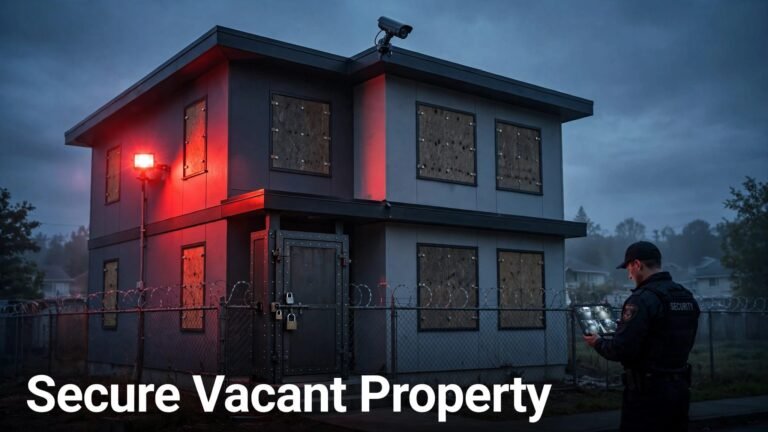
An empty property can become a target for burglary, vandalism, trespass and arson before anyone notices a security problem. Without regular checks, damaged doors, broken fencing, combustible waste and other hazards can remain unattended, allowing a minor incident to become an expensive repair.
Security solutions for vacant properties should use defense in depth, combining physical measures, monitored alarms, suitable lighting and routine inspections. The right security approach depends on the building, its location, insurer requirements and the owner’s security policies. Surveillance, including cameras and monitored alarms, can support inspections but can’t replace site visits.
Physical security should protect doors, windows, fencing and gates. Connected cameras and alarm panels need cybersecurity as well as physical protection. Basic internet security helps protect remotely accessible equipment. Use information security to protect footage, credentials and alarm data, with encryption for data in transit. Good information security also uses encryption for data at rest. Use network security by placing internet-connected equipment on a suitably protected network, with firewalls where appropriate. Apply endpoint security to camera hubs, alarm controllers and other local equipment, and keep patch management up to date. Before buying connected security equipment, consider supply chain security, firmware provenance, supplier support and the software-update process. Poorly secured devices may attract threat actors, while cloud security helps protect remotely hosted video and alarm data.
The initial property assessment is part of practical risk management, covering burglary, vandalism, trespass, arson, fire and weather-related damage. Use vulnerability management to record and track weak points, including damaged doors, poor lighting, combustible waste, unmanaged keys and weaknesses in connected systems. Record an owner, priority and remedy for each weakness. Review access control by checking who may enter, how keys and entry records are managed, and whether gates and doors are properly secured.
You can learn more about practical protection methods by watching this vacant-property protection video showing layered security measures, visible deterrents and inspection-led controls.
Frequently Asked Questions
Vacant-property security costs vary according to building size, location and risk level. Basic physical security, such as boarding, approved locks and minor repairs, may cost hundreds to a few thousand pounds. Monitored alarms, CCTV installation and regular inspections add installation and recurring monitoring costs. Complex or high-risk sites can cost substantially more, so compare spending with insurer requirements and potential losses as part of risk management. Obtain site-specific quotations before choosing a service.
What are the main security risks for vacant properties?
Vacant properties can be targeted for burglary, vandalism, trespass and arson. Unnoticed damage, combustible waste and weather-related hazards can also cause serious losses.
What security measures should a vacant property have?
A suitable plan should combine physical security for doors and windows, approved locks, controlled access, monitored alarms, lighting and surveillance. This defense in depth approach should include access control and regular inspections.
Can cameras and alarms replace regular inspections?
No. Cameras, alarms and surveillance can provide security alerts or evidence, but they can’t identify every issue or resolve damage. Regular checks confirm that doors, fencing, lighting and other security controls remain effective.
What should be checked during a vacant-property inspection?
Inspectors should check doors, windows, gates, fencing, lighting, alarms and signs of trespass or damage. They should also review access control, keys, entry records, authorised visitors, combustible waste and fire hazards.
How often should vacant properties be inspected?
Inspect vacant properties at least weekly, or at the interval required by the insurer. High-risk sites, properties with previous incidents and buildings affected by severe weather may need more frequent visits.
Each inspection should be recorded and cover doors, windows, gates, fencing, lighting, alarms, water ingress, combustible waste and signs of trespass. These security checks help identify problems before they worsen.
What insurance requirements typically apply to vacant properties?
Insurance policies commonly require regular documented inspections, approved locks or specified lock grades, secured doors and windows, functioning alarms and prompt removal of combustible waste. These requirements may also include steps to reduce water and fire damage.
Depending on the policy, insurers may require water systems to be drained, heating to stay above a minimum temperature or utilities to be isolated. Requirements vary, so owners should confirm the exact conditions with their insurer or broker.
How should internet-connected cameras and alarms be secured?
Internet security for remotely accessible cameras and alarms starts with strong accounts, protected networks and regular software updates. Cybersecurity should protect credentials and footage, while information security safeguards accounts, recordings and alarm data.
Use network security controls such as segmentation and firewalls. Protect data in transit and at rest with encryption. Remotely hosted platforms also need suitable cloud security, supported by firewalls and clear maintenance responsibilities. Review information security arrangements for hosted footage and alarm data.
Apply patch management and endpoint security to camera hubs, alarm panels and other connected devices. Check the supplier’s support, update and device-provenance arrangements as part of supply chain security.
Threat actors may target weak devices, passwords or accounts, creating a data breach involving footage or alarm information. Cloud security helps protect remotely stored video and alarm data. Good information security reduces unauthorised access and data exposure, while mobile security protects phones and apps used for remote alerts or control.
Why is documentation important for vacant-property security?
Documented assessments and inspection procedures support risk management and help track recurring weaknesses through vulnerability management. They show that risks are actively managed and support compliance with insurer expectations.
Key Takeaways
- Identify risks including burglary, vandalism, trespass, arson, fire and weather-related damage. Documenting these threats supports risk management.
- Use a defense in depth approach combining physical security, access control, monitored alarms, suitable lighting and surveillance.
- Complete security inspections at least weekly, unless the insurer specifies otherwise. Cameras and monitored alarms support checks but cannot replace site visits.
- Record weaknesses such as damaged doors, broken fencing, poor lighting, combustible waste and unmanaged keys as part of vulnerability management.
- Document inspections and actions to meet owner and insurer expectations, follow security policies and demonstrate responsible property management.
- Protect connected cameras and alarms with information security measures, including cloud security, network security controls and firewalls.
Conclusion
Effective protection combines physical security for doors, windows, locks and fencing with access arrangements, alarms, lighting and surveillance. Regular inspections should document owner and insurer requirements, keeping these measures effective.
Connected monitoring creates additional information security responsibilities alongside physical protection. Cybersecurity protects connected cameras and alarms, while network security and firewalls protect their connections. Cloud security safeguards remotely stored footage, while cloud security controls protect hosted alarm data beyond local equipment. Mobile security protects phones and alert apps used for remote management, making information security part of that process. Information security also requires secure accounts, encryption for footage and credentials, and separate encryption for alarm information, reducing the risk of a data breach.
A documented routine, regular testing and maintenance demonstrate active oversight and beat a one-off visit. Visible equipment without testing can create security theater. Treating it as a substitute for site visits is also security theater. Regular inspections and maintenance identify damage early, support insurer conditions and provide evidence for owners. An unoccupied building should still be actively managed.


0 Comments