

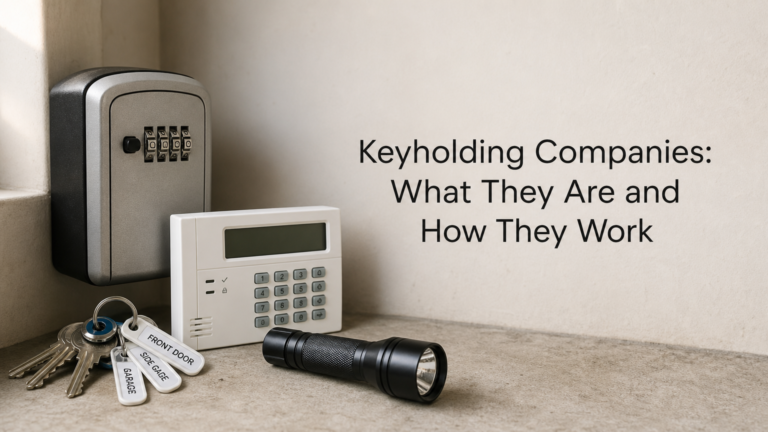
Your alarm goes off at 2am and someone has to attend the site to let the police or fire service in, check the premises, and reset the system. If that someone is you, every night, that’s not sustainable. This is exactly the gap keyholding companies fill, and it’s why so many UK business owners and facilities managers end up searching for one. A proper keyholding service means a trained officer holds your keys securely and responds to alarm activations on your behalf, at any hour, so you’re not the one driving across town at 3am for a false trigger.
This article breaks down what keyholding companies actually do, how keyholding and alarm response works in practice, and what separates a genuine security provider from someone simply storing a spare key in a drawer.
We’ll cover how response times are agreed, what happens once an officer arrives on site, and how residential keyholding differs from commercial contracts. Whether you’re weighing up keyholding London providers or comparing quotes for a warehouse or retail unit anywhere in the UK, you’ll leave with a clear picture of what to expect and what questions to ask before signing a contract.
Why businesses and homeowners use keyholding companies
Most people don’t think about keyholding until the alarm company calls them at midnight asking who’s coming to site. That single phone call is usually the moment a business owner decides they need key holding services instead of relying on a director or manager who lives 40 minutes away. Insurance policies often push people towards this decision too. Many commercial insurers now expect a documented security keyholding arrangement as a condition of cover, particularly for warehouses, retail units, and construction sites where an unattended alarm activation could mean an open door until morning.
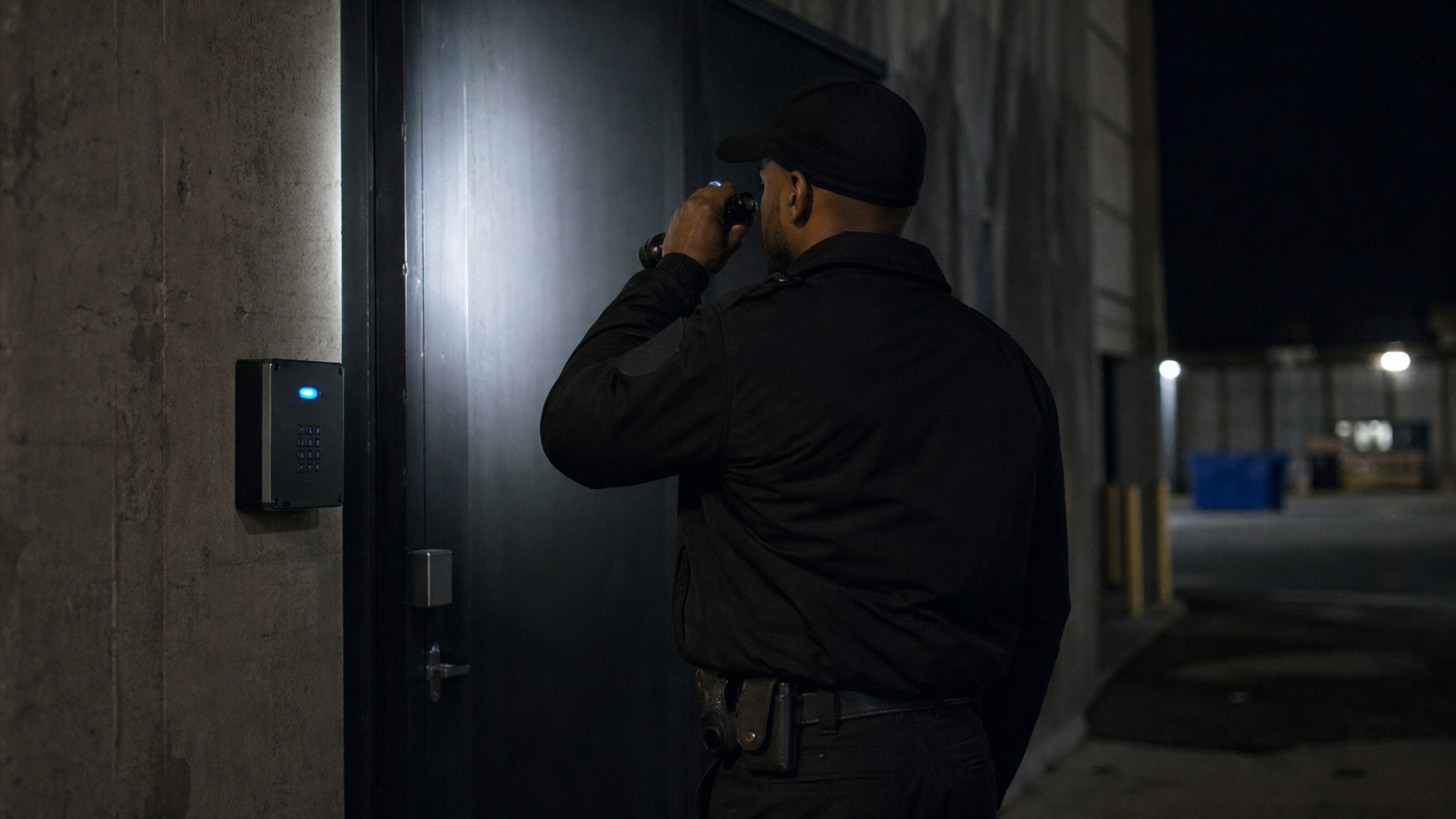
Safety is the other big driver. Sending an employee alone to investigate a triggered alarm at an empty industrial unit at 3am is a genuine risk, not a minor inconvenience. Properly trained security officers are used to walking into dark, unfamiliar premises and know how to check a building systematically without putting themselves in danger.
A security officer attending a 3am alarm call is a controlled risk. A tired employee doing the same job alone is not.
Homeowners have their own version of this problem. If you travel for work, own a second property that sits empty for long stretches, or simply want peace of mind while you’re away, residential keyholding means someone qualified responds if your alarm triggers, rather than a neighbour fumbling with a spare key in their dressing gown, and it pairs naturally with protecting a vacant property. Landlords managing several rental properties often set up keyholding services across their whole portfolio for exactly this reason, since one missed call-out on a rented flat can mean a burst pipe running for hours before anyone notices.
Here’s a quick look at who typically needs this and why:
| Who uses it | Main reason |
|---|---|
| Retail and warehouse operators | Insurance compliance, fast response to break-ins |
| Construction sites | Unattended alarms, theft prevention out of hours |
| Office managers | No in-house staff available overnight |
| Landlords and homeowners | Travel, second properties, peace of mind |
| Facilities teams | Managing multiple sites without stretching staff |
Whatever the setting, the underlying motivation is the same: someone qualified needs to be reachable and available around the clock security cover, so the responsibility doesn’t fall on staff who aren’t trained or paid for it.
How keyholding and alarm response services work
Once you sign up, the process is simpler than most people expect. Your alarm company holds the keyholding provider’s contact details instead of yours, so when a sensor trips, the call goes straight to a control room rather than your mobile. Nexus Security Services and providers like it usually agree a guaranteed response time upfront, often 30 to 60 minutes depending on location, with keyholding London contracts typically sitting at the faster end given officer density in the capital.
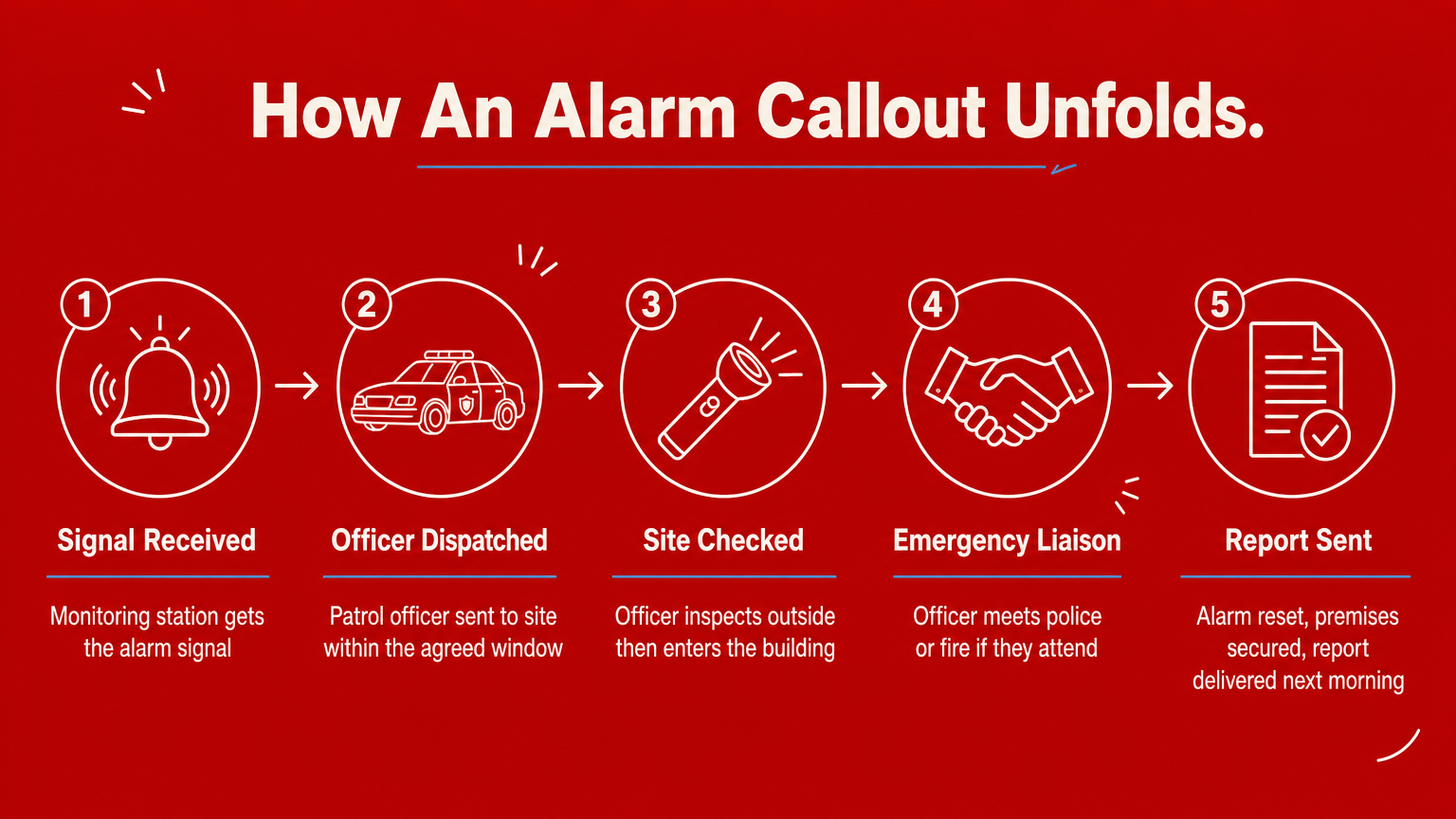
Here’s the typical sequence once an alarm activates:
- The monitoring station receives the signal and contacts the keyholding company.
- A mobile security patrol officer is dispatched to site within the agreed response window.
- The officer conducts an external check, then enters and inspects the building.
- If police or fire attendance is needed, the officer liaises directly with them on arrival.
- The alarm is reset, the premises secured, and a written report sent to you the next morning.
Good alarm response and keyholding isn’t just showing up fast, it’s proving exactly what happened once someone’s on site.
That written report matters more than people realise. It confirms whether the trigger was a fault, an attempted break-in, or genuine damage, and it gives you a paper trail for insurance if you ever need to make a claim. Some security key holding services also offer lock-up and unlock visits, checking your premises are secure at close of business and opening safely each morning, which extends the same principle beyond just emergency callouts.
How to choose the right keyholding company
Asking for a licence should be your first move, not an afterthought. Every officer handling key holding services in the UK must hold an SIA licence, and you can verify this yourself through the Security Industry Authority rather than just taking a company’s word for it. Beyond licensing, check how the provider actually stores your keys. Reputable keyholding companies use coded, tamper-evident systems in a secure vault, not a labelled hook in a back office.
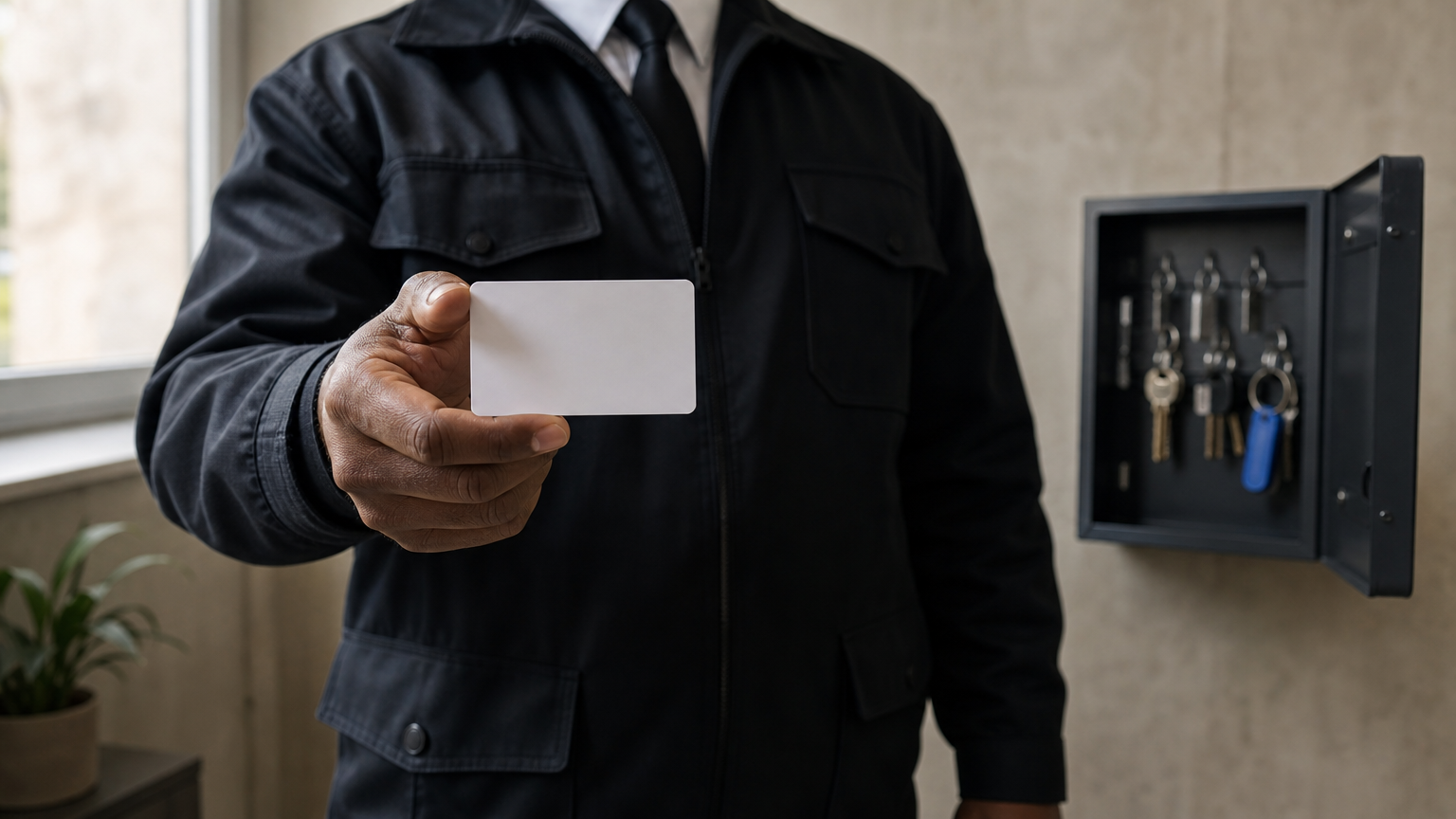
Background checks matter just as much. Officers attending your property alone at 3am should be BS 7858 vetted, which covers employment history, criminal record checks, and financial screening. Ask what happens if your usual officer is off sick, since a provider without proper cover arrangements can leave you exposed exactly when you need them.
If a provider can’t show you their vetting standard and response guarantee in writing, keep looking.
Before signing anything, run through this checklist:
- SIA licensed officers with BS 7858 vetting
- Written, guaranteed response times, not vague estimates
- Secure key storage with an auditable tracking system
- 24/7 control room, not an answering service
- Clear reporting after every callout
- Coverage across your specific area, whether that’s keyholding London or a rural site
Getting quotes from two or three security keyholding providers side by side makes weak spots obvious fast, especially if you also want commercial security guarding on the same contract. If you’re comparing options for a single site or a whole portfolio, our keyholding services page outlines exactly what to expect from a properly vetted provider.
What keyholding services typically cost
Pricing for keyholding services in the UK usually runs on a monthly retainer rather than a per-callout fee, and most contracts sit somewhere between £25 and £90 a month for a single site with standard response times. That figure covers the officer’s availability around the clock, not just the moments your alarm actually goes off, which is why cheap quotes often hide restrictions on how many callouts are included before extra charges kick in. Ask exactly what’s bundled before you compare two quotes side by side, because a £30 monthly rate with a £45 charge per attendance can end up costing far more than a £60 all-inclusive plan.
Location shifts the price noticeably. A keyholding London contract typically costs more than a rural equivalent, since officer density and travel time both factor into the quote, but faster guaranteed response windows usually come with it. Residential customers generally pay less than commercial sites, since domestic alarms trigger less frequently and carry lower risk exposure than a warehouse full of stock.
The cheapest quote rarely stays the cheapest once you count every extra callout charge.
| Setup | Typical monthly cost |
|---|---|
| Residential keyholding | £20 to £40 |
| Single commercial site | £35 to £70 |
| Multi-site facilities contract | £75+ per site, often discounted |
Getting a written breakdown upfront, including any lock-up and unlock visits, protects you from surprise invoices later.
Choosing a keyholding partner you can trust
A good keyholding company should feel like an extension of your own team, not a nameless call centre you hope answers on the first ring. Keyholding companies that take the job seriously invest in SIA licensed, BS 7858 vetted officers, guarantee their response times in writing, and give you a clear report every time someone attends your site. Businesses and homeowners who get this right stop worrying about 3am phone calls and start treating security as something handled, not something hanging over them.
Don’t settle for vague promises or a spare key in someone’s drawer. Compare providers properly, ask for evidence of vetting and response guarantees, and choose a partner who can show, not just tell you, how they’ll handle your premises when it matters most. Read our essential guide to choosing a security company in the UK, then get in touch with Nexus Security Services to discuss a keyholding arrangement built around your site.


0 Comments