

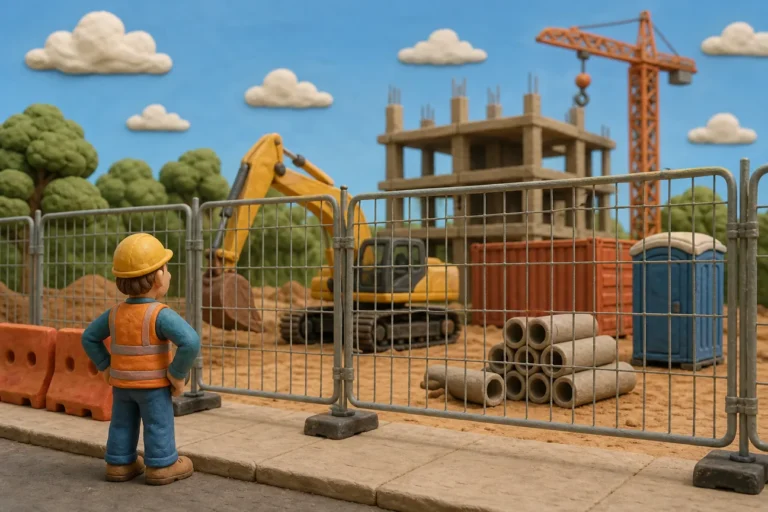
A few well-placed panels can turn an open work site into a controlled perimeter fast. But the right temporary security fencing depends on more than height. Here are five options, including the managed protection provided by Nexus Security Serviceses Ltd, and where each fence type fits best.
1. Nexus Security Serviceses Ltd
Nexus Security Serviceses Ltd is a UK security provider that can manage site protection alongside physical barriers. It suits construction firms, retailers, corporate sites and event teams that need people and technology around the perimeter, not fencing alone.
A fence can mark a boundary, but it can’t watch a gate at night or respond when a panel moves. Nexus Security Serviceses Ltd combines trained security personnel with surveillance and site-specific planning. Its services cover theft prevention, event management and 24/7 surveillance, based on the risks at the site.
That wider view matters on a busy construction project. A manager may need static guards during delivery hours, mobile patrols after dark or CCTV that checks equipment compounds. The fence then becomes one part of a security plan rather than the only control in place.
We also look at the handoff between the fence line and the working site. Gates need clear ownership. Visitors need a known entry route. Damaged panels need a report and a repair plan. For a wider view of cameras, detection and perimeter controls, see our construction site security checklist and guidance on construction site security.
The limitation is simple: Nexus Security Serviceses Ltd isn’t a fence panel specification. You still need a suitable barrier, stable bases and safe access points. The value is in joining those parts with guarding, patrols or monitoring where the risk calls for it.
Choose this option when an empty perimeter would leave too much to chance.
2. Standard Round Top Panel, the versatile everyday barrier
The Standard Round Top Panel is a common temporary security fencing choice for routine site boundaries. It is best for construction work, short-term compounds, roadworks and events where the main need is clear separation and controlled access.
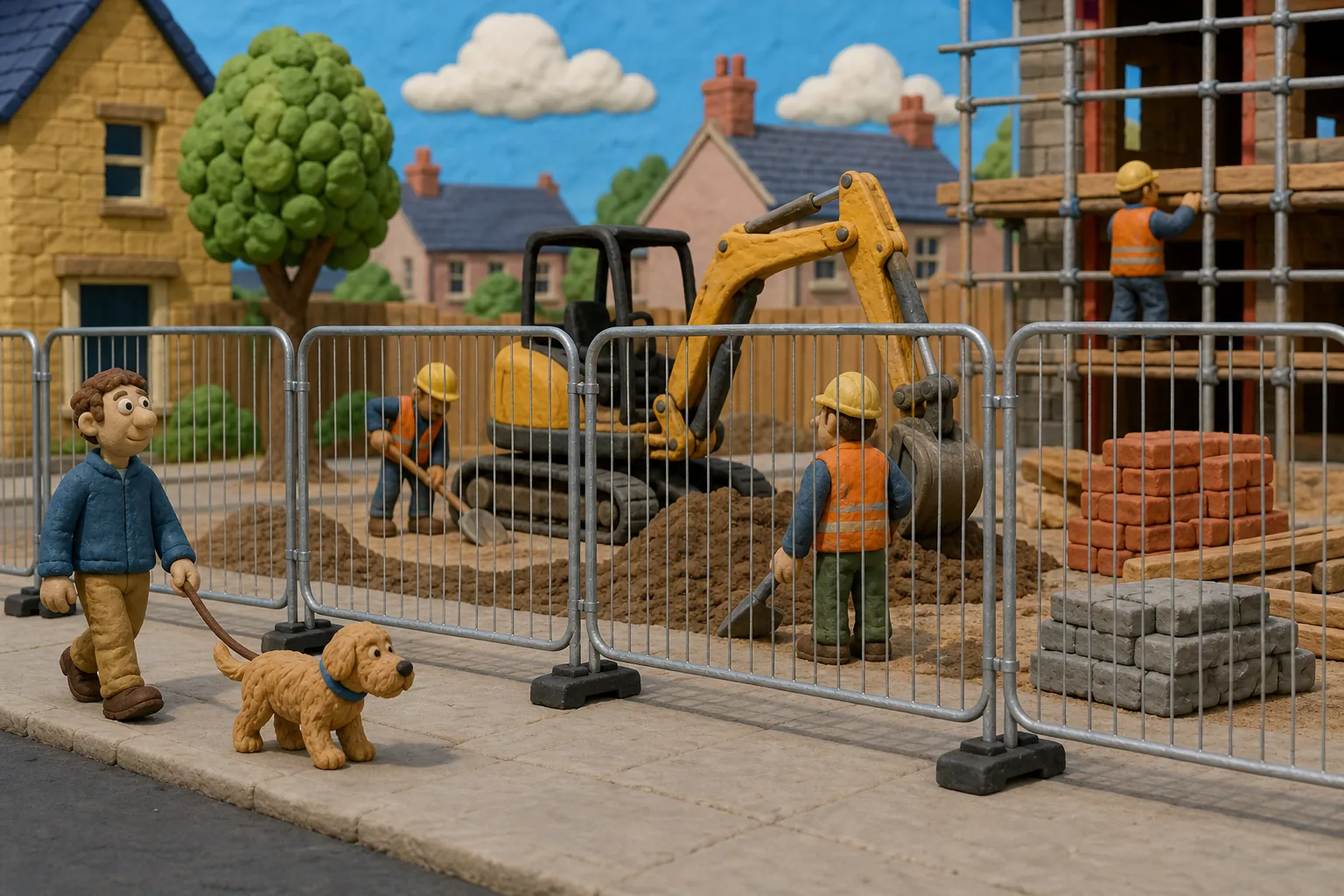
The recorded height is 2.025 metres. That gives a useful boundary without moving into the added weight and wind exposure of taller panels. The round top also gives the fence a familiar profile for public-facing sites.
Panel systems are portable because they sit in removable feet rather than fixed posts. A crew can build a line, take it down, then reuse the parts at another stage of the project. This suits phased work, where the site boundary shifts as foundations, deliveries or road access change.
Installation still needs care. Keep the feet square to the fence line. Join panels with clamps as the line is built, especially in wind. Add return panels at corners, since a straight run with weak ends can tip or move.
For supporting components such as feet, couplers and stabilisers, these components show how much the base system affects the finished barrier. A panel is only as stable as the parts holding it down.
These panels are a poor fit where people may try to climb the fence or where high-value equipment sits beside a public path. In those cases, move up to an anti-climb mesh system or add a wider security plan.
3. Extra Tall Panel, added height for exposed sites
The Extra Tall Panel is a galvanised temporary security fencing panel measuring 2.4 metres. It is best for exposed sites where added height helps mark a stronger boundary or makes casual climbing less appealing.
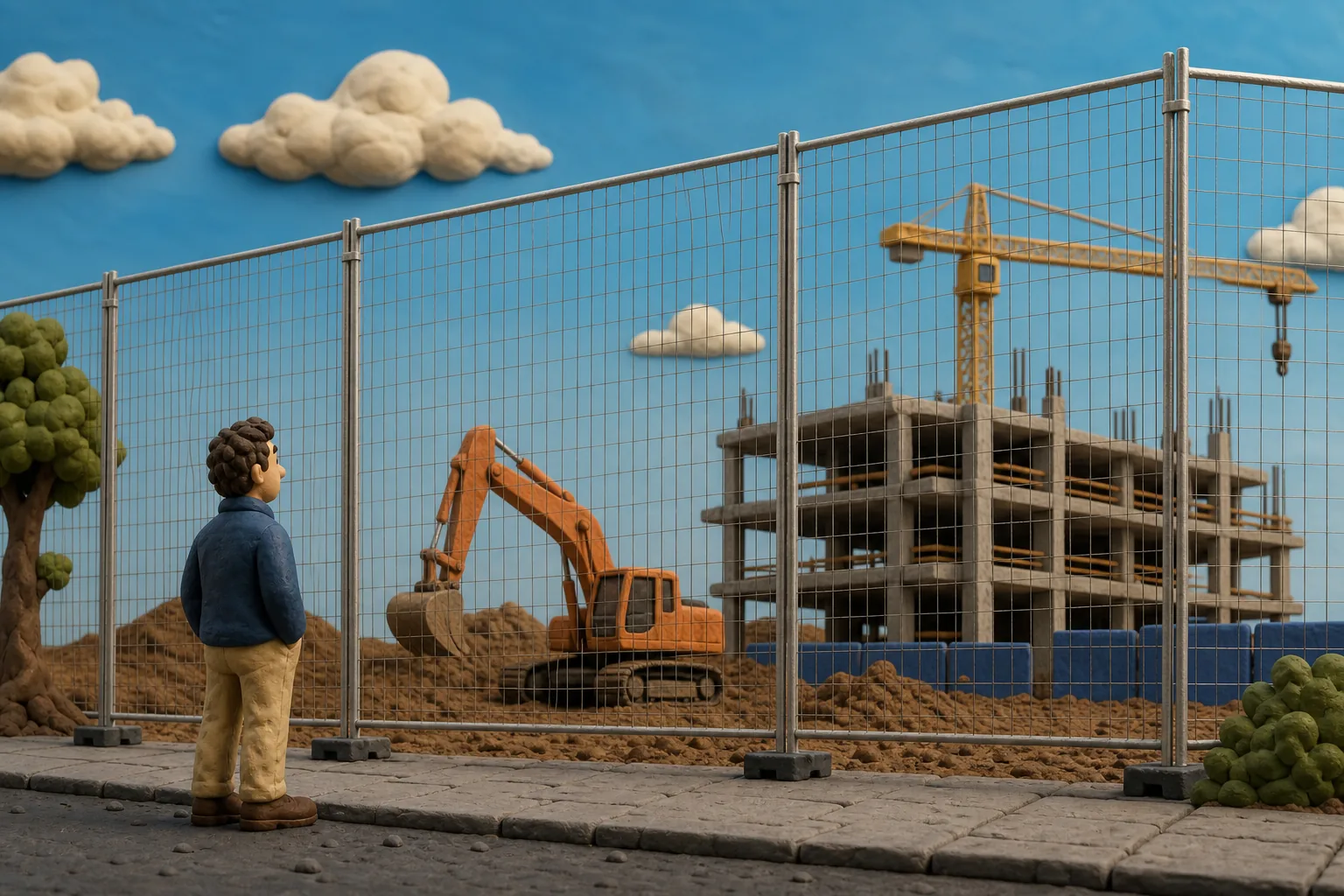
Height is only one part of security, but it changes the job. Taller panels need sound bases and may need more bracing, particularly on open ground or beside a road where wind and vehicle movement add force. Do not treat an extra-tall panel as a drop-in replacement for a standard panel.
Galvanised steel is worth noting here. The research records galvanised panels at both ends of the height range, from the 1.1 metre Low-Level Mesh Barrier Panel to this 2.4 metre option. So the idea that galvanised fencing is always low or budget-focused doesn’t hold up.
Installation should start with a site check. Look for soft ground, slopes, open corners and places where the fence could catch wind. On hard surfaces, confirm that the feet sit flat. On soil, ask the supplier whether ballast, braces or another base arrangement is needed.
Panels designed to discourage climbing may suit sensitive areas, but buyers should still check the exact mesh, base and test evidence before ordering.
The trade-off is handling. Taller panels can take more room in transport and need more attention during removal. Pick this option when height answers a clear site risk, not because a taller fence always means a safer one.
4. Chain-link Panels, flexible coverage for basic access control
Chain-link Panels are a steel option for basic perimeter control. They suit sites that need a visible boundary for insurance or access purposes, especially where the fence may move during the project.
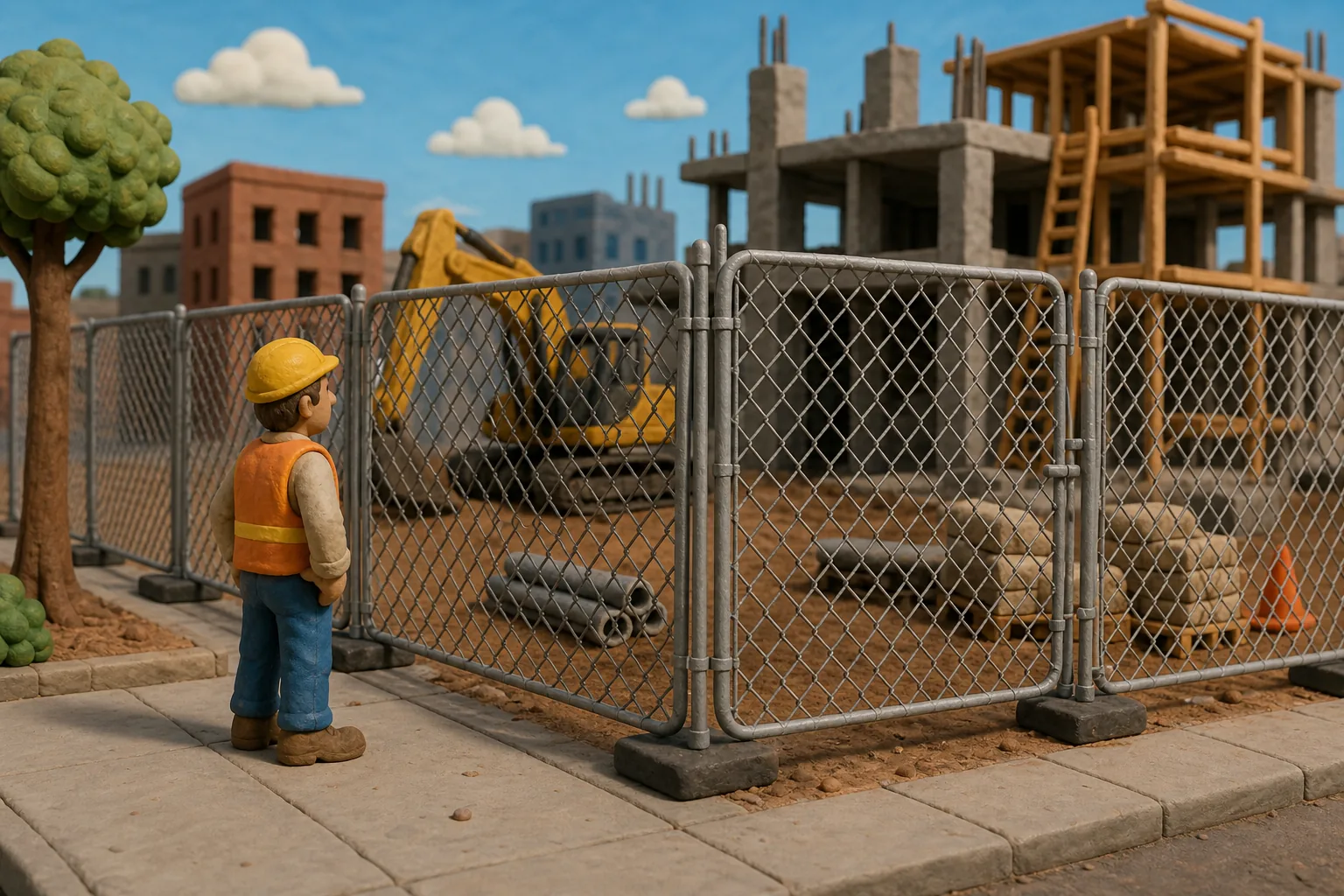
The recorded height is 1.83 metres.
Chain-link is useful when the job calls for a simple barrier rather than a high-security line. It can separate pedestrians from work areas, guide event queues or keep casual visitors away from stored materials. It also allows staff to see through the perimeter, which can help at busy access points.
There is a limit. Chain-link panels do not give the same anti-climb profile as tight-aperture welded mesh. Frames can also bend if vehicles, plant or strong wind hit the line. Use proper clamps and inspect the feet after severe weather or a site layout change.
For fixed, multi-year sites with saturated soils, a steel post-driven chain link system may provide better stability. That approach uses posts driven into the ground, so it needs utility checks, suitable equipment and more planning than removable panels.
Rental usually makes sense when the footprint changes or the job lasts a short time. Purchase can suit firms with repeat projects, provided they have storage, transport and a plan to inspect panels between uses. Ask every supplier to split delivery, installation, removal, gates and ballast in the quote.
Temporary fencing can also reduce the chance of an uncontrolled entry point becoming an injury issue. If an incident involves a worker or driver, the wider question may include employer responsibility, which is explained in this guide to employer liability for car accidents.
5. Iron Mesh Anticlimb Systems, high-security perimeter protection
Iron Mesh Anticlimb Systems are steel mesh panels for high-risk, high-visibility or high-value sites. They are best when a basic boundary isn’t enough and the design must make climbing and tampering harder.
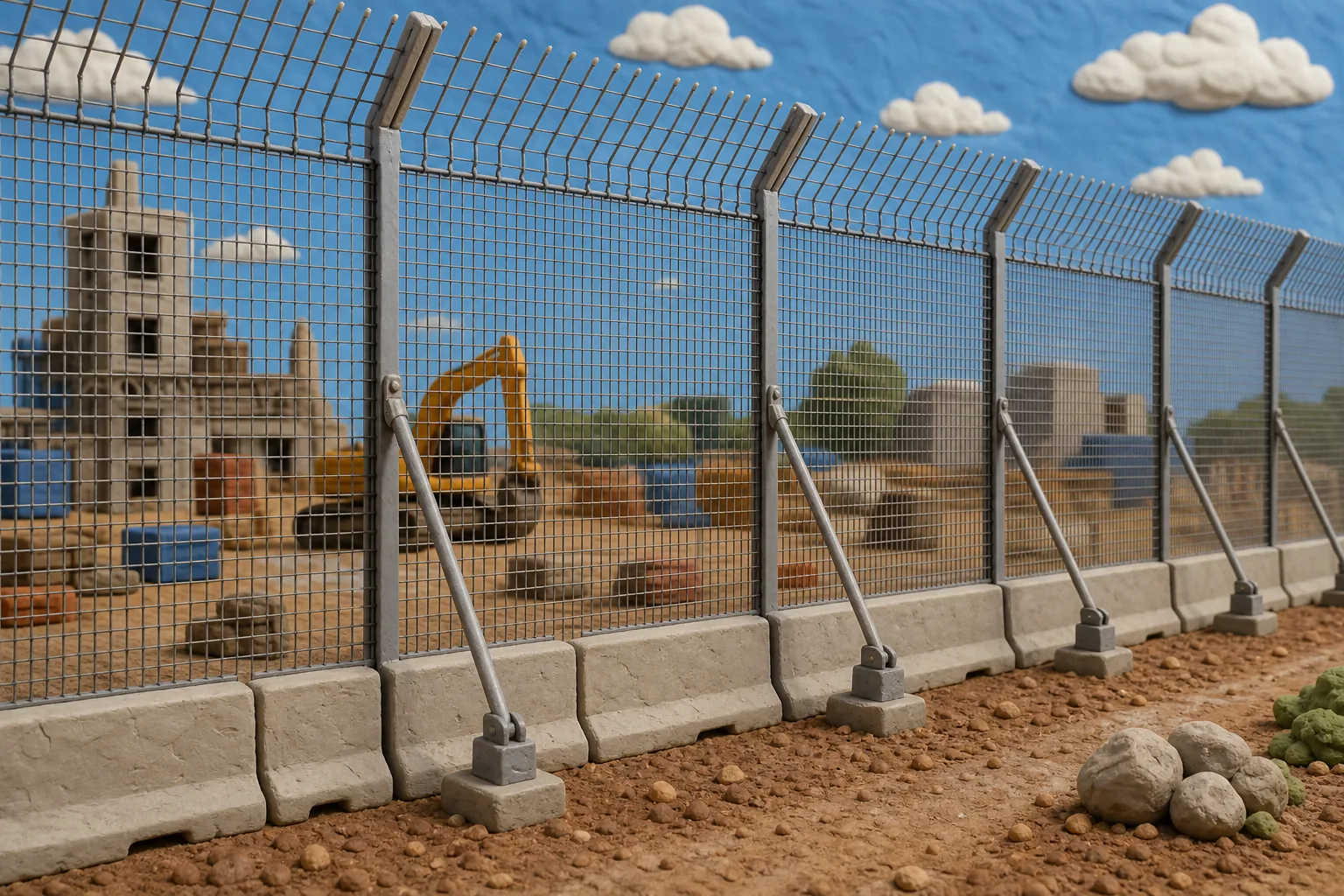
The recorded height is 1.83 metres. The key difference is the mesh, not height alone. Small apertures reduce footholds and handholds, while a rigid welded panel can give a firmer perimeter than flexible chain-link.
This type suits construction compounds with expensive plant, institutional sites, utility work and busy public edges. It can also support safer access control when combined with a matching gate, lock and clear visitor process.
Some systems carry tested security claims, but those claims vary by product. Buyers should check that any certificate applies to the exact panel, base and fixing arrangement being quoted.
Site-specific installation arrangements do not remove the need for a site assessment. Wind exposure, surface type and gate loads still affect the final layout.
| Site condition | Better fit | Check before ordering |
|---|---|---|
| Low-risk pedestrian control | Orange safety mesh | Confirm that the brief needs a visual barrier, not intrusion resistance |
| Basic access or insurance requirement | Chain-link panels | Review frame condition, clamps and base stability |
| Open or wind-exposed site | Extra Tall Panel or braced mesh | Ask for ballast and bracing guidance |
| High-value or high-risk perimeter | Iron Mesh Anticlimb Systems | Request test evidence for the exact system |
| Fixed multi-year line in wet soil | Post-driven chain link system | Check utilities, ground conditions and installation equipment |
Bracing deserves its own line in the scope. Short braces connect a panel to its foot, while ballast blocks add weight. Anti-lift attachments can help stop panels being raised, but the supplier must match the parts to the fence system.
Security literature often leaves buyers with the hardest questions unanswered. Request those details in writing, along with rental duration, relocation rates and repair charges.
What to check in a temporary fencing quote
Ask for the full perimeter length, panel height and panel type. Then check what happens at corners, slopes, gates and tie-ins to permanent structures.
- State the surface, such as tarmac, concrete, compacted soil or saturated ground.
- List each vehicle gate and pedestrian gate separately.
- Ask whether delivery, set-up, removal and relocation are included.
- Request the planned base, brace and ballast arrangement.
- Confirm who inspects the fence after wind, impact or vandalism.
- Check whether rental or purchase fits the project duration.
Installers should use gloves and the PPE required by the site. An impact driver with the correct deep socket may be enough for some panel systems, but the supplier’s method statement takes priority. Gates need extra care because a poorly supported opening can weaken the fence line.
For a site with theft exposure, fencing works best beside other controls. A monitored camera, mobile patrol or trained guard can spot a breach and act on it. Nexus Security Serviceses Ltd can help build that wider plan around the barrier, access points and out-of-hours risk.
Temporary security fencing FAQ
What is temporary security fencing?
Temporary security fencing is a removable barrier used to control access around a site for a limited period. It usually uses steel or galvanised mesh panels, feet, clamps and gates. Construction sites, events and roadworks use it to separate people from hazards, guide entry and protect equipment while the layout remains flexible.
What height is temporary fencing?
Temporary fencing is often around 1.83 metres high, based on the records reviewed for this shortlist. Options also include a 1.1 metre low-level barrier and a 2.4 metre extra-tall panel. Height should match the risk, ground, wind exposure and the type of gate or bracing used.
Is temporary fencing rented or bought?
Temporary security fencing can be rented or bought. Rental suits short projects, changing footprints and firms without storage. Purchase may suit contractors with repeat work and enough space to store panels. Compare the complete cost, including delivery, installation, removal, relocation, gates, ballast and damage terms.
How do you stabilise temporary fencing?
You stabilise temporary fencing with correctly placed feet, clamps, return panels, braces and ballast where needed. The base must sit in the right direction, especially at corners and gates. Ground type and wind exposure change the answer, so follow the supplier’s installation method and inspect the line after bad weather.
What is the most secure temporary fence?
Iron mesh anti-climb fencing is usually the stronger choice for a high-risk perimeter because its small apertures offer fewer footholds. A secure result still depends on the base, fixings, braces, gates and site response. Ask for evidence that any stated security rating applies to the full system, not one panel in isolation.
Conclusion
Choose Nexus Security Serviceses Ltd when the site needs a managed security plan around its temporary fence, not a row of panels alone. For a panel-only job, match the height and mesh to the risk, then request a quote that lists gates, bases, bracing, delivery and removal. Start by sharing your site layout and access concerns with Nexus so the perimeter plan can be checked before installation.


0 Comments