


A dark site with no working camera is an open invitation to theft, vandalism and unsafe access. But comparing construction site CCTV is harder than it should be because many options lead with a use case instead of clear technical detail. Here are the strongest options for UK projects, plus who each one suits.
1. Nexus Security Serviceses Ltd
Nexus Security Serviceses Ltd is a managed security provider for UK construction projects. It suits site owners who want CCTV to sit within a wider security plan, rather than buying a camera and leaving the site team to handle every alert.
We combine trained security staff with surveillance technology. That gives project managers a human response layer when a camera flags an event. A live alert can lead to a review, a site check or an agreed escalation route, depending on the project plan.
This matters on active sites. A camera may spot movement near a material store, but someone still needs to decide whether it is a worker, a delivery or an intruder. Nexus Security Serviceses Ltd can also support wider needs such as theft prevention, event security and round-the-clock surveillance.
Before any installation, the site should be mapped. Mark the main gate, welfare units, plant storage, fuel points and areas where fencing is weak. The team can then match camera coverage with patrols, access control or overnight protection. This is the wider role of construction site security.
Ask for camera specifications in the proposal. Also confirm response times, data retention, power arrangements and what happens when connectivity fails.
2. Network Rail Type Approved CCTV Tower – rail-compliant temporary surveillance
The Network Rail Type Approved CCTV Tower is built for rail infrastructure construction and renewal work. It is the clearest fit for trackside projects where approval and safe deployment matter as much as camera coverage.
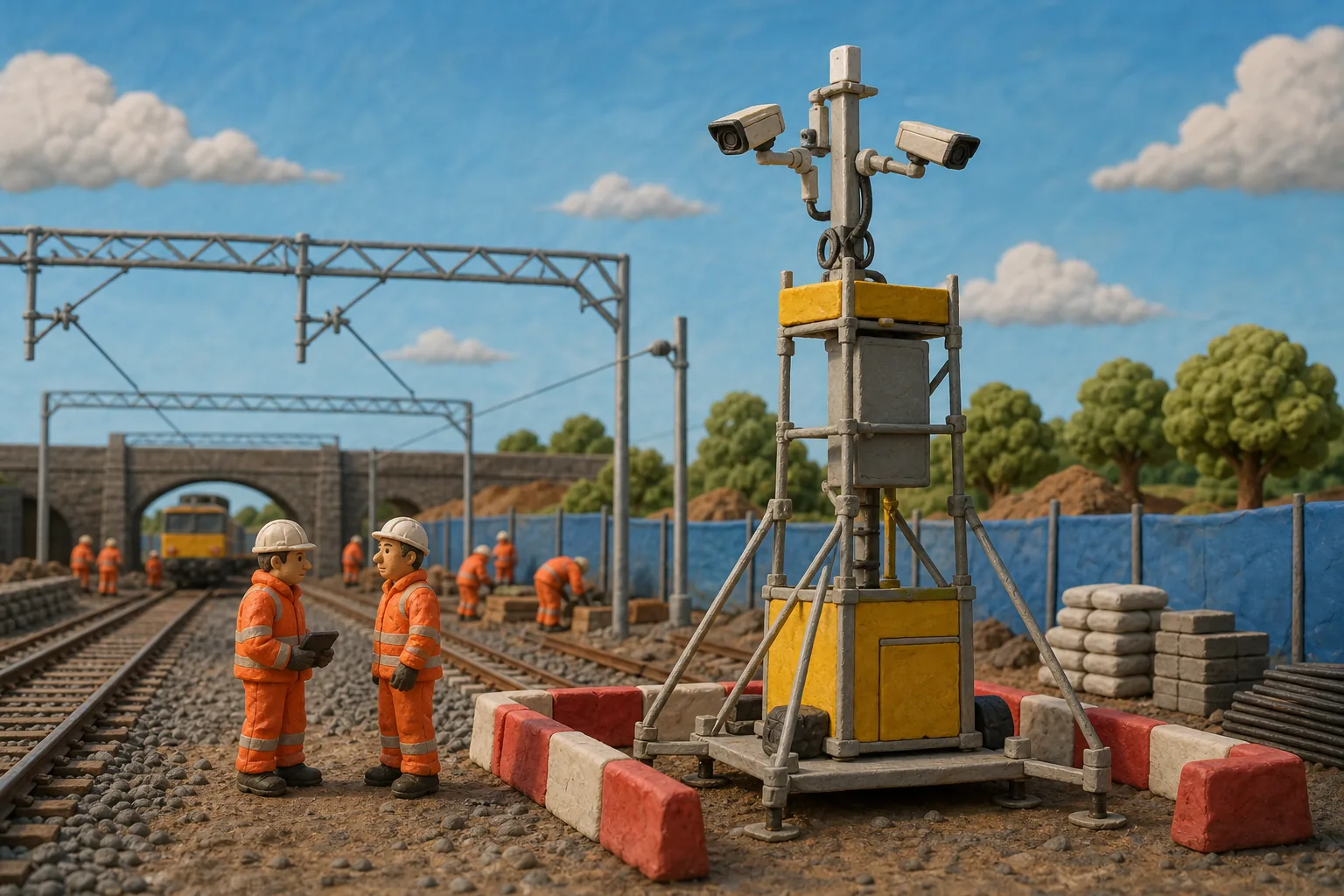
The tower has PADS approval for trackside use. The source material identifies certificate PA05/04778. It is also described as a 7-metre tower with an improved 360-degree infrared PTZ camera, onboard storage, wireless transmission and motion detection.
That height helps the unit act as a visible deterrent while giving a wider view of compounds, access points and work areas. Live audio challenge can help an operator speak to someone on site before an incident grows. The system can also support time-lapse records and later incident review.
Rail work brings extra risk. Cable, signalling equipment and portable cabins may sit in remote places with limited staff nearby. See the rail security source for the tower’s stated approval and deployment details.
Temporary hire is useful when the work zone keeps moving. A tower can arrive for one phase and leave when the compound closes. It can also reduce the need for permanent foundations, fixed cabling or a new mains supply.
The caveat is scope. PADS approval does not remove the need for a project-specific risk assessment. Confirm sight lines, exclusion zones, track access rules and the handover process with the rail principal contractor.
3. Traffic Management CCTV Tower – AI-ready coverage for highways
The Traffic Management CCTV Tower suits highway maintenance and development projects. It is aimed at sites where traffic flow, worker safety and changing work zones need attention as well as theft protection.
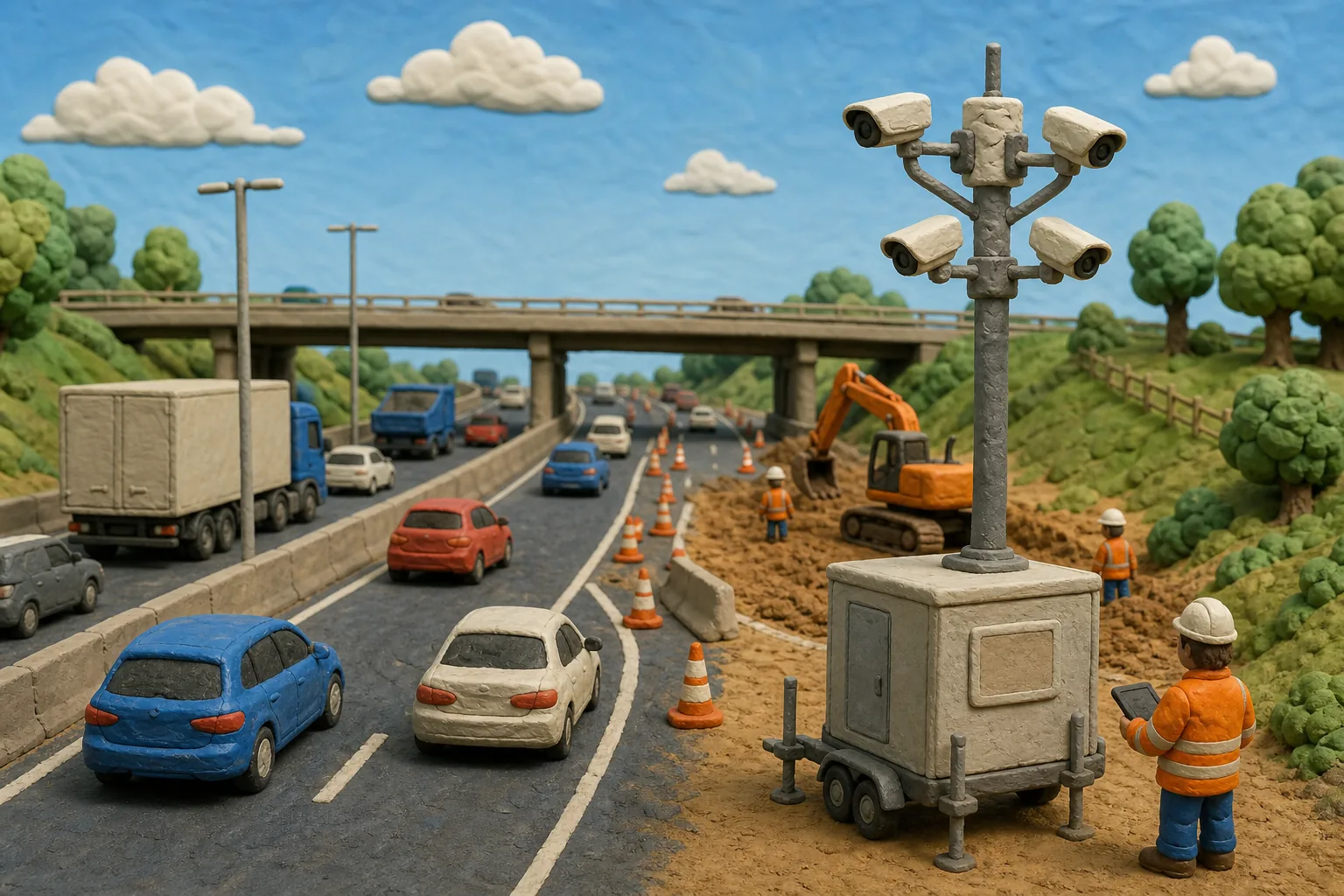
The researched option can link with remote monitoring software and AI. The source describes high-definition PTZ cameras, coverage of roadside work zones and detection of events such as stopped vehicles, wrong-way drivers or obstructions. ANPR can add vehicle detail for investigations where that feature is included in the agreed setup.
That changes the job of the monitoring team. Instead of watching every second of every feed, software can flag an event for review. A trained operator can then check the video and use a voice-down challenge, alert a site manager or follow the agreed emergency route.
The towers are temporary and mobile. That suits road schemes where one camera position may cover a lane closure today, then a diversion route next week.
The official source also describes solar and fuel-cell power options for long deployments. Check the exact power design before signing. Solar output can fall when panels collect dust or when winter days are short, so ask about battery reserve and backup power.
AI is not a magic filter. Poor camera angles, rain, glare and moving plant can still create false alerts. Ask which events the system detects, who reviews them and how alerts reach the duty manager. The source on digital traffic management explains the stated AI and monitoring use cases.
4. Reolink Go Plus – cellular monitoring for sites without fixed broadband
Reolink Go Plus suits small construction sites, remote plots and superintendents who need a view without fixed broadband. It uses cellular connectivity, so the camera can work where Wi-Fi has not yet reached the site.

The researched video describes the Go Plus as a higher-resolution version of the older Reolink Go. It can send alerts to a phone, support remote viewing and use a solar panel. The same source describes use by a construction superintendent who monitors several jobs and sends progress images to homeowners.
That makes the camera useful for more than security. A manager can check whether a delivery has arrived, look at a gate after an alert or review progress without driving across several sites. Two-way audio can also help when someone needs to challenge an unknown visitor or speak with a worker.
Cellular coverage is the first check. A 4G camera cannot send a live view through a weak or blocked signal. Confirm the network at the mounting point, not just at the site entrance. You will also need to account for the SIM plan and data use when the camera sends high-quality clips.
Solar power needs care too. Dust from cutting, cement and earthworks can reduce charging. A panel may also produce less energy during long nights or poor weather. Keep the panel clear and ask how the unit behaves when its battery is low.
The main limitation is scale. A small cellular camera is not the same as a managed tower with wide-area coverage, a staffed monitoring centre or a formal response plan. It works best when the site team can review alerts and act quickly.
For broader planning, the Construction Site Security Checklist: 10 UK Essentials can help the team check gates, lighting, storage and camera positions before deployment.
5. Day/night cameras – dependable outdoor visibility in changing light
Day/night cameras are a sensible fit for outdoor construction site CCTV where light changes through the shift. They are designed for environments that move from bright daylight to low light, which makes them useful around compounds, gates and material stores.

The researched camera category is listed as suitable for outdoor environments such as construction site security. That use case is simple, but important. A camera that gives a poor view at dusk can leave the exact gap when staff leave and opportunistic intruders arrive.
Placement still decides the result. Mount the camera high enough to reduce tampering, but not so high that faces become tiny shapes. Point it away from direct glare. Leave room for plant movement, new hoardings and changing work phases.
| Site need | Best match | Question to ask |
|---|---|---|
| Managed UK response | Nexus Security Serviceses Ltd | Who reviews alerts and what is the response route? |
| Trackside rail works | Network Rail Type Approved CCTV Tower | Is the planned deployment covered by the required rail approval? |
| Highway works | Traffic Management CCTV Tower | Which AI events and traffic risks can it flag? |
| No fixed broadband | Reolink Go Plus | Is cellular signal strong at the camera point? |
| Changing outdoor light | Day/night cameras | How will low-light footage support identification? |
Do not judge a camera by resolution alone. Check night footage at the actual gate or store. A wide view may show movement but fail to show a face. A tight view may identify a person but miss a second route into the compound.
Also check weather protection, cable security, recording retention and maintenance access. Construction dust can settle on lenses. Rain can create glare. A quick cleaning plan may matter more than a headline specification.
UK sites should set a clear purpose for surveillance and tell workers and visitors how footage is used. The Construction Site Security: What UK Sites Need resource is useful when the CCTV plan sits beside fencing, lighting and access controls.
How to choose the right construction site CCTV option
Start with the risk, not the camera catalogue. A small urban refurbishment may need one cellular unit at a rear gate. A rail compound may need approved temporary towers. A motorway project may need AI alerts and a staffed monitoring service.
- Map the risk: mark theft hotspots, blind spots, gates, fuel stores and public boundaries.
- Check connectivity: choose Wi-Fi only when stable internet is already present. Use cellular where fixed broadband is absent. Satellite may suit very remote sites, but it needs a separate technical check.
- Plan power: confirm mains access, solar exposure, battery reserve and backup arrangements.
- Set the response: decide who receives mobile alerts and who can attend after hours.
- Check the legal side: set a clear purpose, limit access to footage and agree retention with the project owner.
- Ask for service detail: confirm installation, maintenance, monitoring hours, support and removal at project close.
The Rio link states 2K resolution with SD card and cloud storage. The gap is a warning: ask every supplier for the same facts before comparing quotes.
Ask for sample night footage, too. If a supplier cannot show how the camera performs in rain, dust and low light, the brochure has not answered the key question.
Frequently asked questions
What is the best construction site CCTV option in the UK?
The best option depends on the site’s risk and response needs. Nexus Security Serviceses Ltd is the strongest first choice when a project needs managed security alongside CCTV. A rail project may need the Network Rail Type Approved CCTV Tower, while a small remote site may suit a cellular camera such as Reolink Go Plus.
Can construction site CCTV work without Wi-Fi?
Yes, construction site CCTV can work without Wi-Fi through cellular or other wireless connections. Reolink Go Plus is the clearest researched example for a site without fixed broadband. Check signal strength at the camera position, then confirm SIM costs, data limits and what happens if the connection drops.
Are solar CCTV cameras reliable at night?
Solar CCTV cameras can work at night when the battery has stored enough power, but performance depends on daylight, weather and panel condition. Dust from construction work can reduce charging. Ask about battery reserve, low-power settings and backup power before using solar as the only energy source.
Can CCTV detect people or speak to visitors?
Some systems can detect people, send mobile alerts or support two-way audio, but these functions vary by camera and service. The researched Traffic Management CCTV Tower mentions AI integration, while the Reolink Go Plus video describes phone alerts and a speaker. Confirm the exact feature set in writing.
What should a UK construction CCTV quote include?
A UK construction CCTV quote should state camera positions, power, connectivity, recording storage and retention. It should also explain installation, maintenance, alert handling and removal. For rail work, ask about the approval needed for the planned location. For all sites, confirm who can view footage and who responds to an alert.
Conclusion
For most UK projects, start with a risk survey and a clear response plan. Choose Nexus Security Serviceses Ltd when you want managed protection around the CCTV, then ask for a site-specific proposal covering coverage, power, connectivity and response times. Review remote CCTV monitoring services next and request a usable deployment plan before work begins.


0 Comments