

Construction Site Security: What UK Sites Need
Construction sites are difficult to secure because they change constantly. New access points appear, fencing moves, materials arrive in phases, and multiple contractors may be on site at once. That makes construction site security less about one product or one guard, and more about having a practical system that protects people, plant, materials, and the public before incidents happen.
For UK site managers, principal contractors, developers, and facilities teams, the main risks are usually the same: theft, trespass, vandalism, arson, unsafe access, and disruption that delays work and increases costs. A strong approach to building site security reduces those risks by combining perimeter control, access management, lighting, monitoring, secure storage, and visible on-site presence.
What many competitor guides miss is that security on a construction project is not only about stopping crime. It also supports public protection, contractor accountability, emergency response, insurance expectations, and safe daily operations. The best construction site security plan is the one that fits the site as it exists today, while still adapting to how the project will look next week.
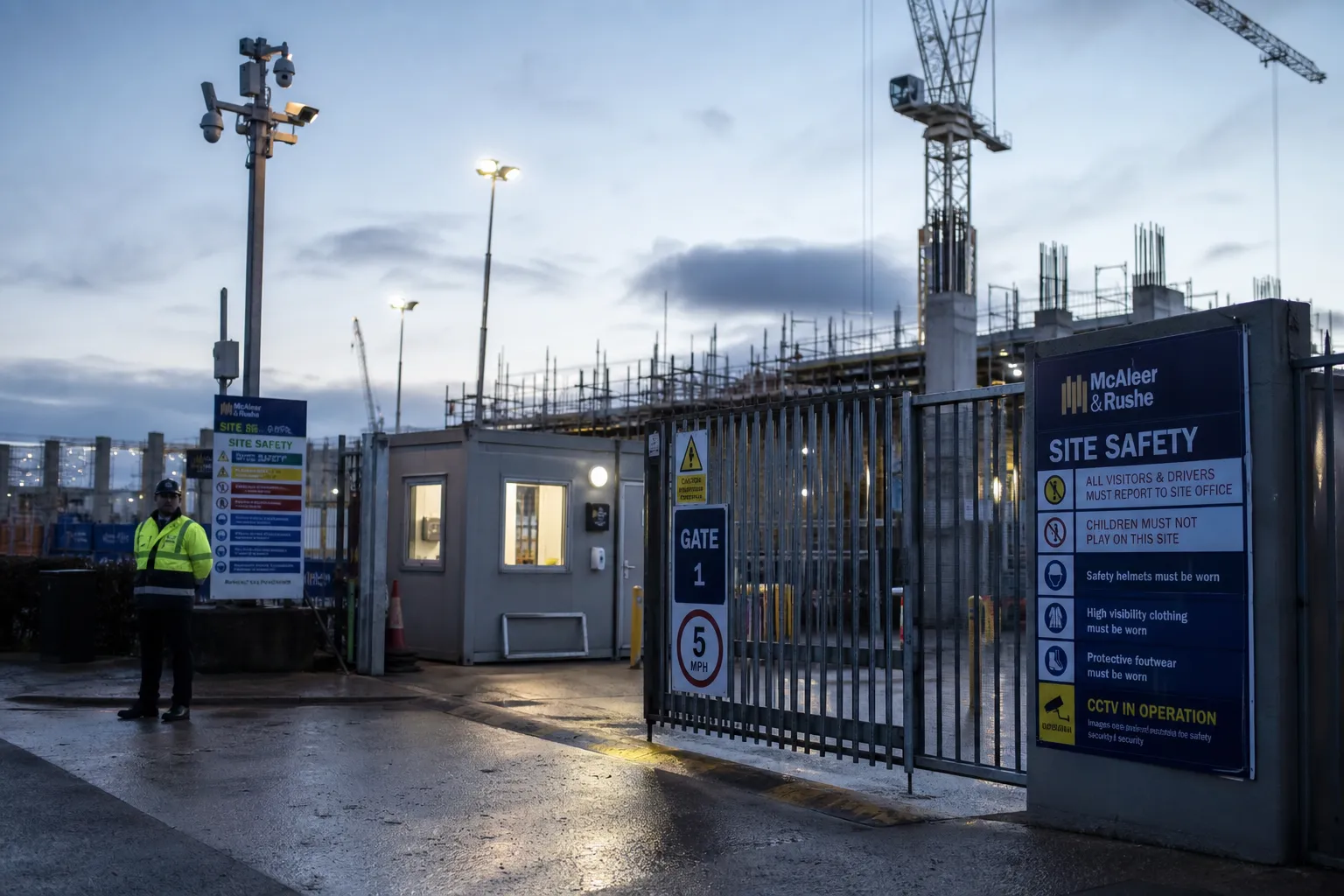
Why Construction Site Security Matters Before an Incident Happens
Security failures on building sites rarely begin with a major breach. More often, they start with small weaknesses: a damaged fence panel, poorly lit material storage, tools left out overnight, shared gate codes, or visitor controls that are not enforced consistently. Once a site appears easy to enter, it becomes more attractive to opportunistic thieves and repeat trespassers.
A well-run construction job site security programme does four things:
Security Objective | Why It Matters |
|---|---|
Prevent unauthorised access | Reduces risk to the public and limits theft, vandalism, and injury |
Protect high-value assets | Safeguards tools, fuel, plant, copper, cabling, and materials |
Support safe operations | Helps supervisors know who is on site and where risks are developing |
Reduce disruption | Prevents delays, investigations, replacement costs, and insurance complications |
At Nexus Security Serviceses Ltd, this is where practical planning matters most. Security should not be bolted on after losses occur. It should be built into site setup, daily routines, and out-of-hours protection from the start.
What Competitor Articles Commonly Get Right
Across the leading articles on this topic, the strongest recurring points are consistent:
construction sites are attractive targets because they hold valuable assets
fencing and controlled access are the first line of defence
CCTV and alarms improve detection outside working hours
visible guards or patrols deter theft and trespass
poor security can affect worker safety and project continuity
Those are all valid. But many articles stop at a basic checklist.
The Gaps Most Construction Security Guides Miss
To make this guide more useful, it is important to go further than generic advice. The biggest content gaps in competitor articles are:
Security must change as the site changes
A cleared plot, groundworks phase, steel frame, fit-out stage, and near-completion phase all have different risks. Static advice is not enough.
Public safety is part of site security
In UK practice, keeping unauthorised people out is not just a theft issue. It is also a duty linked to protecting the public from excavations, vehicles, scaffolding, falling objects, and incomplete structures.
Access control is not just about gates
Good access management includes inductions, visitor logging, zone restrictions, delivery handling, and knowing exactly who remains on site at lock-up.
Lighting and housekeeping are major deterrents
Many incidents happen because offenders can work unseen or because valuable items are left exposed. Visibility and site discipline matter.
Human response still matters
Even the best building site security systems work better when combined with trained personnel who can verify, challenge, record, escort, and respond.
What a Good Construction Site Security Plan Should Include
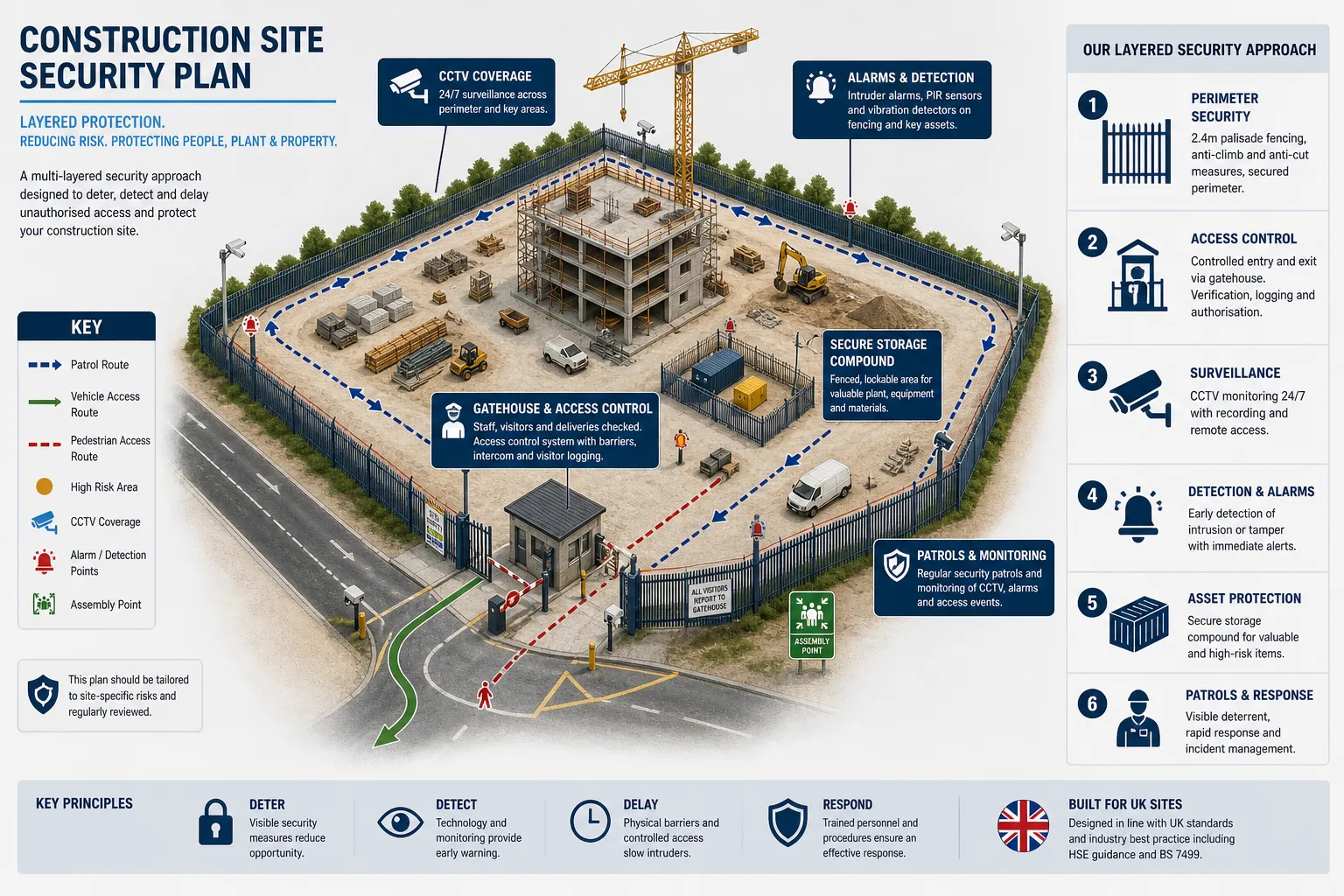
Every site needs a clear, site-specific plan rather than a one-size-fits-all template. This plan should reflect layout, value at risk, public exposure, working hours, contractor numbers, delivery patterns, and local threat levels.
A sensible plan usually includes the following layers:
a defined perimeter
controlled entry and exit
secure storage for tools, fuel, and materials
lighting for key risk areas
CCTV or other monitoring
guard patrols or static guarding where needed
daily opening and closing checks
incident reporting and escalation procedures
If you are comparing delivery models, our guide to construction site security services in the United Kingdom explains how different guarding and monitoring approaches fit different project types.
Perimeter Control: The First Physical Barrier
Perimeter protection is where most effective construction site security measures begin. If the edge of the site is weak, every other control becomes harder to enforce.
What strong perimeter control looks like
A secure perimeter should:
clearly define the boundary
deter casual entry
slow down forced access
support surveillance and patrol routes
protect both the site and surrounding public areas
In practical terms, that usually means stable fencing or hoarding, locked gates, anti-lift measures where appropriate, and frequent inspection for tampering or gaps.
“Typically, in populated areas, this will mean a two-metre high small mesh fence or hoarding around the site.” – HSE
Common perimeter weaknesses
Watch for these recurring failures:
fencing moved for deliveries and not reset
hidden gaps behind cabins or plant
temporary openings created by subcontractors
unsecured pedestrian gates
poor lighting at corners and blind spots
storage placed directly against perimeter lines, helping intruders climb
A perimeter is only effective if it is checked regularly and updated as site layout changes.
Access Management: Knowing Who Is On Site
One of the biggest weaknesses on busy sites is poor access discipline. A gate alone does not equal control. Good access management ensures authorised people can enter efficiently while unauthorised people are challenged or excluded.
Core access controls every site should consider
Access Control Measure | Purpose |
|---|---|
Sign-in and sign-out records | Confirms site occupancy and supports emergency response |
ID badges or passes | Helps identify authorised personnel quickly |
Visitor escort procedures | Prevents uncontrolled movement around hazards and assets |
Delivery booking and verification | Reduces confusion and limits open-gate exposure |
Zoned access restrictions | Keeps contractors within the areas relevant to their work |
Gate supervision | Adds accountability during busy periods |
This is especially important on larger or multi-contractor developments, where dozens of workers and visitors may pass through a site each day. Stronger access control for businesses in the United Kingdom often becomes essential once projects scale beyond a simple single-gate operation.
Who should be challenged?
Anyone without visible authorisation, anyone in the wrong zone, or anyone who cannot explain their purpose on site should be checked immediately. That protects assets, but it also protects safety.
Lighting: A Simple Measure That Has a Big Impact
Lighting is often undervalued in construction site security uk planning, yet it is one of the most cost-effective deterrents available. Criminals prefer dark areas, hidden approaches, and poorly observed compounds.
Where lighting matters most
Prioritise lighting for:
main gates
storage compounds
welfare and cabin areas
plant parking zones
fuel storage
perimeter corners
pedestrian routes
temporary blind spots created by site changes
Motion-activated lighting can work well for low-traffic areas, while constant lighting may be better at main access points and compounds. The right choice depends on the site, neighbouring properties, and surveillance design.
CCTV and Construction Site Security Monitoring
Technology plays an important role in construction site security monitoring, particularly out of hours when the site is quieter and threats are harder to detect early.
What monitoring should cover
A useful CCTV setup should focus on:
gates and entrances
perimeter approaches
plant and equipment areas
fuel and generator storage
container compounds
high-value materials
areas with previous incidents
routes used for likely escape
CCTV is most effective when cameras are placed with purpose, not just installed to create the appearance of coverage. Blind spots, poor angles, and inadequate night visibility reduce value quickly.
Monitoring works best with response
Monitoring without a response plan is limited. The real value comes from linking detection with action, whether that means a keyholder, mobile patrol, site supervisor, or police escalation where appropriate.
Manned Guarding and Mobile Patrols
Visible personnel remain one of the strongest deterrents on high-risk sites. Trained guards do more than watch gates. They verify identities, inspect vulnerable areas, log concerns, support lock-up routines, and provide immediate human judgement when something looks wrong.
When static guarding makes sense
Static or dedicated guarding is particularly useful where:
the site has high-value assets
there is repeated theft or trespass
there are complex access demands
the location has public pressure or protest risk
works continue overnight or around the clock
If you are weighing permanent presence against periodic attendance, our comparison of static vs mobile security guards in the UK helps clarify where each option delivers the most value.
When mobile patrols are effective
Mobile patrols can work very well for smaller, lower-footfall, or shorter-term projects. They are also useful where random attendance adds unpredictability, especially overnight or at weekends.
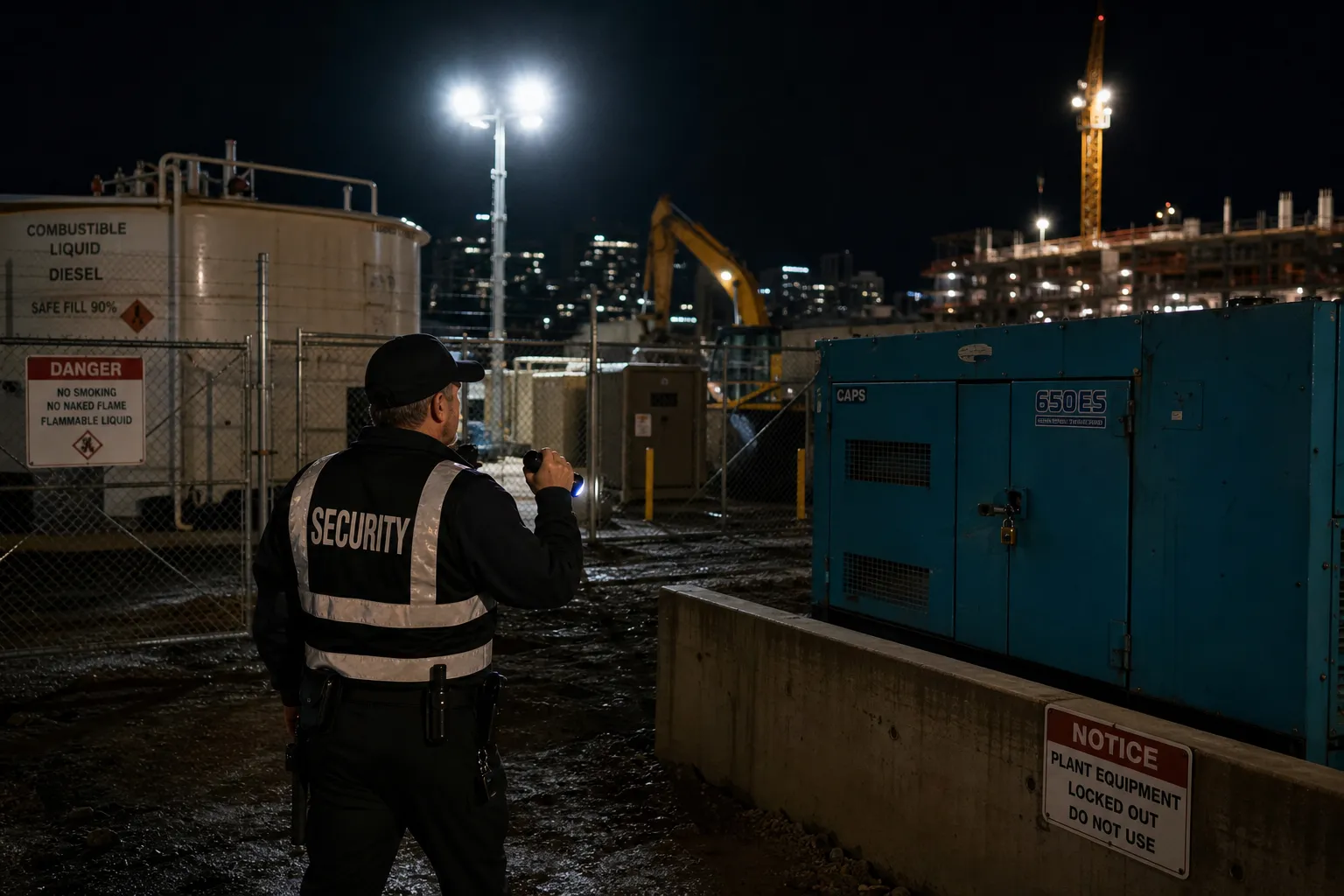
At Nexus Security Serviceses Ltd, this flexibility is important. Some sites need full-time guarding, others need scheduled patrols, alarm response, or a mixed model that changes as the build progresses.
Theft Prevention: What Actually Gets Stolen and Why
Construction site theft is not random. Offenders tend to target items that are portable, high value, easy to resell, and simple to remove quickly.
Common theft targets
power tools
copper cable and pipework
fuel
generators
plant attachments
welfare equipment
pallets of valuable materials
keys left in machinery
Practical theft prevention steps
Risk Area | Prevention Step |
|---|---|
Tools | Lock in secure containers and avoid leaving them in open work areas |
Fuel | Use protected storage, reduce excess on site, and monitor usage patterns |
Plant | Remove keys, immobilise where possible, and park defensively |
Materials | Deliver closer to installation time and store away from the perimeter |
Cabins and containers | Use quality locks and limit who holds access credentials |
Repeated theft attempts | Review camera placement, patrol timing, and local escalation routes |
“The law says you must conduct your business without putting members of the public at risk.” – HSE
That principle matters because theft prevention and public protection often overlap. An intruder who enters to steal can still suffer injury, create danger, or cause serious disruption.
For a deeper look at loss prevention tactics, see our guide on combatting theft at construction sites in the United Kingdom.
Public Safety Is a Construction Security Issue
This is one of the most overlooked parts of construction site security requirements. Keeping the public out is not only about protecting site assets. It is about preventing foreseeable harm.
Key risks to people outside or near the site
falling objects beyond the boundary
vehicle movements at entrances
open excavations or manholes
unsecured scaffolding or access points
loose or poorly stacked materials
hazardous substances
incomplete structures and unstable areas
Where sites sit near homes, schools, footpaths, roads, or active premises, these risks become more sensitive. Children are especially drawn to sites that appear open or easy to explore. End-of-day security checks should always reflect that reality.
Who Is Responsible for Construction Site Security?
Responsibility depends on the project structure, but in practice security is shared across several roles.
Typical responsibilities on UK projects
Role | Security Responsibility |
|---|---|
Client | Provides pre-construction information including boundaries, access context, and adjacent land use |
Principal contractor | Takes the lead in managing the site, including reasonable steps to prevent unauthorised access |
Site manager | Oversees day-to-day implementation, checks, reporting, and coordination |
Contractors and subcontractors | Follow site rules, secure work areas, and report issues |
Security provider | Delivers guarding, patrols, access control, incident response, and site support as agreed |
The key is clarity. If everyone assumes someone else is managing a risk, that risk is usually left exposed.
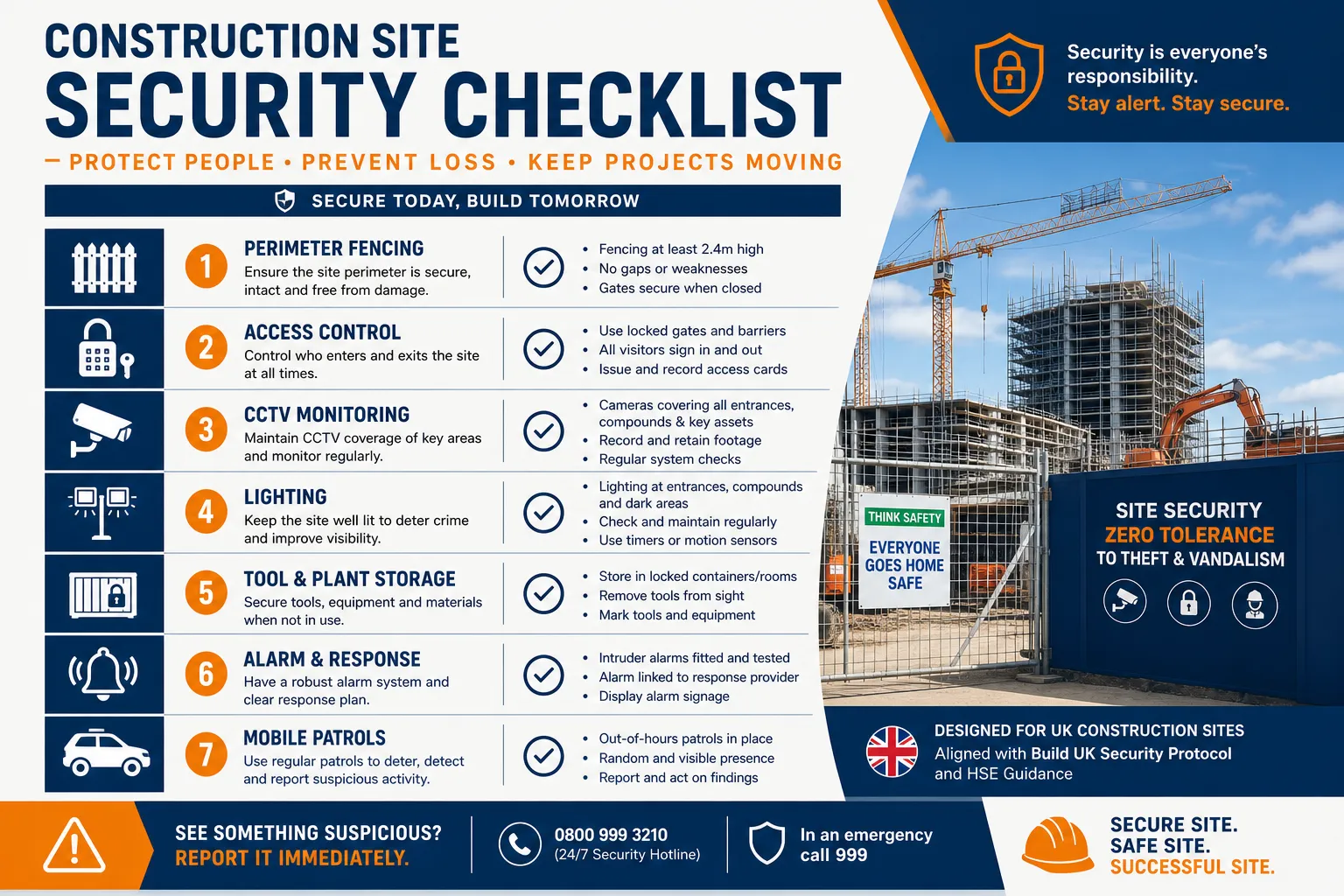
A Practical Construction Site Security Checklist
A useful construction site security checklist should be simple enough to use daily and detailed enough to catch avoidable problems.
Start-of-day checks
inspect fencing, gates, and locks
confirm cameras, alarms, and lighting are working
review overnight incident logs
verify compounds, containers, and plant status
ensure access controls are active before trades arrive
brief supervisors on any new risks or boundary changes
End-of-day checks
lock gates, compounds, cabins, and containers
remove or secure ladders and temporary access equipment
isolate and secure plant where possible
store tools and materials properly
clear perimeter-adjacent clutter that could aid entry
confirm all visitors and contractors have signed out
arm alarms and verify monitoring status
report defects immediately rather than waiting until morning
How Security Changes Across the Build Programme
A more advanced security view recognises that the site evolves. Different phases create different vulnerabilities.
Early phase: groundworks and setup
Main concerns include open boundaries, plant theft, fuel theft, and public access to excavations.
Structural phase
Risks often shift toward delivery traffic, scaffold access, wider material exposure, and multiple contractor movements.
Fit-out and finishing phase
Portable tools, internal finishes, copper, mechanical and electrical components, and repeated access by specialist trades become bigger issues.
Near completion
Sites may look more finished and therefore easier for outsiders to mistake as accessible. Security still matters until handover is complete and responsibilities are formally transferred.
Signs Your Current Site Security Is Too Weak
If any of the following are true, your arrangements may need improvement:
repeated fence damage goes unresolved
people can enter without being challenged
deliveries regularly force gates open for long periods
materials are stored against the perimeter
dark areas remain unlit overnight
site occupancy records are unreliable
CCTV exists but nobody reviews alerts properly
keys, fuel, or portable tools are too easy to access
previous incidents have not led to procedure changes
These are often the warning signs that appear before more serious loss or disruption.
Choosing the Right Security Support for a Site
Not every project needs the same level of cover. The right security model depends on:
site value and risk profile
local crime and trespass exposure
size and complexity of the perimeter
working hours and weekend shutdowns
amount of public interface
insurance expectations
number of contractors and deliveries
whether there is a history of incidents
For some sites, strong procedures and periodic patrols are enough. For others, full construction site security services with dedicated guards, access control, and integrated response are the safer option.
Nexus Security Serviceses Ltd supports UK sites with practical, scalable protection built around real operating conditions. That includes professional and reliable security personnel, stronger access control, theft and vandalism deterrence, mobile patrol flexibility, and tailored support for construction and vacant property risk reduction.
Final Word
The question is not whether a site has security. The question is whether the security in place actually matches the risks on the ground.
Effective construction site security should include a secure perimeter, managed access, clear public protection measures, reliable lighting, sensible storage discipline, responsive monitoring, and trained personnel where needed. When those layers work together, sites are safer, losses are lower, and project teams can stay focused on delivery instead of reacting to avoidable incidents.
If you need dependable, UK-focused support for building site security, Nexus Security Serviceses Ltd can help assess your risks and shape a practical solution around your site, schedule, and operating pressures. The right system is not the most complicated one. It is the one that protects the site consistently, every day and every night.
FAQ
What security is needed on a construction site?
A construction site usually needs secure perimeter fencing, controlled access, lighting, monitored CCTV, secure storage, and regular guard patrols or checks. The right mix depends on the site’s size, location, public exposure, and the value of plant, tools, and materials on site.
What are the HSE requirements for construction site security?
HSE guidance makes clear that sites need defined boundaries and steps to exclude unauthorised people. Contractors must also manage risks to the public, including hazards such as falling objects, excavations, vehicles, and unsafe access points.
Who is responsible for construction site security?
Responsibility is shared, but the principal contractor usually leads on site control and preventing unauthorised access. Clients, site managers, subcontractors, and any appointed security provider also have important roles in keeping the site secure and safe.
What PPE do you need on a construction site?
The PPE needed depends on the work, but common essentials include hard hats, high-visibility clothing, safety boots, gloves, eye protection, and hearing protection. Some tasks may also require respiratory protection, harnesses, or face protection based on the risk assessment.
What are the 7 basic PPE?
The seven basic types commonly referenced are head protection, eye protection, hearing protection, hand protection, foot protection, respiratory protection, and high-visibility or body protection. Exact requirements should always follow the site risk assessment and task-specific hazards.
What is the 20/20 rule in construction?
The term can mean different things depending on the company or context, so it is not a universal UK construction security rule. Some firms use it informally for visibility, observation, or break guidance, but site teams should always follow their own documented procedures and formal safety rules instead.


0 Comments