

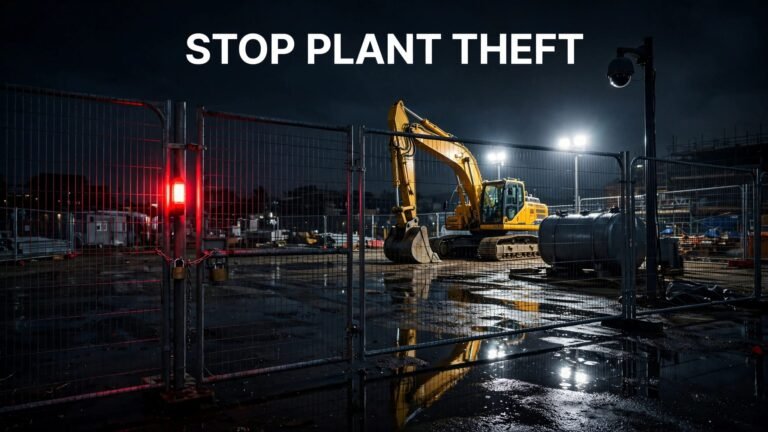
A stolen excavator, broken gate or overnight fire can stop a programme before anyone has poured the next slab. Theft and vandalism are among the risks behind such disruption. The replacement cost matters, but so do missed deliveries, hired-in replacements, insurance excesses and time spent putting the site back in order. An incident may also affect future insurance premiums.
Proper construction site security is not a camera on a pole and a padlock on the gate. It is a set of physical, technological and procedural controls. These site security measures support construction site theft prevention, while controls for fire and vandalism should complement, rather than replace, measures against theft, trespass and arson.
Start with the site as it is today, then change the controls as the works change.
Key takeaways
- Treat plant, tool and fuel theft, trespass, vandalism and arson as separate risks. Each needs controls suited to the threat.
- Secure the boundary first, then protect high-value items inside it. A locked tool vault means little if offenders can drive a trailer onto site.
- CCTV only helps when someone receives and acts on alerts. Unmonitored footage often becomes evidence after a loss.
- Keep clear records of who has access, what plant is on site and who holds keys, fobs and alarm codes.
- Review security at each project stage, particularly before groundworks, major deliveries, shutdowns and handover.
- Preserve evidence after an incident. A rushed clean-up can destroy information needed by police, insurers or investigators.
Construction site security starts with a risk assessment
A decent risk assessment is practical. It should cover construction site crime, including opportunistic incidents and organised plant theft. It identifies what could be taken, damaged or entered. It also records when the site is exposed and how someone would get in or out.
Separate opportunistic theft from organised crime
Opportunistic offenders look for an open gate, unsecured fuel bowser, loose tools or a scaffold that gives easy access. Organised plant theft is different. It may involve reconnaissance, false collection paperwork, cloned vehicles, key theft or equipment moved quickly onto a low-loader.
Record each item by make, model, serial number, value, keeper and usual parking location, with clear photographs. These details support both prevention and recovery.
Include generators, attachments, copper, fuel, temporary power units and materials that are easy to resell. Then identify the weak points: blind corners, pedestrian gaps, delivery routes and neighbouring land.
Published estimates vary, but the linked Allianz/CESAR plant-theft leaflet cites a UK plant theft estimate of £1 million per week. This is a published estimate from the leaflet, not an independently verified current figure. The operational cost is often worse than the invoice. One missing machine can hold up several trades.
Map risk by time as well as place
A site can be well managed at 10am and exposed at 7pm. Public exposure, reduced supervision and anti-social behaviour can change the risk. Consider weekends, bank holidays, night shifts, delivery windows and periods when the principal contractor changes.
The HSE states that sites need defined access boundaries and measures to exclude unauthorised people. Its guidance on protecting the public is relevant here: preventing trespass is a safety duty as well as a loss-prevention measure.
The most useful security plan records who responds to an alarm at 2am, what they do first and how quickly they attend.
Build a boundary that is difficult to defeat
Perimeter security should make entry visible, slow and inconvenient. It should also direct legitimate workers and deliveries through one controlled point, while supporting trespass prevention.
Use fencing, gates and lighting together
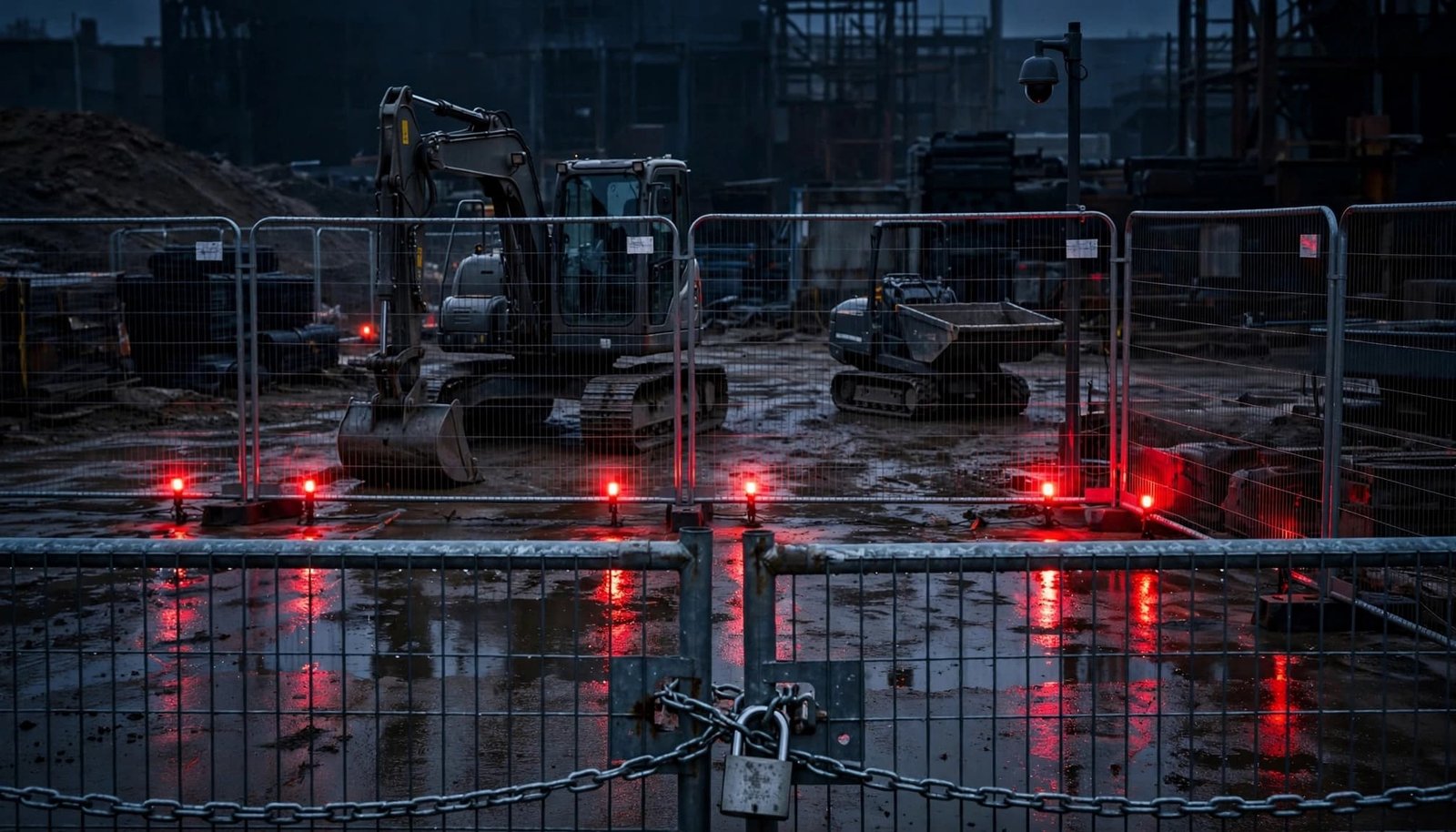
Choose fencing suited to the site, its surroundings and the expected duration of the works. This may include temporary fencing. Inspect all fencing daily for lifted panels, damaged ties, gaps beneath gates and materials stacked as climbing aids.
Gates need robust locking, clear ownership and a closing routine. Keep external access routes free of loose materials that could be used to force entry. Motion-activated security lighting around gates, plant compounds and storage areas removes cover without lighting every corner of the site all night.
Secured by Design is the police security initiative focused on reducing crime. Its principles provide a sensible test: can the boundary deter, delay and support a prompt response? Use Secured by Design as a practical benchmark for best-practice crime prevention, not a legal requirement for construction sites.
Keep emergency escape routes usable
Security measures must not trap people on site. Gates, doors and scaffold access controls need a clear emergency arrangement, understood by workers and visitors.
Do not leave ladders, mobile towers or stored materials where they create a ready-made route over the fence or onto scaffolding. At the same time, do not remove or lock down access in a way that prevents safe evacuation. Legal health and safety duties, including public protection, still apply. Safety and security should be planned together, not passed between separate contractors; security controls must not compromise evacuation or other legal safety arrangements.
Protect plant, tools and fuel after every shift
The end-of-shift routine is ordinary work. That’s why it gets missed when a programme is tight. Make it a signed responsibility, with a named person checking the compound before the final gate is locked.
Mark machinery so it can be identified
Record serial numbers and photograph plant and heavy vehicles, including excavators, dumpers, generators, attachments and distinctive markings. Fit tracking devices where risk and asset value justify them. Equipment tracking supports identification and recovery, but doesn’t replace immobilisation, secure parking or controlled keys.
The CESAR construction registration system combines Datatag identification, visible and covert markings, and a central registration database. It can support identification and recovery after theft, but registration isn’t a substitute for physical security. CESAR says more than 650,000 machines are registered and protected, but registration still needs to sit alongside physical controls.
Ask plant suppliers about immobilisers and keys. Remove keys from unattended equipment, control spare keys and change codes when a key holder leaves the project.
Make removal slower and noisier
Park plant in a compact, well-lit compound, with larger machines positioned to obstruct easy removal of smaller items. This is an extra layer, not a substitute for a secure perimeter. Secure buckets, breakers and other detachable attachments separately. Where practical, lock gates or barriers within the main site, so a breached perimeter isn’t the end of the job.
Use steel tool vaults for portable tools and secure fuel in protected, access-controlled storage. Don’t leave delivery tickets, machine keys or plant documents in cabins or vehicles. They can help an offender make a theft look legitimate.
Use technology for detection, not decoration
Technology should answer three questions: who entered, what happened and who was told. A CCTV monitoring system should support detection and response, while cameras, alarms, lighting and access records work together as connected security systems. If it cannot do that, it’s decorative security.
Put monitored CCTV where it matters
Security cameras should cover entry points, plant compounds, fuel stores and routes used to remove assets. Construction site CCTV should be verified as the site changes. Test security cameras in darkness, poor weather and changing site conditions, because a daytime survey can hide an obvious night-time failure.
Monitored CCTV, verified security alarms and motion detection can help a control room filter false alerts. Remote monitoring can then help verify an alert and contact a keyholder, patrol or emergency service where appropriate. Security alarms should be tested regularly, with clear fault reporting and escalation procedures. AI video analytics can distinguish people and vehicles from general movement, but detection zones need careful setup and testing to reduce false alarms from trees, site flags and passing traffic.

Control access with records, not assumptions
Issue named fobs, cards or codes. Log visitors, delivery drivers and subcontractors, then remove access promptly when work finishes. Cloud-based access control can make this easier across several projects, provided permissions are reviewed regularly to prevent unauthorized access rather than left open for convenience.
Temporary codes should not become permanent codes. A weekly access control report will often show former workers, expired subcontractors or duplicate credentials before they become a problem.
Treat CCTV footage as personal data
CCTV is not exempt from privacy rules because a site is temporary. Privacy compliance is a legal requirement, but the precise mix of monitoring technology is a risk-based best-practice decision. The ICO says organisations should have a lawful basis, restrict access to recordings and consider a Data Protection Impact Assessment where surveillance creates a high risk to people. Follow the ICO’s CCTV requirements on signage, retention, viewing permissions and documented purpose.
Audio recording is more intrusive and should normally be switched off. Keep footage only for as long as there is a genuine need, then delete it securely.
Decide when security guards are justified
Security guarding services are most useful when duties and authority to act are clear. A static guard can manage a gate, challenge unauthorised entry, check deliveries and complete patrol records. A mobile patrol may suit a smaller or lower-risk site needing unpredictable visits and alarm response.
Set duties that can be checked
Write post orders for opening and closing, visitor checks, plant compound inspections, fire checks, key control, escalation and incident reporting. Guards should understand the safety protocols, lone-working limitations, emergency contacts and escalation arrangements.
A guard is not a substitute for fencing, alarms or access control, and has no police powers. Nor should a lone guard be asked to confront a group entering a large site.
Check the provider before appointment
Before appointing security guarding services, check what the security company provides and how it supervises its team. Where licensable security activity is provided, verify individual licences through the SIA Register of Licence Holders. Request records of security personnel training and supervision, plus insurance details, response and escalation procedures, and incident reports; treat these as due diligence and best practice, not universal legal requirements.
SafeContractor and ISO 9001 can show that a supplier has been assessed against wider management standards. They’re useful due-diligence checks, not a guarantee that the guard on your gate understands your project.
Change controls as the project moves
The security plan needs to follow the works, but changing access arrangements don’t automatically transfer legal or contractual responsibility. Review controls against the risk assessment at mobilisation, structural works, fit-out, shutdowns and handover. A vacant plot and a fit-out project do not have the same risks.
| Project stage | Main exposure | Practical priority |
|---|---|---|
| Pre-start and groundworks | Open boundaries, plant deliveries, public access | Establish fencing, gates, lighting and a delivery process before valuables arrive |
| Structural works | High-value plant, tools, scaffold and materials | Tighten access records, secure compounds and check climbing routes daily |
| Fit-out and completion | Copper, finishes, vacant areas and changing trades | Protect stores, cancel old access rights and increase checks during quiet periods |
During groundworks, delivery drivers and plant operators may need access before the normal workforce arrives. Use pre-agreed booking slots and confirm collection details before releasing equipment.
During structural works, inspect scaffold access at the end of each shift. During fit-out, reduce the number of people who can enter stores, because small high-value items disappear more easily than an excavator.
At shutdowns, confirm who is responsible for checks, alarms and emergency contacts. Before handover, remove temporary codes, recover keys and fobs, and confirm responsibility for vacant-period security. The final weeks are often busy, fragmented and full of assumptions.
A concise overnight prevention checklist
Before the last person leaves, confirm that:
- Perimeter fencing, gates and internal compounds are intact and locked.
- Plant is parked in its agreed location, immobilised and free of keys.
- Tools, attachments, fuel and portable equipment are secured in approved storage.
- Security cameras, security alarms and lighting are working, with faults reported immediately.
- Visitor records, access credentials and delivery documents have been checked.
- Waste, ladders and loose materials don’t create a route over the boundary.
- The call-out list is current, including keyholders, the security provider and project leads.
- Unusual activity, damaged fencing and suspicious vehicles have been logged.
Respond properly when an incident occurs
A rushed response can make a bad situation worse. Put health and safety first, and don’t enter a dangerous area merely to protect evidence.
Preserve evidence and report the facts
If a crime is in progress or there is immediate danger, call 999. Don’t confront intruders or enter an area where fire, damaged electrics or unsafe plant may be present.
Restrict unnecessary access to the scene and preserve evidence before repairs, where it is safe to do so. Save CCTV clips, event records from security alarms and access-control logs before automatic deletion. Photograph criminal damage and record dates, times, vehicle details and witness names. Urgent steps to make the site safe and prevent further access can still be taken. Report the matter to police, notify insurers and provide the crime reference number to plant owners or hire companies.
Recover the site without repeating the failure
Repair the boundary promptly, but record its original condition first. Reset access codes, cancel missing fobs and replace compromised keys. Review other credentials and check whether the offender exploited a boundary blind spot, delivery process or storage weakness.
Hold a short review with the site manager, security provider and affected subcontractors. Ask what was stolen and how access was gained. Check why the control failed, whether response arrangements worked and what must change before the next shift.
Frequently asked questions
Is CCTV enough for construction site security?
No. Security cameras can deter, detect and provide evidence, but they can’t physically stop entry or secure plant. They work best with fencing, lighting, alarms, access controls and a defined human response.
Do construction sites need a static guard?
Not every site does. A static guard is usually justified by site risk, busy gate activity, valuable plant, repeated trespass, public exposure or the need for continuous presence. A mobile patrol may suit lower-risk sites where regular checks and a defined response are enough.
What should happen after plant theft?
Protect people first, then preserve footage and access logs. Contact the police and insurer, notify the plant owner or hire company, and circulate accurate machine details. Provide serial numbers and registration details without delay.
A secure site is a managed site
The strongest controls are unglamorous: a checked fence, a reconciled key list, a locked compound and security cameras with alerts or footage someone monitors and acts upon. They make theft harder, protect the public and give the project team a clear record when something goes wrong.
Construction site security works when each layer supports the next, with access and keys accounted for. Build the routine early, inspect it often and review it whenever the project changes.


0 Comments