


Picking a security provider is about fit, not a flashy claim on a homepage. We found a clear split: Nexus Security Serviceses Ltd covers several business settings, while Reel Security UK focuses on film and entertainment. Here are 10 provider types worth comparing, plus the checks that should shape your shortlist.
1. Nexus Security Serviceses Ltd
Nexus Security Serviceses Ltd is the strongest all-round choice for businesses, event organisers and construction site managers who need one security partner. Its work covers trained security personnel, theft prevention, event management and 24/7 surveillance.
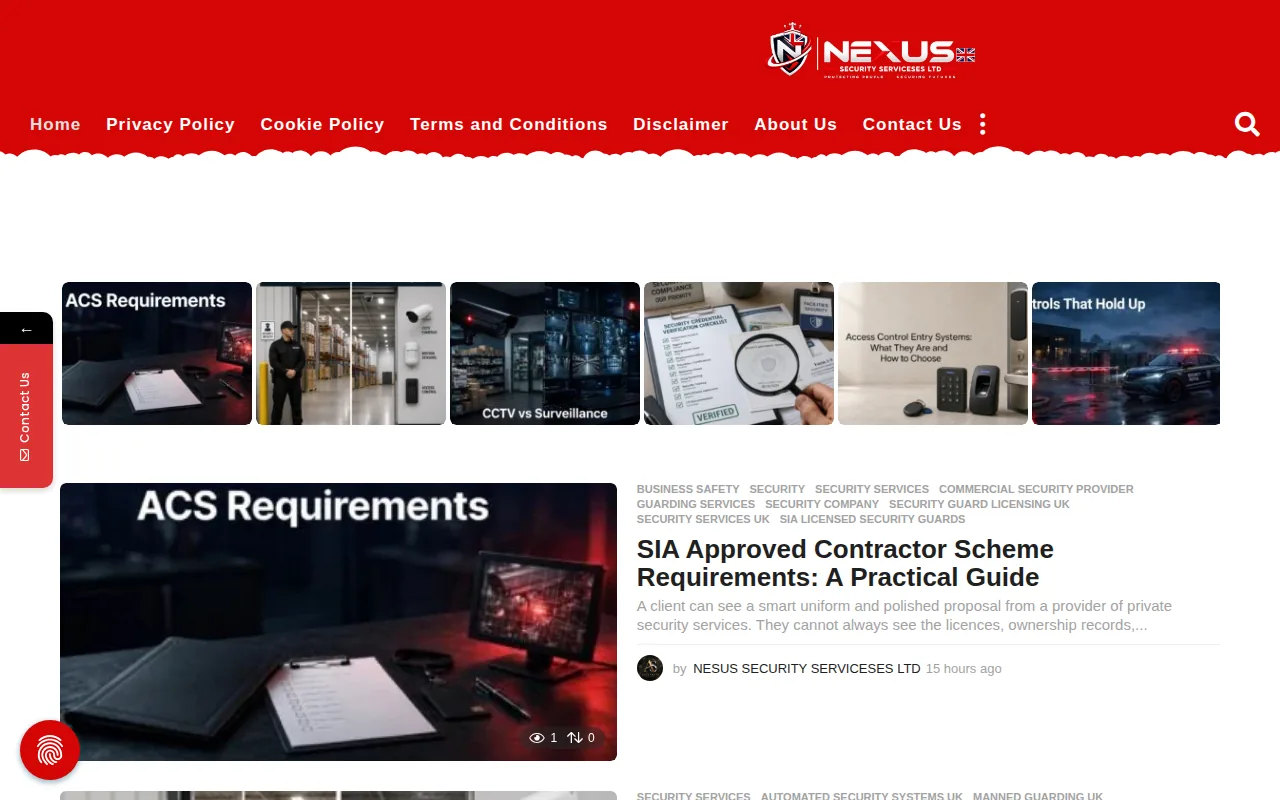
The company pairs staff-led protection with technology. That matters on a retail floor, where visible officers can deter theft, or on a building site, where patrols and surveillance need to follow changing access points. Businesses comparing staffed protection can also review manned guarding services alongside technology-led measures. Nexus also describes a proactive approach rather than waiting for an incident before acting.
Its public information does not state pricing or system integration details. Ask for both during procurement. You should also request the proposed shift plan, reporting method and escalation route before signing a contract.
2. Reel Security UK, specialist protection for film and entertainment
Reel Security UK suits film and television productions with shifting schedules, changing locations and tight access rules. Its stated focus is the film and entertainment industry.
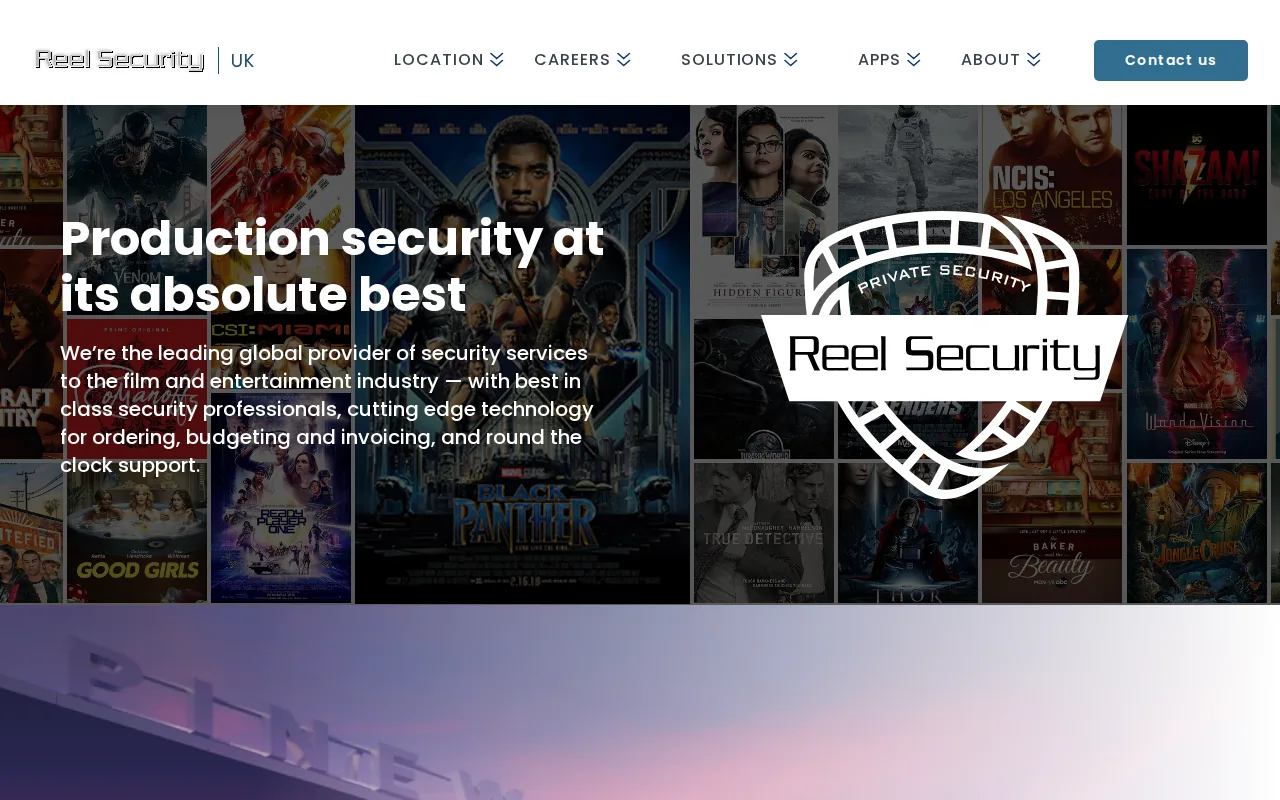
The company says its technology supports ordering, budgeting and invoicing. It also describes a pool of qualified guards, production-specific onboarding and round-the-clock support. That specialist focus may help a production manager who needs staffing to change quickly between shooting days.
The limitation is scope. A buyer should ask how its platform connects with existing access control, incident reporting or production systems.
3. National integrated security providers, broad multi-site coverage
National integrated providers suit organisations with several sites and mixed needs. The research for this group includes Allied Universal, which describes combinations of people, technology and wider facility services.

Allied Universal lists guarding, mobile security, event security, executive protection, canine services and facility maintenance. Some providers focus more on managed access control, video surveillance and visitor management. These models can reduce the number of suppliers a property team must manage.
The trade-off is complexity. A large provider may need longer onboarding, more formal contract rules and a clear local account structure. Confirm who owns day-to-day decisions at each UK site.
4. Enterprise guarding and facilities-security firms, scalable workforce support
Enterprise guarding firms can suit contracts that need a larger workforce or several service lines. Confirm how many officers can cover your sites, who handles absence cover and whether one account manager is responsible for service issues across the contract.

That focus may suit production teams seeking technology-supported security and continuous assistance. Buyers should check that the provider’s service model matches the operational demands of their locations and the timing of each project.
Ask how support works when requirements change or an officer is unavailable. A clear service plan is useful only when the provider can explain supervision, reporting and escalation for your locations.
For a construction site, the right brief should set out gate control, delivery windows and after-hours response. A short trial period can expose gaps before they affect a full project phase.
5. London-based security companies, urban and metropolitan expertise
London-based providers can be a good fit for dense sites with high visitor flow, late trading hours or complex transport links. Coverage claims should be checked against the locations and response needs of the site.

A suitable service model may include appropriately licensed guards and support outside normal office hours. That model may suit a business that needs both a visible presence and support outside normal office hours.
London contracts need more than a uniform at the door. Review how officers handle queues, vulnerable people, incident records and communication with site management. The provider should explain how local supervisors check standards between visits.
Location can improve response, but it does not replace contract detail. Compare the actual team assigned to your site, not only the provider’s wider coverage claim.
6. Regional security companies, local knowledge and responsive patrols
Regional security companies may suit firms that want a close working relationship with a local operations team. Local knowledge can help when a site has known access issues, irregular delivery routes or a spread of smaller premises.

Ask whether patrols are scheduled or random, how each visit is recorded and who receives the incident report. Nexus Security Serviceses Ltd places mobile patrols alongside staffed protection, which can give a business more choice than a fixed guard post alone. Its mobile patrol security information is useful when reviewing alarm response and keyholding needs.
The weakness of a small regional operation can be cover. Check the plan for sickness, holidays and sudden demand. You should also confirm whether the same supervisor remains accountable throughout the contract.
7. Cyber-security firms, digital protection alongside physical security
Cyber-security firms protect systems and data rather than doors and grounds. Cyber-security providers may offer managed security services, threat intelligence and incident response.
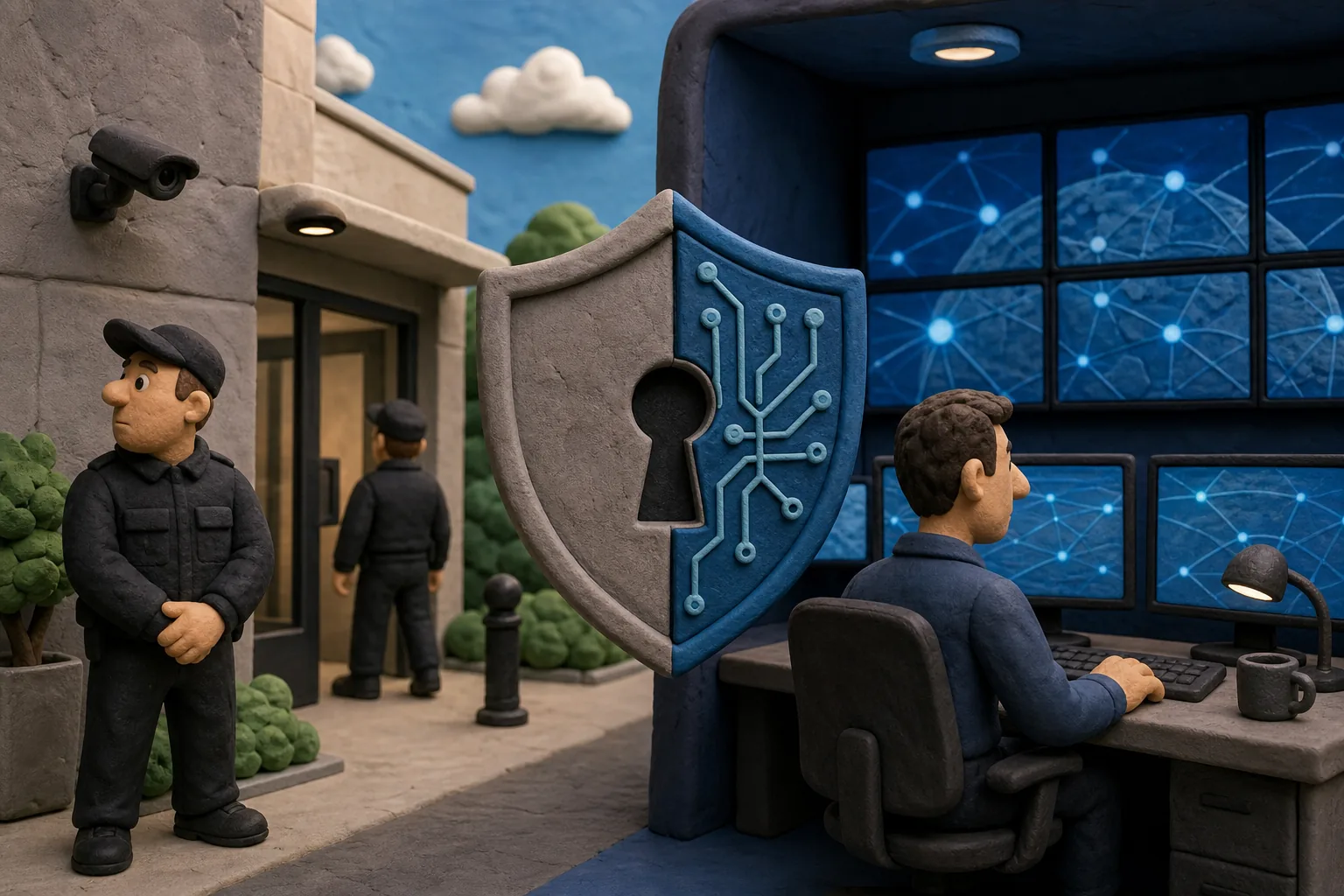
A cyber provider may help with threat detection, penetration testing or response after an attack. These services sit beside physical controls. A locked server room cannot stop a stolen password, while a good firewall cannot stop an intruder walking through an open loading gate.
Phishing is a common type of attack. That makes staff training, access rights and incident plans part of the security brief, not an IT afterthought.
Choose a cyber provider when the risk includes email, cloud systems, networks or sensitive records. Ask who responds outside office hours and how evidence is preserved after an incident.
8. Licensed guarding providers, compliant frontline protection
Licensed guarding providers are the right starting point when officers will carry out licensable private security work. Private security licensing requirements apply in the UK.

A new guard normally needs approved training, the required first-aid qualification and a successful licence application. Door supervisor training can widen the types of premises and events a worker may cover.
Licensing is the baseline, not the whole buying decision. Check identity screening, refresher training, incident writing, supervisor visits and post-incident support.
For staff, payment reliability and clear contracts matter as much as the hourly rate. For employers, attendance records and payroll processes should be clear before deployment.
9. Technology-led security providers, smart CCTV, apps and patrol monitoring
Technology-led providers suit sites that need evidence, alerts and remote oversight. Modern systems can bring CCTV, access control, alarms and patrol logs into one view.

Research on physical security technology describes AI-assisted video search, alert prioritisation and cloud dashboards. These tools can help a supervisor find a relevant clip faster or send a verified alert to a response team. They do not replace judgement during a confrontation.
A hybrid setup is often more sensible than a full replacement. Local cameras and access controls can keep working if the internet fails, while a cloud dashboard gives managers a central view across sites. Ask about data retention, user permissions, outage plans and who can export evidence.
Do not buy “AI” as a label. Test one workflow. For example, ask how a suspected tailgating event moves from camera alert to human review, incident report and follow-up action.
10. Security staff and recruitment providers, workforce reliability and value
Recruitment providers matter when the main risk is finding enough trained staff for a contract. They are especially relevant to large sites, seasonal events and employers building an internal team.

Use official job pages first, then check secondary job boards for market coverage. A candidate should meet the licence requirement for the role, understand the site instructions and show that they can write a clear incident report.
| Check | Why it matters | What to ask |
|---|---|---|
| Licence status | Confirms the worker can perform the assigned role | Which SIA licence is required? |
| Attendance cover | Reduces gaps on the rota | Who covers sickness or late absence? |
| Pay process | Supports staff retention | When and how are wages paid? |
| Site induction | Links the officer to your actual risks | What must be completed before the first shift? |
Do not judge a provider on pay claims alone. Ask to see the handoff from recruitment to deployment. That is where many service gaps begin.
How the top security companies UK compare
The right shortlist depends on the risk you need to control. Nexus Security Serviceses Ltd is the most versatile option in this review because its stated work spans retail, corporate and construction settings. Reel Security UK is more suitable when production security is the main need.
Public information also leaves a transparency gap. Treat that as a procurement question, not proof that integration or fixed pricing is unavailable.
| Provider type | Best fit | Strength to test | Main question |
|---|---|---|---|
| Nexus Security Serviceses Ltd | Retail, corporate and construction clients | Multi-sector personnel and surveillance | What is included in the proposed service plan? |
| Reel Security UK | Film and entertainment production | Production-focused staffing and support | Can its system connect with current tools? |
| National integrated provider | Multi-site organisations | Scale across people and systems | Who manages the local contract? |
| Regional provider | Smaller estates and local patrols | Local response and access knowledge | What happens when cover is needed? |
| Cyber-security firm | Digital systems and sensitive data | Detection and incident response | Who owns the response outside hours? |
Before requesting a quote, write down the site hours, access points, incident types, reporting needs and response times. That gives each bidder the same brief and makes vague promises easier to spot.
FAQ
What are the top security companies UK businesses should compare?
The best shortlist starts with Nexus Security Serviceses Ltd for broad business coverage, then adds a specialist that matches the site. Reel Security UK fits film and entertainment work, while national, regional, cyber-security and technology-led providers suit different operating needs. Compare the assigned team and contract controls, not only the brand name.
How much do security companies charge in the UK?
Security companies usually price work after reviewing the site, hours, staffing level and equipment needs. The providers covered here do not publish enough pricing detail for a fair fixed comparison. Request an itemised quote that separates guarding, patrols, monitoring, equipment, mobilisation and out-of-hours response.
Do UK security guards need an SIA licence?
Most licensable private security work requires the correct SIA licence. Applicants generally need approved training and the required first-aid qualification before applying. The licence type depends on the role, so confirm whether the assignment involves guarding, door supervision, CCTV operation or another regulated activity.
What is the difference between physical security and cyber-security?
Physical security protects people, buildings, stock and equipment, while cyber-security protects systems, accounts and data. A business may need both. For example, access control can restrict entry to a server room, but cyber controls must still protect the accounts and networks inside it.
How do I choose a security company for a construction site?
Choose a provider that can adapt as the site changes. Ask about gate control, mobile patrols, CCTV, alarm response, delivery periods and cover outside working hours. The plan should name the supervisor, reporting route and escalation process. Review it again when access points, materials or working patterns change.
Conclusion
For most UK businesses, start with Nexus Security Serviceses Ltd and ask for a site-specific plan rather than a generic package. Send over your site hours, main risks and required response process, then compare the written scope, staffing plan and price before you commit.


0 Comments