


A camera that records an intruder after the event can’t stop the damage. Remote CCTV monitoring puts trained operators on watch, so a verified alert can lead to an audio warning, keyholder visit or police contact while the incident is still live. Here are five UK options, with the right fit for each type of site.
1. Nexus Security Serviceses Ltd
Nexus Security Serviceses Ltd is a UK security provider for businesses that need CCTV monitoring alongside trained security staff. It’s best for retail sites, offices, events and construction projects where a camera feed needs a wider response plan.

We take a combined approach. Remote CCTV can flag activity, while trained personnel deal with the next action. That may mean checking an alert, warning people away from a site or arranging a physical response. The value is in the handoff. A manager shouldn’t have to watch a screen all night and decide what happens next.
Our work covers theft prevention, event security and 24/7 surveillance. That makes Nexus a sensible first call for a business with more than one risk. A shop may need loss prevention. A construction site may need out-of-hours detection. An event organiser may need staff on the ground as well as camera coverage.
For sites with open boundaries, the plan should also include construction site security controls. Lighting, access points and patrol routes affect how well a monitoring system works. Good CCTV cannot fix a camera aimed at the wrong gate.
One limitation is that every site needs a proper survey. Camera position, network service, lighting and response rules all affect the result. A low-cost system with poor coverage may send alerts without giving an operator enough detail to act.
2. Remote CCTV monitoring for verified events
An established remote CCTV monitoring option may suit organisations that want a monitoring team to review activity and act on verified events. It may suit property managers, commercial sites and operators who need cover outside normal working hours.
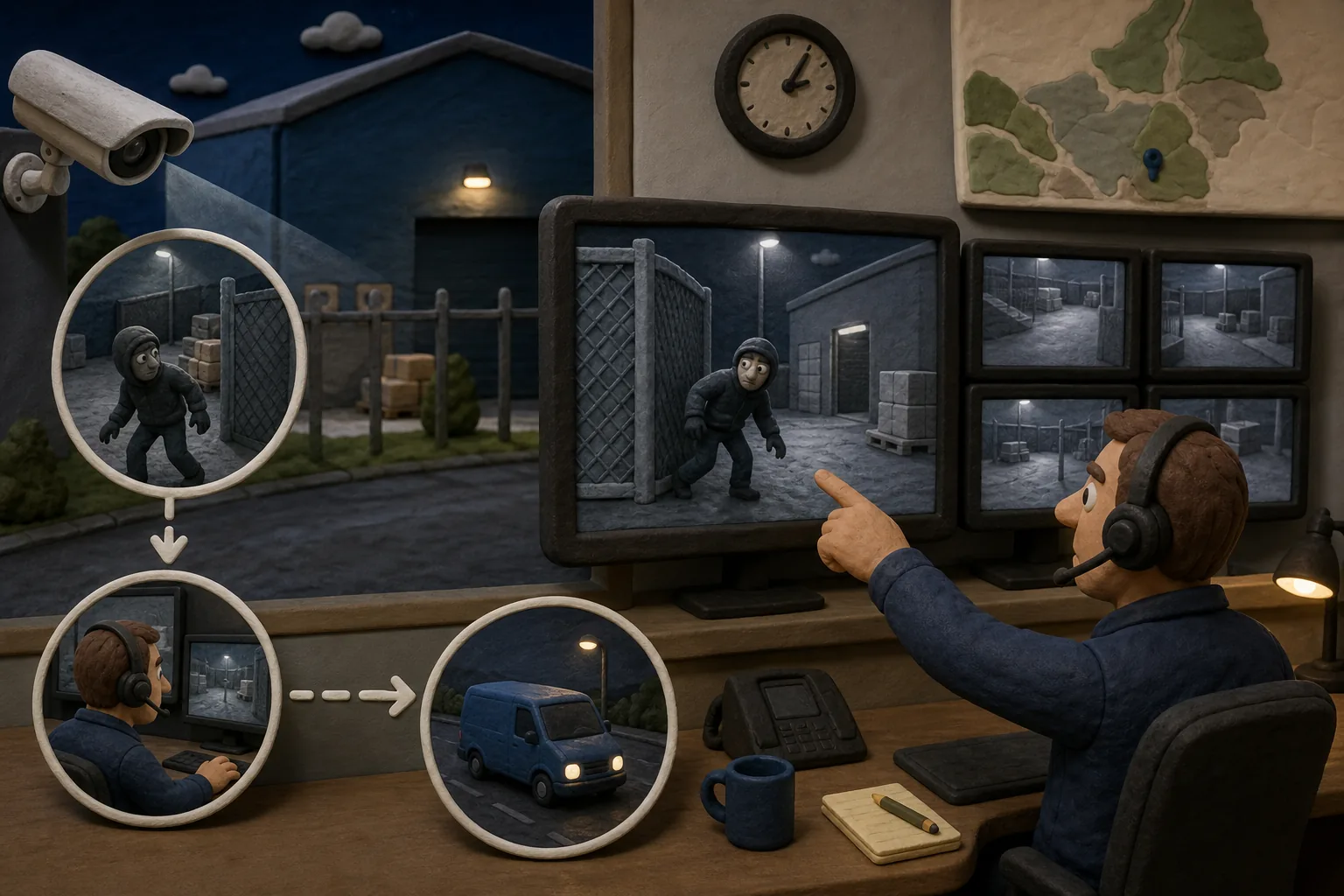
The key question is how the provider handles an alert. A useful service should show what happens when a person crosses a detection zone, when an alarm activates or when a site manager reports suspicious movement. The operator needs enough video to judge whether the event is a person, a vehicle, wildlife or a false alarm.
Ask about the response ladder before signing up. It might begin with a live audio warning. If the person stays, the operator may contact a nominated keyholder or escalate to emergency services where the situation meets the agreed rules. Key holder services can also reduce the burden on staff who would otherwise be asked to attend a dark or damaged site.
Notification choice matters too. Some businesses want an app alert for managers. Others may prefer email, a control-room report or a direct escalation path. Ask if alerts include a short video clip and whether the service records the operator’s actions for later review.
Remote video surveillance can be adapted for apartments, construction sites, neighbourhoods and retail properties. That wider range is a useful reminder to ask how the provider adapts coverage to the property, rather than selling one fixed camera layout.
The caveat is simple: “24/7” can mean different things. It may mean a live operator watches every feed all day, or that a control room responds whenever an analytics event arrives. Get that point in writing. The two models have different staffing, alert and cost implications.
3. CCTV monitoring with integrated system planning
CCTV monitoring with integrated system planning is a fit for buyers who want the camera system and monitoring workflow planned as one technical setup. That can suit a warehouse, commercial yard or high-risk site where standard motion alerts would create too much noise.

Human detection is more useful than a basic movement trigger in many outdoor settings. A tree moving in wind should not receive the same treatment as a person crossing a restricted zone. Ask how the system separates people and vehicles, and whether an operator receives a short video event rather than a single still image.
Hardware can add another layer. Depending on the proposed design, buyers may wish to discuss thermal cameras for low-light areas, strobe lights for visible deterrence, sirens and two-way audio. A live announcement can be more effective than a silent recording because the person knows the site is being watched.
Think about a building site after midnight. An operator sees two people near stored equipment. First comes a live warning. Then the operator watches the cameras to see if they leave. If they remain, the agreed process may move to keyholder contact or police escalation. The strength of the system lies in that sequence, not in the camera specification alone.
These systems still need human review. Analytics can reduce false alerts, but they don’t know the full context of every site. A delivery driver, contractor or late worker may look like an intruder unless the operating rules are clear.
4. Monitoring for changing sites
Monitoring for changing sites is the option to consider when a site needs mobile or temporary coverage rather than a fixed camera network. It may suit construction zones, vacant property, remote yards or projects where the risk changes as work moves around the site.

Temporary monitoring can help when a permanent installation isn’t ready. A project may have open fencing, new materials arriving or plant stored before the building is secure. A mobile unit can give the site team a monitored view during that higher-risk period, subject to the supplier’s survey and service design.
Ask where the unit will stand, how it gets power and how the system keeps a reliable connection. A camera placed too far from the main access route may record movement without giving useful identification. Poor sight lines can also leave blind spots behind welfare units, storage areas or temporary fencing.
Response rules need the same care as fixed CCTV. Confirm whether the service provides live audio, visible deterrence, keyholding or mobile patrol support. If the unit detects a person, the operator should know which areas are restricted and which activity is expected.
This type of service is less suited to a small indoor office with stable access and low night-time risk. A fixed system may be easier to manage there. This approach makes more sense when the site itself changes, or when installing permanent infrastructure would be wasteful.
For construction managers, compare the camera plan with the project programme. The best position in week one may be wrong after a new building shell, gate or storage area appears. Build review points into the contract instead of treating the first deployment as final.
5. Integrated monitoring for complex sites
A broader monitoring arrangement is worth considering for organisations that want CCTV monitoring reviewed alongside other security systems. That may appeal to a multi-site business with alarms, access control and cameras managed through one security plan.
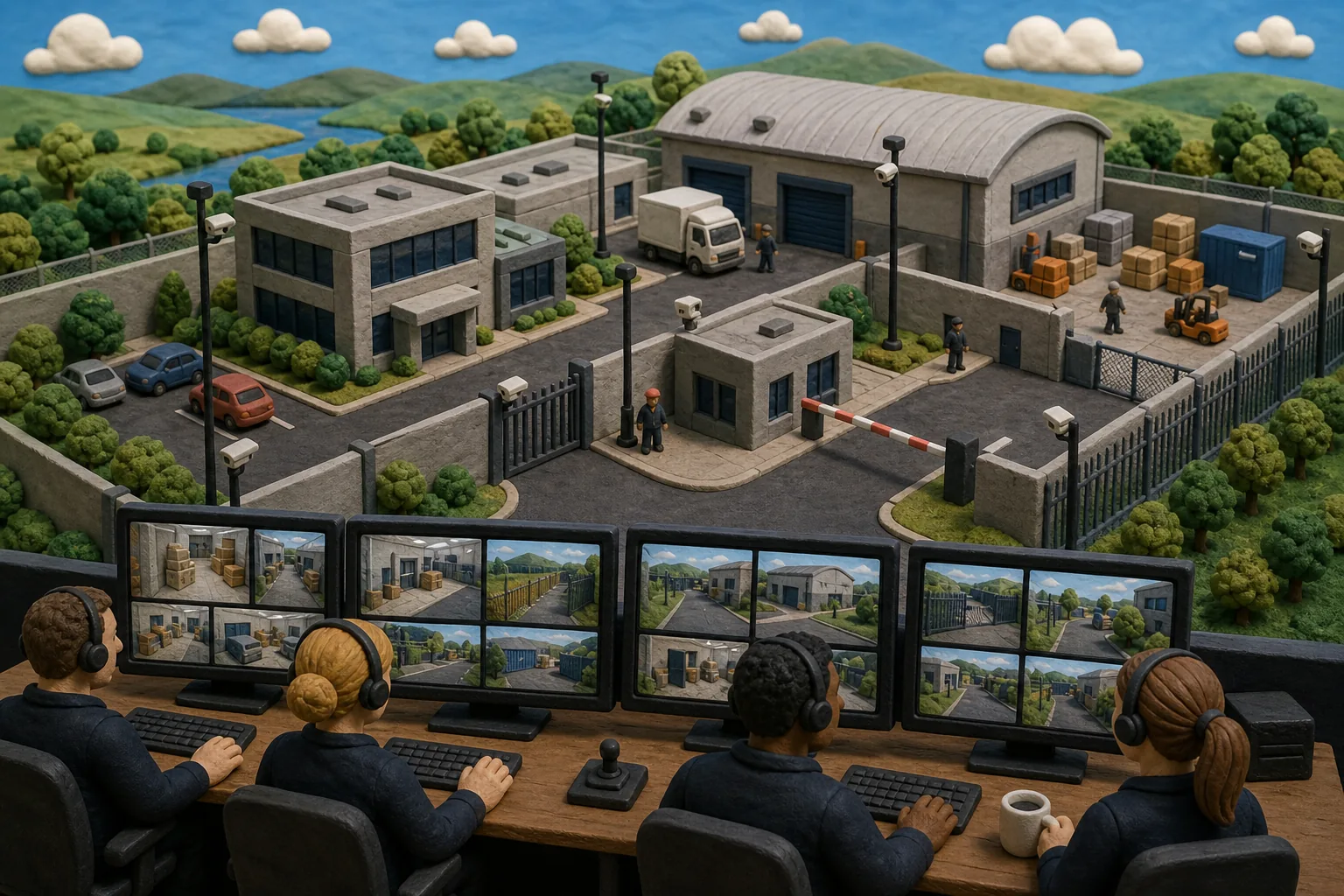
Integration can make an alert easier to understand. An alarm event may show which door opened. CCTV can then help confirm whether the cause was a person, a staff member or a false trigger. Access records may add more context, although the provider must explain what systems it can connect and how data is handled.
Buyers should ask about control-room standards and staff training. Industry language such as NSI approval or gold-standard certification should be backed by the provider’s current certificate and scope. Don’t accept a badge on a sales page as proof that every part of the proposed service carries that approval.
Insurance is another point to check. Monitored CCTV may support a risk plan, but a premium reduction is never automatic. An insurer may want specific equipment, maintenance records, response times or proof that the system is active. Footage can also help with a claim, but only when it is stored, available and linked to a clear incident record.
Ask for a written view of the full workflow:
| Decision point | What to ask | Why it matters |
|---|---|---|
| Detection | What triggers a review? | It shows whether the system relies on movement, human detection, an alarm or more than one signal. |
| Verification | Does an operator review live video? | Human review can help separate a genuine incident from a false alert. |
| Deterrence | Can the operator speak through the camera? | A live warning may make a person leave before damage occurs. |
| Escalation | Who contacts the keyholder or emergency services? | Everyone knows their role when the site is at risk. |
| Evidence | How is footage stored and supplied? | It can support an incident review or an insurance discussion. |
Privacy also needs a place in the contract. Organisations using personal data must consider the wider UK data protection duties that may apply. A provider should help define camera zones, access rights and retention rules, but the business remains responsible for its use of surveillance.
A broader monitoring arrangement may be a strong match for a complex estate. For a single small premises, an integrated package could add cost and admin that the site does not need.
How to choose a remote CCTV monitoring provider
The provider should match the risk, not the other way round. Before comparing quotes, write down the areas that need cover, the hours when risk is highest and the people who can authorise escalation.
- Check the response: Ask what happens after a verified alert.
- Check the cameras: Confirm night vision, detection zones, audio and power arrangements.
- Check the handoff: Confirm keyholding, mobile patrol and emergency contact rules.
- Check the record: Ask how clips, actions and incident times are stored.
- Check the price basis: Compare installation, equipment, monitoring hours and site visits separately.
- Check the privacy plan: Agree camera scope, access rights and retention before launch.
Use the same questions with every shortlisted provider. That makes it easier to spot a cheap quote that leaves out response cover, maintenance or overnight monitoring.
FAQ
What does remote CCTV monitoring include?
Remote CCTV monitoring usually includes camera alerts reviewed by an off-site operator. Depending on the contract, the operator may issue a live audio warning, contact a keyholder or escalate a verified incident. Ask whether the service is live all day or event-led, because those are different models with different response workflows.
Can remote CCTV monitoring contact the police?
Remote CCTV monitoring can support police escalation where the provider’s process and the circumstances allow it. The operator normally reviews the event first, then follows agreed escalation rules. A buyer should ask who makes the decision, what evidence is supplied and whether keyholder attendance is included.
Is remote CCTV monitoring suitable for a home?
Yes, remote CCTV monitoring can protect a home, especially during long periods away or while building work is under way. Human review can help filter false alerts before anyone is contacted. The system still needs careful camera placement, privacy controls and a clear plan for who attends the property.
How much do remote CCTV monitoring providers charge?
Prices vary because providers may charge for equipment, installation, monitoring hours, maintenance and response services. A temporary camera tower will have a different cost structure from a fixed multi-camera system. Request an itemised quote that separates setup costs from monthly monitoring and any keyholding or patrol fee.
Can CCTV monitoring lower insurance premiums?
CCTV monitoring may support an insurance risk plan, but a lower premium isn’t guaranteed. The insurer may set conditions about equipment, certification, maintenance and response. Ask the insurer what it needs before installation, then keep monitoring records and incident footage in case a claim depends on them.
Conclusion
For most UK businesses, Nexus Security Serviceses Ltd is the strongest first option when remote CCTV needs to work with trained security personnel and site response. Next, arrange a site survey and ask each provider to show the full alert-to-response process in writing before you compare quotes.


0 Comments