

Choosing a manned guarding provider has real consequences when comparing manned guarding providers UK-wide. Get it wrong and you may be left with unvetted officers, gaps in patrol cover, and a service that feels more like staffing than security.
Price matters, but it cannot be the first or only test when assessing security guarding services. A credible provider should show that its officers, standards, supervision and service model are appropriate for your site and the regulated security sector.
Key Takeaways
- Do not choose a manned guarding provider on price alone; check SIA licensing, ACS accreditation, BS 7858 vetting and relevant sector experience.
- Verify every officer assigned to the site, including relief cover, holds a valid SIA licence and has completed the required checks.
- Select static guards, mobile patrols or a hybrid model according to the site’s risks, coverage requirements and findings from a site visit.
- Confirm supervision, account management, office details and sector references before signing, rather than relying on website testimonials.
- Allow four to six weeks for the site visit, checks, planning and written quotation before the guarding service begins.
Treat guarding as a proper procurement decision
Security is not a standard product. Effective security risk management depends on the site’s risks, the cover required and the operating environment.
Do not choose a guarding provider on price alone. In the regulated security sector, a low figure may look attractive at the quotation stage. It tells you nothing about licence checks, officer vetting, relief cover or supervision.
Before signing, establish whether the provider can demonstrate:
- Valid SIA licences for every officer assigned to the site.
- An SIA approved contractor with ACS accreditation and vetting in line with BS 7858. ACS shows the contractor has been assessed, but it isn’t a guarantee of performance at your site.
- Evidence that the provider is ISO 9001 certified, where applicable. This supports quality management, but doesn’t replace SIA licensing, ACS accreditation or BS 7858 vetting.
- Experience in your own sector.
- A guarding model that matches the risk.
- Clear supervision, a named account manager and a verifiable office.
- References from similar clients, not only website testimonials.
The work should be planned around the site. It should not be a generic package placed over a specific security problem.
Start with the legal baseline: SIA licensing
Providers must supply SIA licensed security officers, and each person needs a valid SIA licence. This is the legal starting point in the regulated security sector, not an optional extra to discuss after agreeing the quote.
Use the SIA’s free licence checker to verify an officer before they begin work. The check should happen before the first shift, not after an issue has already arisen.
Check every officer, including relief cover
The standard cannot apply only to the regular team. Relief officers and anyone brought in to cover a shift must also hold a valid licence.
A provider may describe an officer as temporary cover, but the responsibility remains the same. Anyone placed on site needs to meet the same baseline requirement.
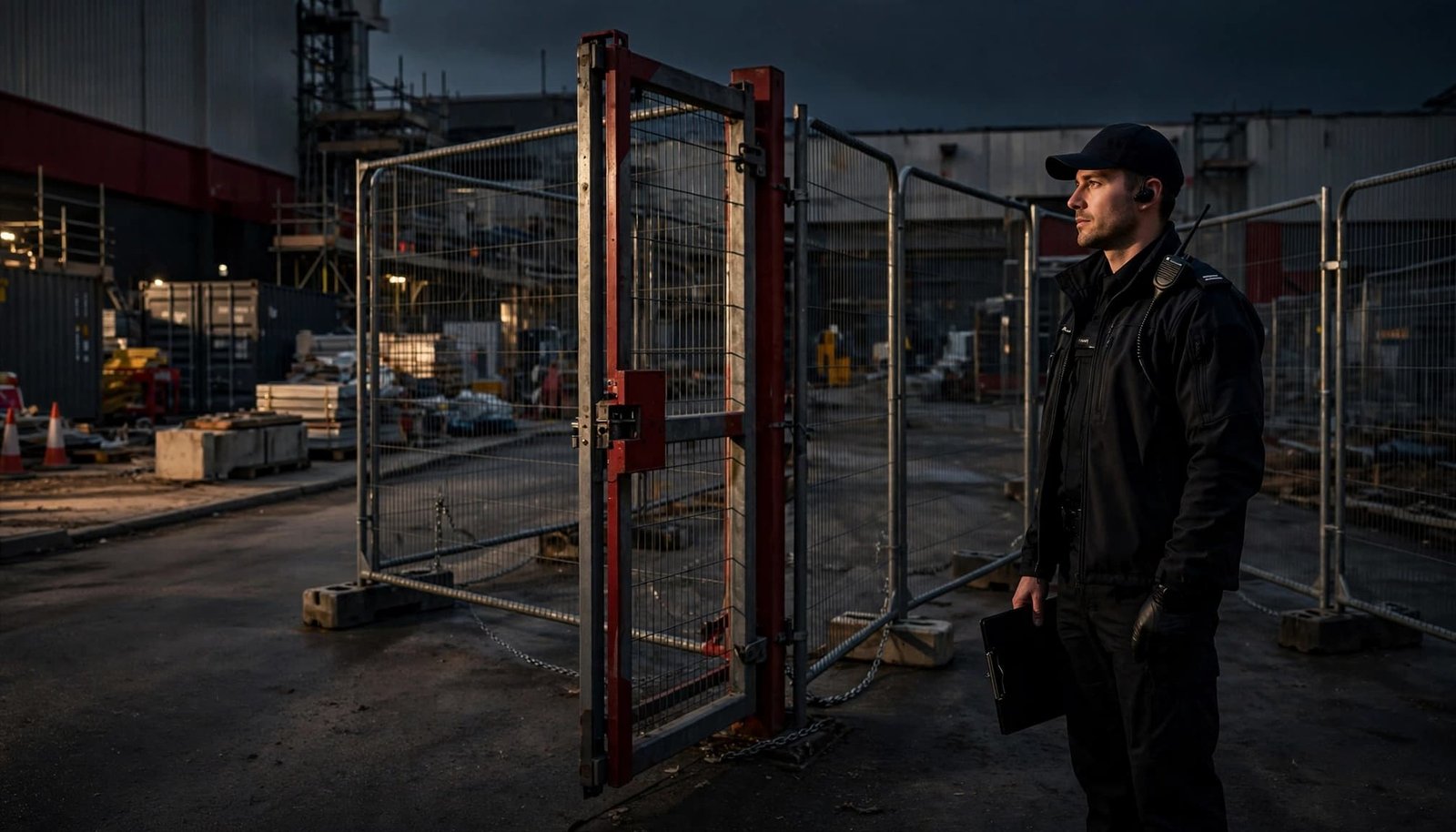
A guarding service is only as reliable as the people who are actually sent to the site, including relief cover.
Look for recognised standards and proper vetting
Licensing checks whether an officer can legally work in the role. In the private security industry, it is only one part of responsible practice.
In a regulated security sector, documented processes and consistent checks matter beyond the licence itself. A credible guarding provider should be able to explain how those checks are managed.
ACS accreditation matters
ACS accreditation shows that a company has passed SIA quality standards. It is one practical sign that the provider has been assessed against recognised requirements.
It should sit alongside licensing and vetting, not replace either. An accredited provider still needs to show that the officers assigned to your site are properly licensed, vetted and supported.
Vetting should follow BS 7858
Officer vetting should follow BS 7858 for every officer. That includes regular officers, the relief team and anyone who may be sent to cover shifts.
Ask the provider to evidence its security guard vetting process and explain how it follows BS 7858:
“Does your vetting process follow BS 7858 for every officer, including relief cover?”
A clear answer is expected. Vague assurances are not enough when the provider is placing people in responsibility for your premises, people or assets.
Choose sector experience over a one-size-fits-all service
The one-size-fits-all provider rarely delivers the right result. Security requirements differ between sites, and the provider should understand the setting rather than treat every contract in the same way.
Different environments call for different experience, from corporate manned guarding and front of house security to specialist executive protection services. The latter should not be confused with routine site guarding, which requires a different operating model.
Ask for evidence of experience in your own sector. General claims about serving many industries are less useful than a reference from a similar client with comparable requirements, such as a retailer that has used retail security services.
Construction sites need relevant knowledge
For construction sites, the provider should understand construction site security and CDM 2015. This is part of knowing the environment in which officers will be working.
The question is not whether a company can supply a guard. It is whether it understands the requirements of a construction site and can provide a service that fits them.
For construction sites, ask whether the provider understands CDM 2015.
Match the guarding model to the site’s risk
There is no single guarding model that suits every site. The right choice depends on the risks, coverage required and findings from a site visit and security risk assessment.
The main options are straightforward:
| Guarding model | What it provides |
|---|---|
| Static guards | Fixed static guard security, supporting access control solutions and providing visual deterrent security at key access points. |
| Mobile patrols | Mobile patrol services supported by scheduled checks, patrol records and security guard patrol monitoring. |
| Hybrid model | A planned combination of static guarding and mobile patrols for sites needing both. |
The provider should discuss the site before recommending one of these options. A fixed presence may be appropriate in one setting, while patrol cover or a hybrid arrangement may better match another. Any related scope, such as key holding and alarm response, should also be clarified.
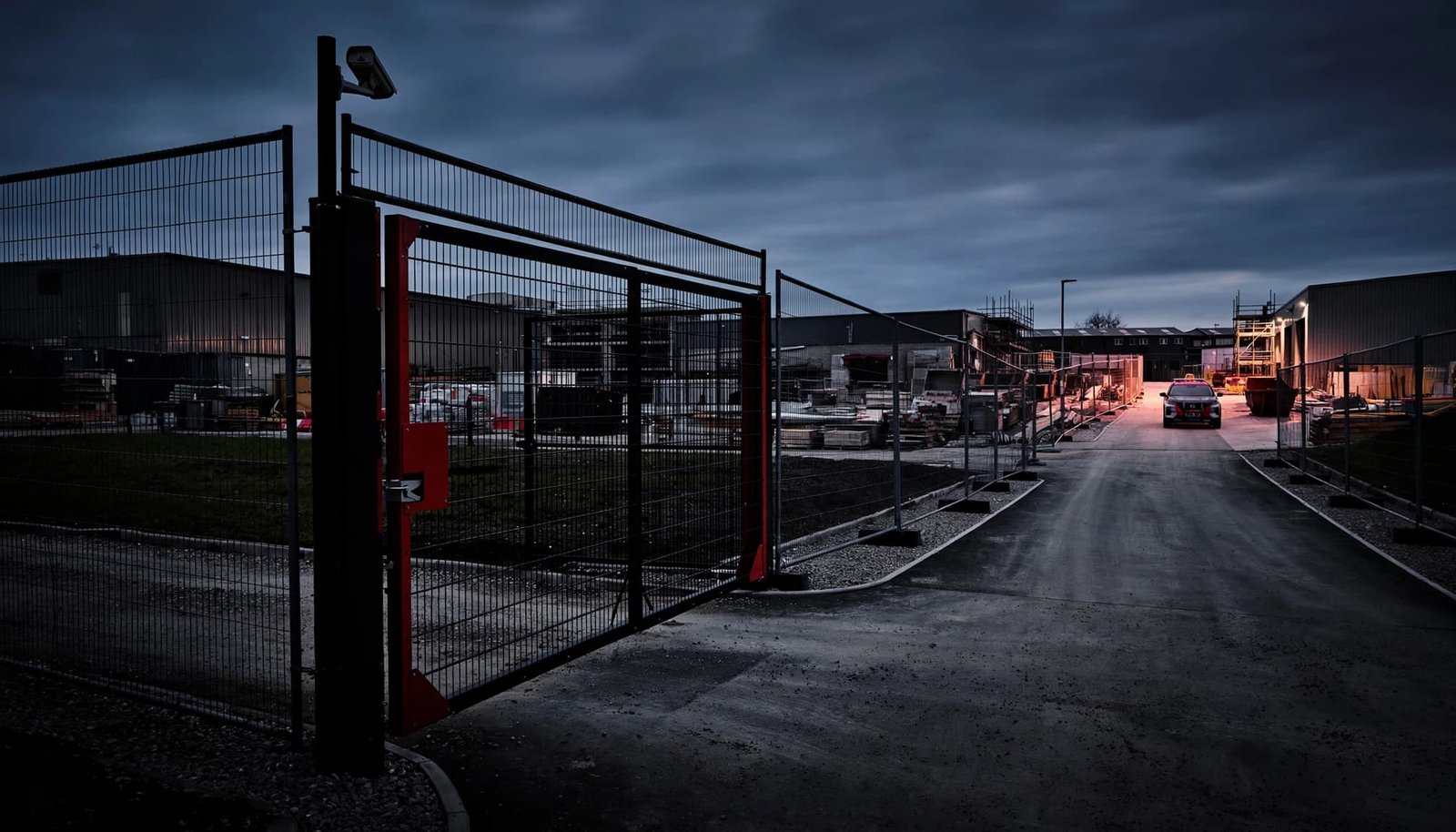
The point is not to select the most elaborate model. It is to select the one that properly matches the risk.
Confirm supervision and account management
A credible provider names the supervisor and account manager responsible for security personnel services. These details matter because security contracts can look complete on paper whilst responsibility remains vague in practice.
Ask who is responsible for supervising the officers, who manages the account, and how concerns are reported. Where the supplier also provides facility management services, security responsibilities, reporting lines and service standards must remain clearly separated.
Never sign without a site visit
A site visit should take place before you sign. The provider needs to see the premises before settling on the proposed service model and giving a written quote for the site.
Allow four to six weeks for the process. This gives time for the site visit, checks, planning and appointment of the provider.
Start early. A proper guarding arrangement should not be rushed because the procurement process began too late.
Recognise the warning signs before signing
Some warning signs are simple, but they’re often overlooked when attention shifts too quickly to price or urgent coverage.
Be cautious with below-market quotes
Question quotes that sit below the market, particularly when they include unsupported promises to supply officers at short notice. A short-notice requirement may be legitimate, but ask how the provider will maintain compliance and supervision.
Rapid deployment security should still involve licensing, vetting, supervision and a clear handover. Emergency security cover shouldn’t be used to bypass normal checks.
The lowest number isn’t automatically the right decision. Guarding involves licensing, vetting, cover arrangements, supervision and sector knowledge. Those requirements need to be properly accounted for.
Verify the office and ask for real references
Be cautious of providers with offices that can’t be verified. A genuine security guard company should provide a traceable business address and relevant client references.
Website testimonials prove nothing on their own. Ask for references from clients in your own sector instead.
Website testimonials are not the same as sector references. A relevant reference is more useful because it relates to the type of site, risk and service you need.
Ask for a written quote for your site
Once the provider has visited the site and discussed the proposed guarding model, ask for the quote in writing. It should describe the proposed security guarding services for your premises, not a generic service description.
Before you proceed, confirm that:
- All assigned officers, including relief cover, are SIA licensed security officers.
- The firm is an SIA approved contractor with ACS accreditation, and this status has been verified rather than assumed.
- Documented security guard vetting follows BS 7858 for every officer, including relief cover.
- The provider has experience in your sector.
- For construction projects, the construction site security provider understands CDM 2015 where relevant.
- Static guards, mobile patrols or a hybrid model have been matched to the site’s risk.
- Supervision and account management are clear.
- The office can be verified and sector references are available.
- A site visit has taken place before signing.
- If included, security monitoring solutions, reporting or related technology are clearly defined in the proposal.
- You have allowed four to six weeks and received a written quote.
Frequently Asked Questions
What should I check before choosing a manned guarding provider?
Check that the provider supplies valid SIA-licensed officers, follows BS 7858 vetting and holds ACS accreditation where applicable. You should also confirm relevant sector experience, clear supervision, a verifiable office and references from similar clients.
Does every security officer need an SIA licence?
Yes. Every officer assigned to the site must hold a valid SIA licence, including temporary and relief officers brought in to cover shifts. Use the SIA’s free licence checker before an officer starts work.
How do I choose the right guarding model?
The right model depends on the site’s risks, access points, coverage requirements and operating environment. A provider should assess the site before recommending static guards, mobile patrols or a hybrid arrangement.
Why is BS 7858 vetting important?
BS 7858 provides a recognised framework for vetting security officers before they are placed in positions of responsibility. Ask the provider to confirm that the process applies to every officer, including relief cover.
How long should the procurement process take?
Allow four to six weeks for the site visit, licensing and vetting checks, service planning and appointment of the provider. Rushing the process can make it harder to confirm compliance, supervision and suitable cover.
Good security is already under control
The strongest guarding service is often almost invisible, because the right checks, people and arrangements are already in place. That starts with more than a price comparison.
Dependable outcomes come from working with a provider that understands its responsibilities in the regulated security sector. Credible commercial security solutions combine suitable people, clear controls and effective supervision for your site.
Nexus Security Services provides SIA-licensed guarding across the UK. Ask for a written quote for your site.


0 Comments