

A physical incident can cause operational downtime long before the building is unusable. A damaged entrance, stolen specialist equipment, blocked loading area or unsafe site can leave staff unable to work and customers waiting.
Physical security incident business continuity planning supports emergency preparedness for these events and turns them into manageable operational decisions. It protects people first, then preserves the services, facilities and information the organisation needs to keep moving.
The aim isn’t a decorative plan that sits in a folder. It’s a clear set of responsibilities, thresholds and recovery actions that people can use under pressure.
Key takeaways for decision-makers
- Treat physical security as an operational dependency, not only a loss-prevention function.
- Base priorities on what stops critical services, not simply what costs the most to replace.
- Give security, operations, HR, finance and senior leadership defined responsibilities before an incident occurs.
- Set clear escalation criteria for life safety, site closure, police contact, insurer notification and continuity-plan activation.
- Test decisions, communications and alternate working arrangements before a real incident exposes the gaps.
A stolen item is a security loss. A stolen item that prevents a production line, site team or delivery route from operating is a business continuity incident.
Why physical security incident business continuity belongs together
Physical security protects people, premises, equipment, stock and operational access. Business continuity protects the organisation’s ability to deliver its critical products and services when one of those things is disrupted. They are part of the same practical problem.
The GOV.UK definition of business continuity centres on managing risks to the smooth running of an organisation, maintaining critical functions during disruption and supporting recovery afterwards. This type of event belongs in that work when it affects people, access, capacity, safety or the ability to meet commitments. The same event may expose systems or information if access controls fail, but it isn’t automatically linked to cyberattacks or a data breach.
Downtime rarely begins with the replacement cost
The immediate loss may be a stolen tool, damaged shutter or forced entry point. The wider cost is usually more awkward: staff sent home, deliveries turned away, a restricted area, overtime, missed service levels and management time diverted into incident handling.
A £2,000 item can cause a far greater interruption if it is the only item that allows a site to open, load goods or maintain safe conditions. That is why security executives and continuity managers need one shared view of operational dependency. It should connect security posture, loss prevention and wider operational security priorities.
Ownership must cross departmental lines
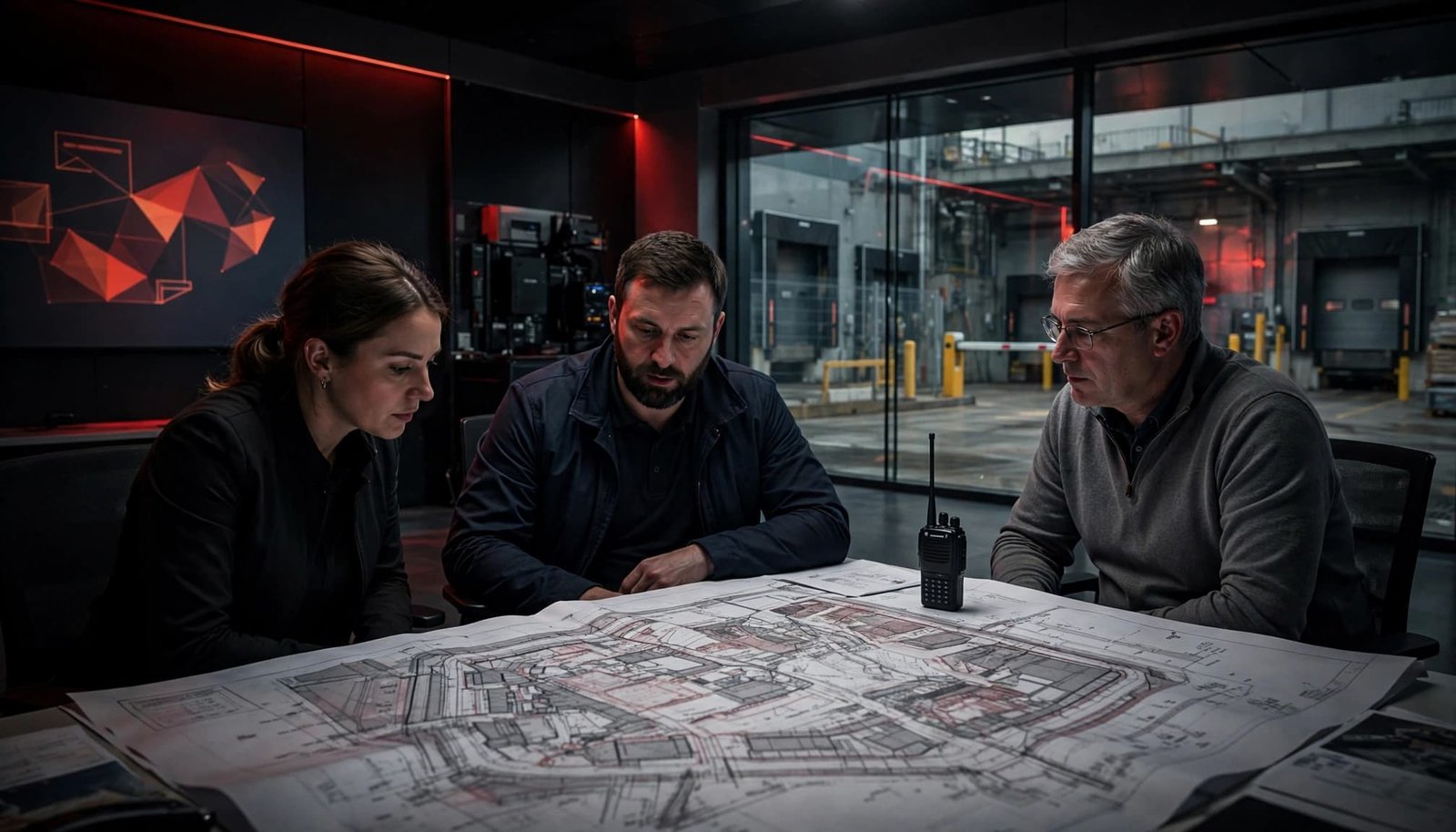
Security should lead detection, site containment and evidence preservation through the incident response plan. Operations should decide what work can continue safely, where it can move and which customer commitments are affected. HR manages staff welfare and accessible communications, while Finance records loss and recovery costs. Senior leaders decide when disruption requires formal plan activation.
Assign named deputies as well as primary owners. An incident at 03:00 is a poor time to discover that a decision depends on one unavailable person.
Start with the business impact analysis
A risk assessment asks what could happen. A business impact analysis asks what happens next if it does. Both are required, and security executives should sponsor the process.
The GOV.UK Business Continuity Management Toolkit starts with the products and services whose disruption would have the greatest impact. Apply that same discipline to physical security incidents.
Identify the services that cannot wait
List each critical service, its minimum acceptable operating level and its dependencies. Include people, premises, power, keys or credentials, vehicles, equipment, suppliers, communications and data. Consider whether a physical disruption could expose connected systems to cyberattacks.
For example, a distribution operation may depend on safe loading access, authorised drivers, handheld scanning equipment and a carrier collection window. Losing any one element can reduce or stop service, even if the warehouse itself remains intact.
Set a maximum tolerable period of disruption for each activity. This is the point at which the effect becomes unacceptable to customers, employees, regulators or the organisation’s finances.
Prioritise asset criticality over asset value
An expensive asset is not automatically the first recovery priority. Ask three direct questions:
- Does its loss stop a critical product or service?
- Is there a safe and approved substitute?
- How quickly can the organisation obtain, repair or relocate it?
Use the business impact analysis to rank recovery dependencies. Record any vulnerability created by relying on a single access device, supplier or specialist asset.
A single access-control panel, specialist key, fuel card or piece of testing equipment may have modest replacement value but no realistic short-term substitute. Asset criticality, rather than replacement value alone, should guide the priority. Mark it as critical and plan for a controlled manual process, alternate equipment or an alternate site.
Build physical controls into the recovery plan
Access control systems, CCTV, alarms, barriers and security personnel are useful controls. They are not continuity plans by themselves. Each control needs an operational fallback if it fails, becomes unavailable or restricts a site after an incident.
Plan safe access, not access at any cost
Document the security measures for site entry, area closure and re-entry, including who can authorise each decision. Include visitors, contractors, lone workers and people who need reasonable adjustments during an evacuation, relocation or restricted-access period.
Safety and security come before stock, evidence or service recovery. Where there is immediate danger, contact emergency services and follow their direction. The continuity plan should never encourage staff to re-enter an unsafe building to protect property or maintain output.
Use monitoring to support sound decisions
CCTV, wider surveillance systems and alarm monitoring can help teams verify a report, identify the affected area and decide whether an incident requires wider action. Compromised access-control or monitoring devices can expose credentials or information through cyberattacks or a data breach.
The useful question is not whether security technology exists. It’s whether the right person receives reliable information quickly enough to make an appropriate decision.
Keep escalation instructions short: who reviews the alert, how they contact the site, when they call a manager and when they activate the incident response plan. Maintain tested contact details away from the affected location.
Include supply chain and third-party dependencies
A site disruption can begin outside your own boundary. A transport provider may lose access to its depot. A keyholding company may be delayed. A specialist contractor may be unable to attend after damage to a local route or facility.
NIST’s supply chain risk management guidance focuses on cybersecurity, but its wider lesson supports third-party risk management. External dependencies need clear ownership, visibility and agreed reporting routes.
Check the suppliers that keep the site operating
Review providers with access to sites, equipment, goods or sensitive areas. This includes guarding, cleaning, maintenance, waste collection, logistics, temporary labour, locksmiths, alarm monitoring and critical equipment suppliers.
Consider supply chain risks involving transport, guarding, maintenance and specialist suppliers. Also assess whether disruption or compromise following cyberattacks could affect physical access, communications or operations. Treat this review as part of third-party risk management, with contacts and notification routes linked to the formal incident response plan.
Ask each provider how it will notify you of a disruption, what alternative capacity it has and who can approve a change. Record the answer in contracts, operating procedures and the continuity plan, not in a person’s inbox.
Put recovery obligations in plain language
Contracts should state notification expectations, out-of-hours contacts, access arrangements and evidence-handling responsibilities. They should also address insurance cooperation and the practical handover needed after an incident.
Organisations must align these arrangements with local requirements, emergency-service instructions, insurer obligations and applicable standards. Legal and regulatory duties differ by sector, location and incident type.
Write an incident response plan people can use
An incident response plan should be short enough for an on-call manager to follow, but detailed enough to stop confusion. It should define when the business continuity plan is activated, what triggers formal continuity activation and who has authority to invoke it.
The GOV.UK guidance on business continuity management identifies clear invocation procedures, training, exercises and regular review as core plan elements.
Use a simple sequence: protect, assess, recover
For most physical security incidents, the sequence is:
- Protect people and prioritise safety and security, obtaining emergency assistance where needed.
- Secure or isolate the affected area without creating additional risk.
- Verify the facts, record the time and preserve relevant evidence.
- Assess operational impact, including access, staffing, customer commitments and critical assets.
- Use the incident response plan to invoke business continuity arrangements when agreed thresholds are met.
- Restore priority activities safely, then move into formal recovery and review.
Keep employee communications factual. Explain what has happened, what people must do now, where they can get support and when the next update will arrive. Avoid speculation, especially where police, insurers or legal advisers are involved.
Set escalation thresholds before the event
A site manager should not have to guess whether one damaged door requires a call to the executive team. Define thresholds such as injury or a credible threat to life safety, loss of access to a critical facility, or disruption beyond the maximum tolerable period. Include suspected unauthorised access to sensitive information, a possible data breach, or physical damage that could expose systems or information to cyberattacks. Also include an incident likely to require insurer notification.
The plan should also identify the communications lead. Customers, employees, suppliers and landlords may all need different messages. One clear source of information prevents rumour filling the gap.

Test the plan under realistic conditions
A plan that has never been tested is an assumption. Exercises show whether contact lists work, decision rights are understood and alternate arrangements are genuinely available.
They should distinguish physical response, business continuity and IT recovery. A business continuity plan must prove that alternate working and service-restoration decisions are practical, not merely documented.
NIST contingency planning guidance includes alternate procedures, equipment and locations where a facility is physically affected. Those options should be tested, not merely listed.
A disaster recovery plan may restore systems after a technology disruption, but it doesn’t replace testing for site access, people and essential services. Exercises can also include cyberattacks alongside a facility disruption.
Start with a tabletop exercise
Use a concise scenario: a vehicle damages the main entrance at 06:30, access is restricted, a key supplier is due at 08:00 and staff begin arriving at 07:00.
Ask the team who makes each decision, how people are informed, which service continues first and what information is needed for insurer and police contact. Check whether the site incident response plan can be followed under out-of-hours conditions. Record delays, unclear authority and missing dependencies.
Follow with a functional simulation
A functional exercise tests actual actions. It might involve opening an approved alternate entrance, using manual visitor records, moving a team to another location or proving that a supplier contact route works outside normal hours.
Measure the time taken to detect, escalate, invoke, communicate and restore the priority service. Use a resilience framework to assign corrective actions to owners with clear dates. Otherwise, the exercise becomes theatre.
Frequently asked questions
How does physical security prevent operational downtime?
It reduces the chance that unauthorised access, theft, vandalism or unsafe conditions interrupt people and critical operations. It also gives teams the information and controls needed to contain an event quickly.
Prevention matters, but recovery arrangements matter too. This approach covers both prevention and recovery.
What should be measured after an incident?
Track time to detect, verify, isolate, invoke the plan and resume priority activity. Record direct costs, lost capacity, overtime, customer impact, supplier disruption and any backlog still outstanding after normal operations restart.
The review should identify what failed in practice, including unclear ownership or inaccessible information, then update the plan and training.
A continuity plan should make the next decision clearer
Physical security becomes meaningful when it protects the organisation’s ability to operate, not only its property. Start with people and critical services, then map the controls, dependencies and decisions that keep them safe.
The strongest plans are practical tests of safety and security, as well as operational resilience. For security executives, they’re management tools that name the people who act, set the thresholds that matter and prove recovery arrangements through regular testing.


0 Comments