

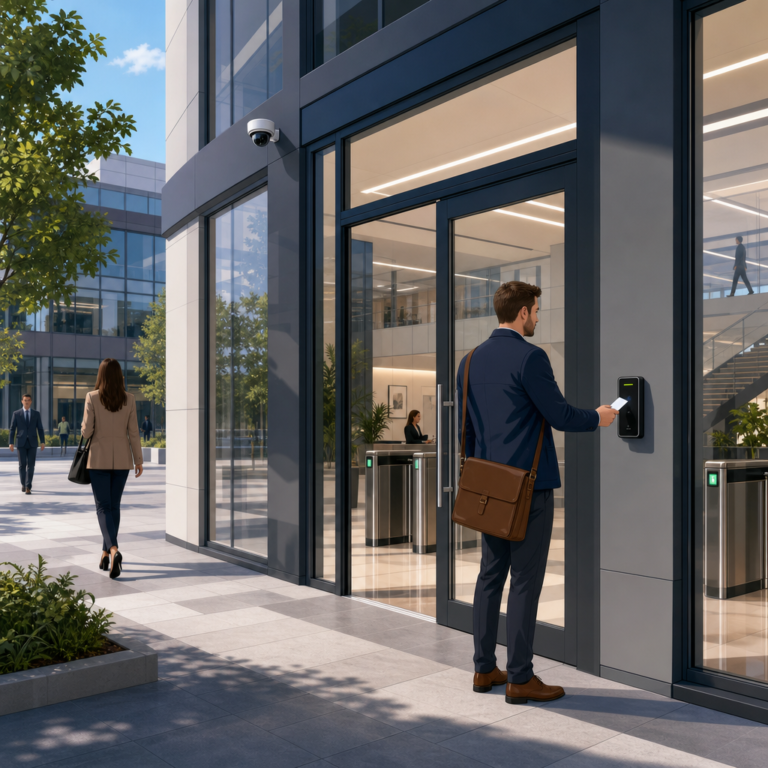
There’s a moment nearly every facilities manager remembers vividly. For Sarah, it was a Tuesday morning in February. A former employee, terminated three weeks earlier, walked straight through the front door of a Manchester warehouse using a key that nobody had thought to collect. Nothing was stolen. Nobody was hurt. But the incident report that followed cost her company two days of investigation, an insurance review, and a very uncomfortable conversation with the board about why the locks hadn’t changed.
Stories like Sarah’s are the quiet, unglamorous reason access control systems have become one of the fastest-growing categories in UK commercial security. Not because of dramatic break-ins, but because of the thousand small failures of traditional keys: the ex-employee who never handed one back, the contractor who made a copy, the master key that opened everything and answered to no one.
This article walks through what access control systems for business actually cost in the UK in 2026, what shapes that price, and how to avoid paying for more — or less — than your building actually needs.
What Counts as an Access Control System?
Before diving into numbers, it helps to define the territory. Access control isn’t a single product; it’s a category that spans several very different technologies, all doing the same basic job: deciding who gets through a door, and recording that they did.
- Standalone locks – battery-powered locks with a keypad or card reader, not networked to anything.
- Networked card/fob systems – readers wired back to a central controller and software, allowing remote management.
- Mobile credential systems – access granted via smartphone app or Bluetooth/NFC rather than a physical card.
- Biometric systems – fingerprint, facial recognition, or iris scanning used alone or alongside a card.
- Cloud-based access control – system management hosted remotely, accessible from any browser, often billed as a subscription.
- Integrated platforms – access control combined with CCTV, intruder alarms, and fire systems on one interface.
Each tier serves a different kind of business, and — as you’d expect — a very different budget.
UK Pricing in 2026: What You’ll Actually Pay
Pricing for access control varies enormously depending on the number of doors, the technology chosen, and whether you’re buying outright or subscribing to a managed service. The table below reflects typical UK market pricing for 2026, based on installer quotes and industry benchmarks.
| System Type | Typical Use Case | Approx. Cost (Supply & Install) | Ongoing Costs |
|---|---|---|---|
| Standalone keypad/fob lock (1-2 doors) | Small office, single shop unit | £800 – £2,500 | Minimal; battery replacement |
| Networked card system (3-10 doors) | Small-to-medium office, retail unit | £3,000 – £12,000 | Software licence, support contract |
| Cloud-based access control | Multi-site SMEs, flexible teams | £150 – £600 per door installed | £5 – £15 per door/month subscription |
| Biometric access control | High-security areas, server rooms, labs | £2,000 – £8,000 per reader zone | Maintenance, GDPR compliance costs |
| Enterprise integrated system (20+ doors, multi-site) | Corporate HQs, logistics hubs, hospitals | £25,000 – £50,000+ | Dedicated support contract, upgrades |
These figures are supply-and-install estimates and will shift based on wiring complexity, listed building constraints, and how many doors need fire-rated hardware integration. A Victorian office conversion with solid stone walls will always cost more to wire than a modern steel-framed unit.
For businesses wanting a second opinion on realistic budgeting, the Security Industry Association’s guidance on access control is a useful independent reference point, alongside the British Security Industry Association (BSIA), which publishes standards for installers operating in the UK.
The Hidden Costs Nobody Mentions in the Sales Pitch
Every procurement team has been burned by a quote that looked reasonable until the invoices started arriving. Access control has its own version of this problem, and it’s worth naming the culprits directly.
- Cabling and fabric work. Running cable through solid walls, fire doors, or listed buildings can add 20-40% to a quoted price.
- Software licensing renewals. Many systems now bill annually for the management software, even if the hardware was a one-off purchase.
- Credential replacement. Lost fobs and cards aren’t free — budgeting £3-£8 per replacement across a large workforce adds up.
- Integration fees. Linking access control to existing CCTV or alarm systems, especially from different manufacturers, often requires a specialist integrator.
- Maintenance contracts. Reputable installers recommend annual servicing, typically £150-£500 per visit depending on system size.
- Fire and building regulation compliance. Any door in a fire escape route usually needs a break-glass override or fail-safe mechanism, which is a legal requirement, not an optional extra — see the UK Government’s fire safety guidance for context on how this intersects with door hardware.
Sarah’s company, as it turned out, discovered several of these the hard way. Their original quote for a 15-door system didn’t include the cost of upgrading two fire doors to compliant hardware — a £4,000 surprise added mid-project.
A Tale of Two Buildings: Small Office vs Multi-Site Warehouse
To make the cost differences concrete, it helps to follow two realistic scenarios through to completion.
The small office. A 12-person marketing agency in Leeds occupies a single floor with two entry points: the main door and a rear fire exit. They chose a cloud-based system with mobile credentials, avoiding the cost of issuing physical fobs. Total cost: £1,900 installed, plus £22/month subscription. The appeal wasn’t just price — it was that the office manager could add or remove staff access from her phone without calling an engineer.
The multi-site warehouse group. A logistics company with three depots across the Midlands needed centralised control: one HR team managing access permissions for all sites from a single dashboard, tied into existing CCTV. This meant 34 doors, biometric readers on two high-value storage areas, and integration with an existing intruder alarm. Total cost: £41,000, with a £2,200 annual maintenance contract. It’s a significant outlay, but set against the value of stock held on-site — often north of £2 million — the maths made sense to their insurers, who offered a modest premium reduction as a result.
These two examples illustrate the core truth of access control pricing: it isn’t really about the number of doors, it’s about the level of central control and integration you need.
Comparing the Main Technology Types
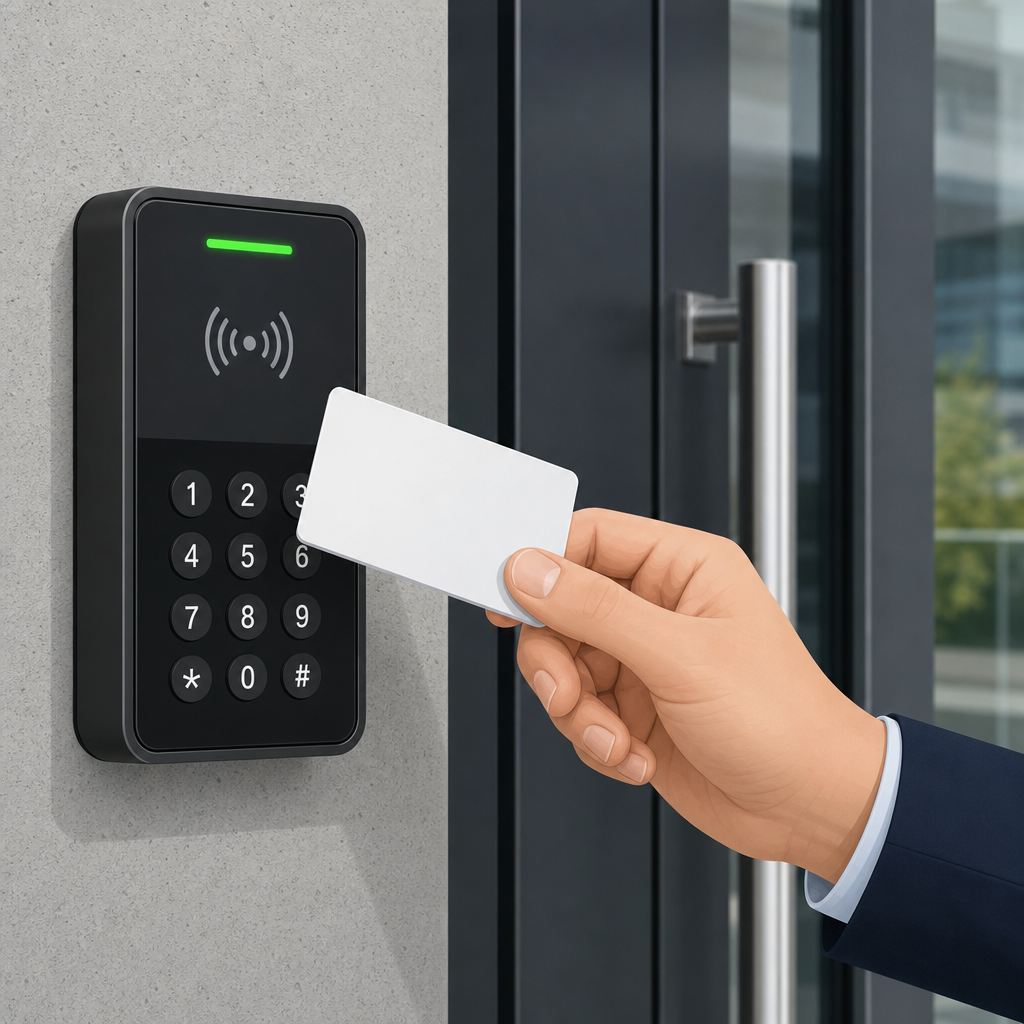
Choosing between card-based, mobile, and biometric access isn’t purely a budget decision — each comes with trade-offs in convenience, security, and staff experience.
| Feature | Card/Fob Systems | Mobile Credentials | Biometric Systems |
|---|---|---|---|
| Upfront cost | Low-medium | Medium | Medium-high |
| Convenience for staff | Good | Very good | Good, but can be slow at peak times |
| Risk of credential sharing | Moderate (cards can be lent) | Low | Very low |
| GDPR/data considerations | Minimal | Moderate | Significant — biometric data is special category data |
| Best suited to | General office/retail | Modern SMEs, flexible workforces | Server rooms, pharma, high-security zones |
| Replacement cost if lost | £3-£8 per card | None (revoke remotely) | N/A |
It’s worth flagging that biometric systems carry genuine legal weight in the UK. Because fingerprint and facial data are classified as special category data under UK GDPR, businesses must complete a Data Protection Impact Assessment before rollout. The Information Commissioner’s Office guidance on biometric data sets out these obligations clearly, and it’s not something to skip — regulators have taken enforcement action against organisations that installed fingerprint scanners without proper legal grounds.
Why Integration Changes the Value Equation
There’s a pattern that shows up again and again in security procurement: buyers evaluate access control, CCTV, and manned guarding as three separate purchases, when the real value emerges once they talk to each other.
Consider a scenario common across UK retail parks. A door held open too long triggers an alert; the CCTV camera nearest that door automatically pulls up a live feed for the control room; a guard is dispatched or a remote monitoring team makes contact through an intercom — all within seconds, without a human having to notice the problem first. That level of coordination isn’t possible when each system sits in its own silo with its own login and its own maintenance schedule.
This is precisely the argument laid out in Nexus Security Services’ overview of commercial security services in the UK, which treats access control as one component of a wider security ecosystem rather than a standalone purchase. Businesses that plan procurement this way tend to spend more upfront but significantly less over a three-to-five-year period, because they avoid the cost of ripping out and replacing incompatible systems piecemeal.
Common integration benefits worth costing into any proposal:
- Single sign-on dashboards reducing admin workload for facilities teams
- Automatic lockdown triggers linked to fire or intruder alarms
- Audit trails combining footage and access logs for HR or police investigations
- Reduced false-alarm callouts because access events provide context for alarm activations
- Simplified compliance reporting for insurers and auditors
How Many Doors, How Many Staff: Sizing the System Correctly
One of the most common mistakes in access control procurement is sizing the system to the building rather than the behaviour of the people inside it. A 20-door building with a stable team of 15 long-term staff has very different needs from a 20-door building with 200 people rotating through shift patterns, agency staff, and visiting contractors.
Questions worth answering before requesting quotes:
- How many unique credential holders will the system need to manage, including short-term and contractor staff?
- Are there time-based access restrictions needed (e.g., cleaners only between 6-8am)?
- Does the business operate across multiple sites that should share one management platform?
- Are any areas high-risk enough to warrant dual-factor entry (card plus PIN, or card plus biometric)?
- What’s the expected staff turnover rate, and how does that affect credential management costs?
- Is there a need for visitor management integration, so guests are logged and access is time-limited automatically?
Getting these answers wrong in either direction is expensive. Under-specifying means expensive retrofits within two years; over-specifying means paying enterprise-level subscription fees for a building that never needed them.
Compliance, Standards, and Why They Affect Price
UK businesses installing access control aren’t operating in a vacuum. Several standards and regulatory frameworks shape what a compliant installation actually looks like, and cutting corners here tends to resurface later as an insurance or legal problem.
- BS EN 60839 governs alarm and electronic security system standards across Europe, including access control components.
- Fire safety regulations require that any door on an escape route can be opened without a key from the inside, even if it’s electronically locked — this is a non-negotiable design constraint, not a preference.
- UK GDPR applies to any system storing personal data, which includes access logs showing who entered a building and when, not just biometric data.
- BS 7858, more commonly associated with vetting security personnel, is also relevant where installers or engineers require unsupervised access to a client’s premises during installation — a topic covered in detail in Nexus Security Services’ guide to BS 7858 screening for anyone hiring third-party security contractors.
Installers who are members of the National Security Inspectorate (NSI) or the Security Systems and Alarms Inspection Board (SSAIB) generally build compliance into their standard installation process, which is one reason their quotes can look higher on paper than an unaccredited local installer. In practice, the gap often closes once you factor in the cost of retrofitting a non-compliant system after a fire risk assessment flags it.
Manned Guarding, CCTV, and Access Control: Choosing the Right Mix
It’s tempting to think of access control as a replacement for other security measures, but in most well-run UK businesses it functions as a force multiplier rather than a substitute. A guard checking every visitor manually doesn’t scale past a certain size of building; a card reader with no human oversight doesn’t stop tailgating. The strongest setups combine layers deliberately rather than picking one technology and hoping it covers every risk.
| Security Layer | Strength | Weakness | Works Best When Combined With |
|---|---|---|---|
| Access control | Scales well, detailed audit trail | Doesn’t stop tailgating alone | CCTV, staff training |
| CCTV monitoring | Visual verification, deterrence | Passive without monitoring | Access control, manned response |
| Manned guarding | Human judgement, immediate response | Higher ongoing cost | Access control, CCTV |
A useful rule of thumb from procurement teams who’ve been through several security tenders: budget access control as the backbone of daily operational security, and reserve manned guarding for reception points, high-footfall entrances, or out-of-hours response, where human presence still matters most. CCTV then fills the gap by covering areas that don’t justify either a guard or a full access-controlled door, such as car parks and loading bays.
Questions to Ask Before Signing Any Contract
Given how much variation exists in quality, compliance, and long-term cost, it’s worth arriving at supplier conversations with a firm checklist rather than relying on the sales presentation alone.
- Is the installer accredited by NSI or SSAIB, and can they provide certification on completion?
- What happens to system control if the installer goes out of business — is the software proprietary or open standard?
- Are software licence fees fixed for a set period, or can they increase annually without notice?
- Who owns the access data, and where is it hosted (particularly relevant post-Brexit for data residency)?
- What’s the manufacturer’s warranty period on hardware, and what does the installer’s own workmanship guarantee cover?
- How quickly can the system be scaled if the business adds new doors or sites?
- Is there a genuine emergency lockdown feature, and how is it tested?
Businesses that ask these questions upfront consistently report smoother installations and fewer disputes later — a pattern echoed across procurement guidance published by the Chartered Institute of Procurement & Supply (CIPS), which stresses total cost of ownership over headline price in any capital security purchase.
Bringing It Back to Sarah’s Warehouse
Six months after the incident that started this article, Sarah’s company installed a networked card system across their Manchester site, tied into their existing CCTV. It cost £9,400, including two fire-door upgrades that turned out to be non-negotiable once the fire risk assessment was updated. The system flags any card that hasn’t been used in 30 days for review, closing the exact loophole that let a terminated employee walk back in.
It wasn’t the cheapest option on the table, and it wasn’t the most expensive. It was, in the end, the system sized correctly for a business with 40 staff, moderate turnover, and a genuine but not extreme risk profile — proof that the right answer to “how much should this cost” is almost always “it depends on your building, your people, and what you’re actually trying to protect.”
That’s really the lesson underneath all the pricing tables and technology comparisons in this article: access control isn’t a product you buy once and forget. It’s an ongoing relationship between a business, its people, and the systems that quietly decide who gets through which door, and when. Getting the budget right matters, but getting the specification right matters more — a £2,000 system that fits your risk profile beats a £20,000 system that doesn’t.
For UK businesses working through exactly this decision, Nexus Security Services publishes ongoing guidance on access control, CCTV monitoring, and the wider commercial security landscape, built specifically to help facilities managers and procurement teams cut through sales pitches and specify systems that actually match their risk, their budget, and their building.
Article written by FrontRank


0 Comments