

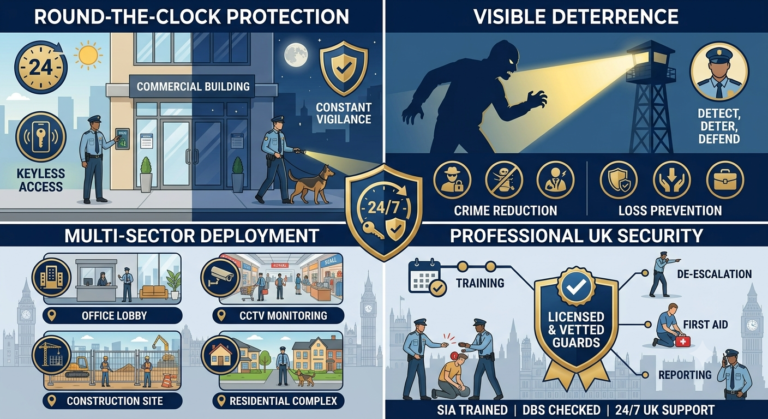
Introduction to 24/7 Security Guard Services
In today’s increasingly complex world, the demand for robust security measures has never been greater. 24/7 security guard services play a pivotal role in ensuring safety and security across a wide range of environments, from commercial to residential sectors. These services are designed to provide continuous, round-the-clock protection against various threats, including theft, vandalism, and unauthorized access.
The importance of 24/7 security guard services cannot be overstated. Businesses, for instance, rely on these services to safeguard their assets and protect employees and customers. In retail environments, the presence of security guards can deter potential criminal activities, creating a safer atmosphere for shoppers and staff alike. Furthermore, the visibility of security personnel not only provides a sense of security but also enhances customer confidence.
Residential areas are not exempt from security concerns, as homeowners increasingly seek ways to protect their properties and families. 24/7 security guard services can act as a strong deterrent against crime, often complementing other security measures such as alarm systems and surveillance cameras. The knowledge that trained security personnel are patrolling neighborhoods can significantly reduce the likelihood of criminal activity.
Moreover, these services adapt to various environments, including corporate offices, construction sites, and special events, tailoring their strategies to meet specific security needs. This flexibility ensures that individuals and organizations are receiving the necessary protection they require, regardless of their setting. As crime rates fluctuate, the need for reliable 24/7 security guard services continues to be a vital consideration for maintaining safety in the UK.
Types of Security Guard Services Available
In the United Kingdom, security guard services are essential for safeguarding various environments and assets. These services come in numerous forms, each tailored to meet specific security needs. The following outlines the primary types of security guard services available in the UK.
One common type is mobile patrols. Security personnel conduct regular checks and patrols of designated areas, utilizing marked vehicles to enhance visibility and deter potential criminal activity. This proactive approach not only reassures the public but also acts as a first line of defense against trespassers and disturbances.
Event security is another critical service offered by security companies in the UK. This service encompasses the deployment of trained security personnel at events such as concerts, corporate gatherings, and festivals. Event security teams are responsible for managing access control, monitoring crowd behavior, and ensuring compliance with health and safety regulations. Their presence allows event organizers to focus on delivering a successful experience while maintaining a secure environment.
Residential security services are aimed at providing protection for homes and private properties. This can involve the presence of security guards at the property, as well as surveillance systems and alarm monitoring. The goal is to create a safe living space for residents, deterring burglaries and ensuring prompt response in the case of emergencies.
Corporate security provides protection for businesses and offices, safeguarding assets, staff, and sensitive information. Security guards in this setting may monitor entrances and exits, enforce access control measures, and provide assistance in emergency situations. Their role is vital in maintaining a secure workplace atmosphere.
Lastly, specialized security services cater to high-risk situations, such as managing protests, strikes, or threats against individuals or organizations. These services require specially trained personnel who can handle complex scenarios, ensuring safety while navigating potential conflicts.
Each type of security guard service in the UK plays a significant role in promoting safety and security across various sectors, ultimately working to protect people, property, and peace of mind.
Key Benefits of 24/7 Security Services
Implementing 24/7 security services can provide numerous advantages across various sectors, enhancing overall safety and operational efficiency. One of the primary benefits of having round-the-clock security is the enhanced protection it offers. With security personnel present at all times, businesses and residential areas are less susceptible to crimes such as burglary, vandalism, and other trespassing incidents. This continuous vigilance serves as a strong deterrent, ensuring that individuals with ill intentions think twice before attempting to commit a crime.
Another significant advantage of having 24/7 security is the rapid response capability in the event of an incident. Whether it is a medical emergency, fire, or a security breach, the immediate presence of trained security staff allows for quick action. This prompt response can be crucial in mitigating damages and ensuring the safety of individuals on the premises. Having personnel readily available means that situations can be addressed swiftly, which is essential in high-stress environments.
Additionally, the presence of security staff can contribute to a more peaceful environment for clients and employees alike. Knowing that security services are on-site 24/7 instills confidence and peace of mind, allowing staff to focus on their work without the distraction of safety concerns. This sense of security can lead to improved morale among employees and a better overall customer experience.
Furthermore, 24/7 security services can assist in maintaining order within facilities, especially during after-hours operations when disturbances are more likely to occur. The continuous monitoring of cameras and the availability of personnel to patrol the premises can greatly reduce risks and identify potential concerns before they escalate.
In conclusion, the adoption of 24/7 security services presents unmatched benefits that include enhanced protection, rapid incident response, a deterrent presence against crime, and overall peace of mind for clients and employees. These services are integral for fostering safe and secure environments in today’s ever-evolving landscape of security challenges.
Choosing the Right Security Service Provider
When it comes to ensuring safety and security, selecting the right security service provider is of utmost importance. This decision requires careful consideration of several key factors to ensure that the chosen provider meets your specific needs effectively. One of the primary aspects to evaluate is the provider’s experience in the industry. A well-established security service provider with a proven track record is more likely to deliver reliable services. Businesses should seek providers with years of experience that can demonstrate successful handling of various security challenges.
Another critical factor is accreditation. Reputable security companies should hold appropriate certifications and licenses relevant to their operations. Accreditation from recognized authorities or industry organizations can serve as a validation of the provider’s commitment to established standards and practices. This can significantly influence levels of trust, as companies with the right credentials often adhere to best practices in security.
Customer reviews and testimonials play a significant role in the selection process as well. Prospective clients should consider feedback from current and previous clients to gauge the service provider’s reliability, professionalism, and effectiveness. Online platforms often contain valuable information from users, which can aid in evaluating the quality of service provided. Moreover, it is advisable to request references from the service provider and contact these references for firsthand accounts of their experience with the company.
Lastly, businesses should consider the range of services offered by the security company. Different organizations may require different types of security solutions, such as armed or unarmed guards, mobile patrols, surveillance monitoring, or specialized security services for events. Choosing a provider that can offer customized solutions tailored to your specific security needs will enhance overall protection.
The Role of Technology in Modern Security Services
The evolution of security services in the United Kingdom has been significantly enhanced by advancements in technology. In recent years, the integration of modern surveillance systems, access control mechanisms, and alarm monitoring solutions has transformed the landscape of security services, enabling companies to better protect assets and enhance response times, especially in 24/7 operations.
Surveillance systems have become increasingly sophisticated, employing high-definition cameras equipped with night vision and motion detection capabilities. These systems not only provide real-time monitoring but also facilitate remote access for security personnel. This technological shift has enabled security guard services to proactively address incidents rather than merely react post-event. Furthermore, integrating analytics tools within these surveillance systems allows for the assessment of patterns and potential threats, ensuring a higher level of preparedness.
Access control technology has also progressed, moving beyond traditional key-and-lock systems to more secure solutions such as biometric scanners and card access systems. These methods ensure that only authorized personnel can enter sensitive areas, thereby reducing the risk of unauthorized access significantly. This level of security is paramount for businesses that operate critical infrastructure or handle sensitive information.
Moreover, alarm monitoring systems have revolutionized the way security operations are conducted. With advancements in alarm technology, response times have been decreased dramatically. Modern systems can immediately notify security personnel of breaches or emergencies, leading to a swift response from security teams. The real-time alerts provided by these systems improve monitoring efficiency and enhance the overall effectiveness of 24/7 security operations.
In conclusion, the advancements in technology have played a vital role in shaping modern security services in the United Kingdom. Through the innovative use of surveillance systems, access control, and alarm monitoring solutions, security guard services are now better equipped to provide reliable and efficient protection that meets the demands of today’s security challenges.
Training and Qualifications of Security Guards
In the United Kingdom, obtaining the necessary training and qualifications is crucial for anyone aspiring to become a security guard. This ensures that personnel are competent and fully equipped to handle various security situations effectively. The security industry in the UK operates under a set of robust standards that govern the qualifications necessary for security professionals.
First and foremost, individuals seeking to work as security guards must obtain a Security Industry Authority (SIA) license. To gain this license, candidates are required to undergo specific training courses, which include modules on topics such as conflict management, physical intervention, and customer service skills. These training programs ensure that security personnel are not only knowledgeable about the legal frameworks governing their roles but also skilled in managing on-site incidents while maintaining professionalism.
Moreover, the training provided extends to understanding the importance of health and safety regulations, fire safety, and emergency response protocols. This comprehensive educational foundation helps security guards develop the ability to navigate complex environments while adhering to industry standards. Additionally, ongoing professional development and refresher courses are encouraged to keep security personnel updated with the latest practices and technologies in the field.
In terms of qualifications, it is often beneficial for security guards to possess additional certifications relevant to their assigned sectors. For example, guards working in areas that require specialized knowledge, such as healthcare facilities or high-security environments, may need additional training that aligns with specific industry requirements. By ensuring that security personnel possess these qualifications, the security services industry can maintain a high level of competency and uphold professionalism across all sectors.
Common Industries Utilizing 24/7 Security Guards
In the vast landscape of the United Kingdom, the demand for 24/7 security guard services spans across numerous sectors. Each industry possesses distinct characteristics and security requirements that necessitate round-the-clock protection. Understanding these varied needs is crucial for effective security solutions.
One of the most prominent sectors that utilize continuous security services is the retail industry. Retail establishments face unique challenges including theft, vandalism, and crowd control, particularly during peak shopping seasons. Security guards in retail settings not only deter criminal activities but also ensure customer safety, creating a secure shopping environment. Their presence is essential for monitoring surveillance cameras and responding swiftly to incidents.
The construction industry is another sector that greatly benefits from 24/7 security guards. Construction sites are often targeted due to the presence of valuable equipment and materials. Continuous security helps to prevent theft and damage while safeguarding the workforce. Security personnel can also manage access control to ensure only authorized personnel enter the site, thereby enhancing overall safety.
In the hospitality sector, establishments such as hotels and resorts require constant security oversight to protect guests and staff. 24/7 security can address emergencies, manage conflicts, and maintain an atmosphere of safety that guests expect during their stay. This sector often faces unique challenges, from dealing with unruly guests to ensuring public areas are secure at all times.
Residential areas, especially gated communities and high-rise apartments, have seen an increasing need for continuous security services. Homeowners seek peace of mind knowing that their properties are monitored around the clock. Security guards provide essential services, including patrolling neighborhoods, monitoring entry points, and facilitating a quick response to any suspicious activity.
In summary, the necessity for 24/7 security guard services is pronounced in various industries, including retail, construction, hospitality, and residential sectors. Each of these industries has unique requirements that highlight the importance of tailored security solutions to effectively enhance safety and security measures.
Case Studies of Successful Security Implementations
In the United Kingdom, numerous businesses and establishments have adopted 24/7 security guard services to safeguard their assets and ensure the safety of their clientele. These case studies illustrate the practical benefits and challenges encountered during implementation, along with the strategies used to overcome the obstacles.
One noteworthy example is a large retail corporation located in London, which experienced significant losses due to theft and vandalism. In response, the company decided to implement round-the-clock security patrols throughout their premises. Initially, the challenge was to find a competent security provider who could adapt to the unique needs of their retail environment. After conducting thorough research and consultations, they partnered with a reputable security firm that offered specialized training to its guards in customer service and conflict resolution. As a result, not only did theft incidents decrease significantly, but customer satisfaction ratings also improved due to the professional demeanor of the security staff.
Another case involves a technology firm based in Manchester that faced security threats related to sensitive data breaches and unauthorized access to their facilities. Recognizing the critical need for a robust security framework, the company integrated 24/7 security services, which included surveillance cameras and access control systems, manned by trained guards. However, the implementation process was fraught with difficulty, particularly in coordinating security protocols with operational workflows. To overcome this, the firm organized joint workshops between the IT and security teams, ensuring a seamless integration of their services. Subsequently, they reported an enhancement in their overall security posture, along with a noticeable decrease in incidents of unauthorized access.
These examples underscore the importance of tailored 24/7 security guard services that meet specific business needs while addressing challenges proactively. By investing in comprehensive training and fostering collaboration among various departments, organizations can effectively secure their premises and maintain a safe environment for employees and customers alike.
Future Trends in Security Guard Services
The security sector is continually evolving to address new challenges and leverage emerging technologies. As we look towards the future of security guard services in the United Kingdom, several trends stand out. One primary innovation is the integration of artificial intelligence (AI) into security operations. AI technology can enhance decision-making processes through data analysis, predictive policing, and threat assessment. By employing AI, security personnel can respond more effectively to incidents, prioritize resources, and even analyze vast amounts of data for suspect patterns.
Remote monitoring is another significant trend that is reshaping the security landscape. With advancements in technology, security guards can now oversee multiple locations through surveillance feeds and smart analytics. This capability not only increases efficiency but also serves to allocate human resources more effectively. By minimizing the need for constant on-site presence, remote monitoring allows security personnel to focus on critical situations where physical presence is necessary, thus optimizing the overall security operations.
Additionally, evolving legal regulations are influencing how security services are structured and function. As privacy laws become more stringent and public sentiment shifts regarding surveillance, security companies must adapt their practices to comply with new regulations while ensuring public safety. This adaptability could lead to the development of more robust training programs focused on legal and ethical guidelines in security settings.
In conclusion, the future of security guard services in the UK promises to be shaped by technology and regulation. The integration of artificial intelligence, enhancements in remote monitoring capabilities, and the need to comply with evolving legal frameworks are central to the industry’s progress. By understanding and anticipating these trends, security companies can better prepare for upcoming challenges, thereby enhancing their service offerings and maintaining a competitive edge in a dynamic environment.


0 Comments