


A vacant property needs a layered security plan, not a single lock and a hope. Within 72 hours, change or re-key locks, notify the insurer of the vacancy, and secure all ground-floor and accessible openings. A professional security provider can carry out a rapid site survey to confirm what else the property needs before problems set in.
TL;DR:
- Owners should notify insurers and conduct a thorough risk assessment before installing security measures to avoid invalidating coverage.
- Layered security combining deterrence, denial, detection, and response provides the most effective protection tailored to the property’s risk level.
- Costs typically start with locks and boarding within 72 hours, followed by electronic systems and regular inspections that scale with risk and vacancy duration.
- Physical security options, such as steel screens and fencing, should complement monitored alarms and patrols for maximum effectiveness.
- Regularly reassess the property’s risk once vacancy extends beyond initial estimates to ensure security measures remain appropriate.
Table of Contents
- Why vacant property security matters more than owners think
- How does layered vacant property protection work?
- What security measures actually protect an empty building?
- What insurance and council rules apply to empty properties?
- How to choose a vacant property security provider
- What’s a realistic vacant property security timeline and budget?
- How does Nexus Security Services approach vacant property protection?
- Why most vacant property advice gets the priority order wrong
- Protecting a vacant property without the guesswork of doing it alone
- Sources
- FAQ
Why vacant property security matters more than owners think
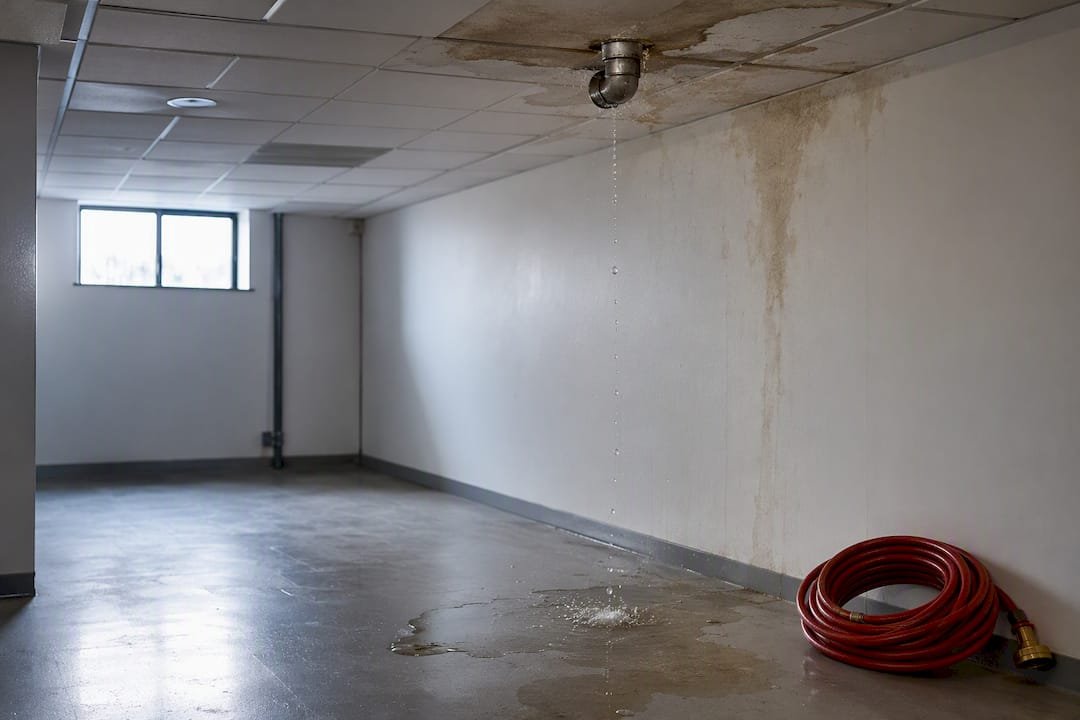
An empty building degrades faster than an occupied one, and the risks compound quickly. Theft of copper piping, boilers, and fixtures often happens within days of a property standing empty, while vandalism and graffiti tend to escalate once a building looks abandoned. Squatters can establish residence within weeks, arson risk rises sharply once debris and combustible waste accumulate, and undetected water damage from a burst pipe can ruin a property long before anyone notices.
The financial exposure is substantial. A recent industry survey found that vacant commercial property incidents cost landlords an average of nearly £50,000 a year in repairs, lost rent, and increased premiums. That figure covers theft, vandalism, and the knock-on costs of insurance claims, and it explains why insurers scrutinise vacant properties so closely.
Legal exposure sits alongside the financial risk. Owners retain occupiers’ liability even when nobody lives on site, meaning an injury to a trespasser or a passer-by from a collapsing fence or unsecured hazard can still land on the owner’s desk. Local authorities also hold real powers here.
Typical risks owners face include:
- Theft: metals, fixtures, and fittings stripped for scrap value.
- Vandalism: broken windows, graffiti, and structural damage.
- Squatting: unauthorised occupation that can be difficult and slow to reverse.
- Arson: often linked to accumulated waste or easy access.
- Water damage: burst pipes and roof leaks going unnoticed for weeks.
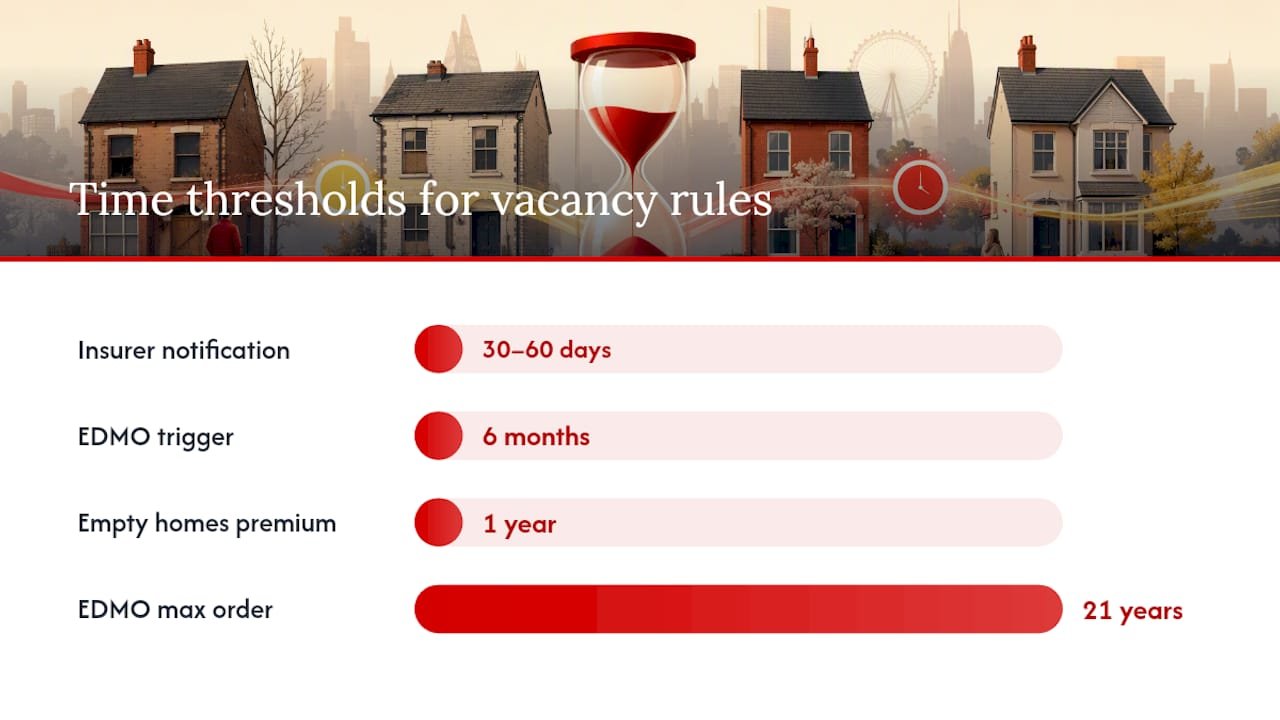
Councils can issue an Empty Dwelling Management Order on a residential property left vacant for six months or more, with a final order running for up to 21 years. Beyond that, many councils apply an empty homes council tax premium once a property has stood unoccupied and substantially unfurnished for a year, adding a recurring cost on top of any security spend.
How does layered vacant property protection work?
Security professionals build vacant property protection around four layers: deterrence, denial, detection, and response. Each layer buys time and reduces the chance that a determined intruder gets far, and the combination matters more than any single measure. A layered security strategy covering physical deterrents, access control, electronic monitoring, and regular inspections is the approach recommended for vacant commercial premises, and it scales down just as well for a single empty house.
Deterrence is the visible signal that a property is being watched and maintained. Warning signage, lit exteriors, tidy grounds, and visible CCTV housings all tell an opportunist to move on before they try the door.
Denial is the physical layer that stops or slows entry. Steel security screens over windows, reinforced doors, palisade fencing, and concrete blockers on vehicle access points fall into this category.
Detection covers the systems that notice an intrusion attempt as it happens, not after the fact. Monitored alarms, motion-activated lighting, and CCTV towers linked to a monitoring centre all belong here.
Response is what happens once detection triggers an alert, whether that’s a mobile patrol dispatched to the site or a keyholder attending in person.
Scaling the four layers to risk level
Not every vacant property needs the same intensity of protection. A low-risk rural property with limited public access might need only deterrence and denial: boarding, signage, and a fortnightly inspection. A medium-risk suburban house awaiting sale often benefits from adding detection, such as a monitored alarm and periodic CCTV checks, alongside those physical measures. A high-risk site, such as a large commercial unit near a town centre or a property that has already suffered an attempted break-in, generally needs all four layers active simultaneously, including a mobile patrol contract with a defined response time.
Before committing to any of it, work through a short risk assessment:
- How visible and accessible is the property from the street or a public right of way?
- Has the property or the surrounding area had recent incidents of theft, vandalism, or squatting?
- What’s inside worth stealing, metals, fixtures, plant, or stock?
- How long is the vacancy expected to last?
- What access does the property have to mains power for electronic systems?
- Are there structural weaknesses, broken windows, damaged fencing, that need immediate attention?
Pro Tip: Reassess the risk level every time the vacancy extends past its original timeline. A property judged low-risk for a three-month sale often becomes medium or high-risk once it drifts past six months, particularly if nearby properties have also gone empty.
What security measures actually protect an empty building?
Owners typically encounter a familiar set of options once they start researching empty building security, and each comes with real trade-offs worth understanding before money changes hands.
Steel screens versus timber boarding. Steel security screens fit over window and door openings without altering the building’s appearance from a distance, and they’re reusable across multiple properties. Timber boarding is cheaper upfront but signals vacancy immediately, which undermines the deterrence layer even as it denies physical access.
Temporary CCTV towers. These self-contained units run on battery or solar power, link to a monitoring centre, and can be deployed within days. They’re one of the more mature short-term options available; accredited, monitored temporary CCTV and alarm towers now offer a genuinely cost-effective alternative to permanent installations for sites awaiting sale, redevelopment, or refurbishment.
Wireless alarms. Battery-powered systems avoid the need for mains wiring, which matters on a site where the electricity has been disconnected. Positioning matters enormously here. A poorly sited sensor produces false alarms that erode a monitoring centre’s confidence and can leave a genuine breach unactioned.
Concrete barriers and fencing. Blockers across vehicle access points prevent ram-raid style attacks on shutters or loading bays, while palisade or heras fencing controls pedestrian access to the perimeter. Planning permission rarely applies to temporary fencing, though listed buildings or conservation areas can carry restrictions worth checking first.
Fogging systems and forensic marking. Security fog fills a room with a dense, harmless vapour within seconds of a trigger, disorienting an intruder long enough for a response team to arrive. Forensic marking of remaining valuables, meanwhile, supports preventing vehicle access and marking assets for identification as recommended practice, and it also helps police recovery if theft does occur.
Mobile patrols and property guardians. Scheduled patrols provide the response layer without the cost of a static guard, while guardian schemes place vetted occupants in the building temporarily. Guardianship reduces some risks but introduces others, since occupants are not security professionals and insurers don’t always treat guardian occupation the same as a monitored vacant property.
Deployment always raises the same practical questions: does the site have power for electronic systems, does the local authority need notifying about fencing or hoarding, does the fire brigade need clear access maintained, and does the insurer’s vacancy clause actually recognise the measures being installed. Skipping that last check is one of the most common and costly mistakes owners make.
What insurance and council rules apply to empty properties?
Insurers treat vacancy as a material change in risk, and most policies contain a clause requiring notification once a property stands empty beyond a set period, often 30 or 60 days. Failing to notify can void cover entirely at the exact moment a claim arises, which makes this one of the first calls to make, not an afterthought.
Insurers commonly expect a documented package covering:
- A written risk assessment of the property and its surroundings.
- Evidence of strengthened physical security, screens, locks, and fencing.
- Maintenance of critical systems such as fire alarms and sprinklers where fitted.
- A regular inspection regime with dated, logged visits.
- Prompt notification of the vacancy and any change in circumstances.
That last point matters because insurers and risk managers recommend risk assessment, strengthened physical security, maintained critical systems, regular inspections, and insurer notification as the baseline for preserving cover, not an optional extra.
Local authorities carry separate powers. An Empty Dwelling Management Order can be applied to a residential property vacant for six months or longer, letting the council manage or let the property, with final orders running up to 21 years in the most persistent cases. Councils can also board up or secure premises directly under emergency local government powers if a property is judged unsafe, and recover the cost from the owner.
On the tax side, councils can charge an empty homes premium once a property has been unoccupied and substantially unfurnished for a year, though exceptions exist for properties undergoing probate, major repair, or active marketing, and each council decides its own local application. Keeping dated inspection logs, insurer correspondence, and repair invoices in one file makes it far easier to demonstrate compliance to both insurer and council if either ever questions the property’s status.
How to choose a vacant property security provider
Credentials separate a serious security provider from someone with a van and a few cameras. Confirm that any manned guarding supplier holds SIA Approved Contractor Scheme status, since SIA ACS is the recognised quality mark for manned guarding, alongside NSI and SSAIB accreditation for alarm and CCTV installations. A provider without one of these accreditations is a warning sign, not a minor omission.
Before signing anything, ask the provider these questions:
- What vetting and training do patrol officers or static guards go through, and is it ongoing or a one-off induction?
- What’s the guaranteed response time to a triggered alarm, and is that written into the service level agreement?
- How often are inspection visits logged, and will you receive dated reports with photographic evidence?
- What happens if a guard or patrol officer is unavailable, is a replacement guaranteed within a set window?
- Who has access to CCTV footage and monitoring data, and how is that data stored and secured?
- Does the provider carry public liability insurance, and at what level?
Pro Tip: Ask to see a sample inspection log before signing. A provider that can’t produce one for an existing client is unlikely to produce one for you either, and a documented log is often exactly what your insurer will ask to see after an incident.
Pricing structures vary between a flat monthly retainer, a per-visit patrol charge, and a tiered package combining electronic monitoring with occasional manned checks. Watch for contracts with automatic renewal clauses, minimum term lock-ins that outlast your vacancy, or vague response-time language such as “prompt attendance” instead of a stated number of minutes.
What’s a realistic vacant property security timeline and budget?
Costs vary with site size, access, and whether mains power is available on site, but most vacant property protection plans follow a similar sequence. The first 24 to 72 hours cover locks, boarding of any breached openings, and insurer notification. Within one to two weeks, electronic systems such as CCTV towers and monitored alarms typically go live, alongside the first documented inspection.
After that, inspection visits usually settle into a fortnightly or monthly cadence, with frequency rising if the property sits in a higher-risk area or has already suffered an incident.
| Package element | Typical timeframe | What drives cost |
|---|---|---|
| Initial risk survey | 1 to 3 days | Site size, access, distance from base |
| Boarding and screens | 1 to 5 days | Number of openings, material choice |
| CCTV tower and alarm | 3 days | Power availability, monitoring contract length |
| Mobile patrol contract | Ongoing | Visit frequency, response time guarantee |
| Inspection reporting | Fortnightly to monthly | Risk level, insurer requirements |
Hand a version of this sequence to any assessor at the outset, it keeps quotes comparable and stops a provider from padding the timeline unnecessarily.
How does Nexus Security Services approach vacant property protection?
Security providers typically build every vacant property engagement around a site survey first, rather than applying a standard package blindly. Trained personnel assess access points, existing vulnerabilities, and the surrounding area before recommending which of the deterrence, denial, detection, and response layers the specific site actually needs.
A proactive combination of accredited technology and experienced personnel, rather than either alone, is what tends to hold up when a property faces repeated attempts at intrusion over a long vacancy.
This combination can result in reduced incident volumes and faster resolution when incidents occur, as monitored systems paired with mobile response can shorten the path from alert to attendance compared to either element alone. Owners who want to understand how manned guarding fits alongside electronic measures can review how security guards support vacant property protection in more detail. Requesting a site survey is a common starting point for a vacant property security engagement.
Why most vacant property advice gets the priority order wrong
Most guidance on this topic leads with equipment: which alarm, which screen, which camera. That’s backwards. The research behind this article points to a different starting order, notify the insurer and complete a proper risk assessment before spending a pound on hardware, because a policy voided by a missed notification clause makes every other measure irrelevant when a claim actually lands.
The other overrated idea is that one strong measure covers the gap. A steel door with no monitoring behind it just delays an intruder by a few minutes. A monitored alarm with no physical barrier gives them the same few minutes to strip what’s nearest the door. The layered approach isn’t a sales pitch for buying more, it’s the only structure that actually closes the gaps between deterrence, denial, detection, and response.
Owners should prioritise the boring paperwork first: insurer notification, a written risk assessment, and a logging system for inspections. Everything else, screens, cameras, patrols, should be sized against that assessment rather than bought on instinct.
— Alex
Protecting a vacant property without the guesswork of doing it alone
Some security providers work with property owners and managers who need a vacant property secured properly and quickly, rather than assembled piecemeal from hardware and spare time. The advantage of using a dedicated provider is that they assess the site, recommend an appropriate mix of physical and electronic measures, and may supply mobile patrol or static guard response to back it up, avoiding the need to coordinate multiple separate suppliers while the property remains exposed.

That matters most for owners managing a portfolio, a construction site awaiting handover, or a commercial unit between tenants, where a delayed decision costs more than a delayed installation. If continuous cover is what the property needs, the 24/7 security guard services page outlines how ongoing patrols and monitoring contracts work in practice. Get in touch to arrange a site survey and a proportionate recommendation for the property’s actual risk level.
This article is general information, not a substitute for advice from a qualified lawyer. Consult a qualified legal professional about your own circumstances before acting on anything here.
Sources
- Housing Act 2004 — final empty dwelling management orders
- Vacant commercial crime prevention guidance (National Business Crime Centre)
- Gov
- Vacant commercial property incidents cost landlords nearly £50k a year (FMJ)
- How to protect your empty business premises against heightened crime risks (StrategicRISK)
FAQ
How do I secure an unoccupied house?
Change the locks, board or screen any accessible openings, notify your insurer of the vacancy, and arrange regular logged inspections. Add a monitored alarm or CCTV tower if the property is in a higher-risk area or the vacancy is likely to run beyond a few weeks.
How long can a house be left unoccupied?
There’s no fixed legal limit on how long a house can stand empty, but consequences build over time. Councils can apply an Empty Dwelling Management Order after six months, and an empty homes council tax premium typically applies once a property has been unoccupied and unfurnished for a full year.
What does it mean when a property is under professional vacant property security?
It means a provider such as NEXUS SECURITY SERVICES LTD has assessed the site and put layered measures in place, physical barriers, electronic monitoring, and scheduled inspections or patrols, to deter and detect unauthorised access and respond quickly if it occurs.
Do you have to pay tax on an empty property?
You may, depending on your local council’s rules. Many councils apply an empty homes council tax premium once a property has been vacant and substantially unfurnished for a year, though exceptions exist for cases such as probate or active repair work.


0 Comments