


Booking the same nightly visit for every property can leave different risks covered by an identical schedule. Mobile security patrols should follow a site-specific risk assessment, with frequency based on exposure, operating hours, existing controls and the consequences of an incident.
A suitable plan may combine fixed lock-up checks, varied inspection times and separate alarm response arrangements. Start by identifying what needs checking, when the site becomes vulnerable and how long a problem can reasonably remain undiscovered.
Key takeaways
- Base patrol frequency on the premises, assets, people and incident history, rather than adopting the schedule used at another property.
- Separate time-critical duties, such as locking a delivery gate after dispatch, from inspections whose timing can vary within agreed windows.
- Assess the gaps between visits, including weekends and extended closures, rather than judging coverage by the number of attendances alone.
- Define the checks, access arrangements and escalation actions for each visit, with sufficient time for officers to complete them safely.
- Combine patrols with suitable locks, fencing, lighting, access control, alarms and CCTV, since intermittent attendance leaves periods without an officer present.
- Review attendance records alongside incidents and unresolved defects, then change the schedule or strengthen other controls when the evidence supports it.
Set mobile security patrols by site risk
A patrol schedule needs a clear purpose before it needs a frequency. Identify whether the main requirement is detecting forced entry, checking vacant premises, securing gates, investigating damage or supporting staff after closure.
Different purposes may require different routes, visit lengths and attendance windows. Counting visits without defining their function gives managers little basis for deciding whether coverage is adequate.
Assess likelihood and consequences separately
Record credible threats and the conditions that make them possible. An isolated rear entrance, repeated trespass, accessible stock or a damaged boundary can affect the likelihood of an incident.
Assess the consequences separately. Theft of replaceable equipment and damage that stops an entire dispatch operation create different recovery demands. Staff exposure, interrupted production, lost access and delayed deliveries belong in the assessment alongside replacement costs.
Use previous incidents, attempted entries, near misses and staff observations. An incident-free period does not establish that every existing control works.
Record what existing controls achieve
Assess the property as it operates, rather than as its security drawings suggest. A locked compound provides little protection when deliveries routinely leave its gate open.
Walk the premises during normal activity and after dark. Record failed lighting, camera blind spots, unreliable doors and access arrangements that depend on informal knowledge.
The HSE’s risk assessment guidance addresses workplace health and safety risks. It supports assessing how patrol duties can be performed safely, but it does not prescribe a commercial security patrol interval.
Give the facilities manager responsibility for maintaining the security assessment. Give the security contractor responsibility for translating the agreed scope into workable patrol instructions.
Map exposure across the whole operating week
Opening hours provide only part of the scheduling picture. Deliveries, cleaners, contractors, late-working staff and shared access can keep parts of a property active after the main business has closed.
Map those movements before deciding when patrol coverage begins. The period described as “out of hours” may contain several different operating conditions.
Identify transitions that create gaps
Shift changes, final collections and closing routines deserve attention because responsibility often changes at these points. A dispatch team may finish before the last vehicle leaves.
Assign ownership of the final gate closure, alarm setting and remaining contractor departures. State whether a patrol officer is securing the premises or inspecting a closure completed by someone else.
Visit timing should follow the actual transition. An inspection completed before the final delivery cannot establish that the loading area was secured afterwards.
Include early arrivals. A gate unlocked for the first contractor may expose the yard before the main workforce arrives.
Treat weekends and closures as separate conditions
A weekday schedule should not carry over automatically into weekends, bank holidays or a prolonged shutdown. Fewer people may notice damage, water leaks, unsecured doors or unauthorised occupation.
Vacant areas need their own consideration within an occupied estate. A busy reception does not provide oversight of an empty rear unit or isolated plant compound.
Record legitimate access during closures, including maintenance visits and landlord inspections. Officers need to distinguish authorised activity from unexpected presence without relying on unanswered calls to individual employees.
Where properties share roads or service yards, name the party responsible for communal areas. Otherwise, each occupier may assume that another organisation’s patrol covers the same boundary.
Review the weekly pattern whenever tenants, shifts or opening arrangements change. The patrol schedule should follow current occupancy, not the original lease plan.
Judge coverage by the gaps between visits
A schedule can contain several visits while leaving its longest vulnerable period largely unattended. Total attendance is useful, but the longest unattended gap often deserves closer attention.
Assess what could happen between visits, how it would be detected and who would respond. This establishes whether periodic inspection is an appropriate control at all.
Consider how quickly harm can occur
Some problems develop gradually. Damaged fencing, accumulating fly-tipping or signs of attempted entry may be identified through routine inspections and followed by repairs.
Other risks require immediate observation or intervention. Aggression towards staff, uncontrolled visitor access and theft during active loading cannot be managed reliably by an officer who attends later.
Ask what delay the business can tolerate for each identified risk. Include the time needed to recognise the problem, contact the responsible person and take action.
A patrol may discover an intrusion after entry has occurred. Its schedule should not imply continuous protection where the service only provides periodic checks.
Include the time required to inspect properly
Visit duration affects coverage as much as visit frequency. A compact office entrance and a warehouse estate with several compounds require different inspection times.
Allow for walking routes, controlled doors, internal access and reporting. Include the time needed to deal with a defect rather than assuming every visit will be uneventful.
A vehicle passing the entrance establishes very little about a rear fire exit, detached store or concealed fence line. Instructions should distinguish a drive-by observation from a full external or internal inspection.
A completed visit does not establish that every vulnerable area was inspected. Attendance evidence and inspection evidence answer different questions.
Where the required route cannot fit safely into the allocated visit, change its duration or scope. Compressing the inspection preserves the timetable while weakening the service.
Combine fixed checks with varied patrol times
Predictability has a legitimate place in a security plan. A gate may need locking after dispatch, and an opening inspection may need completing before staff arrive.
Other visits can vary within defined windows. The distinction should follow the task, rather than treating every scheduled attendance as a weakness.

Keep operational duties tied to events
Write fixed duties around clear events, such as the final collection, contractor departure or end of trading. Assign responsibility for notifying security when those events run late.
A lock-up instruction needs a defined result. State which gates and doors must be secured, which people may remain and what prevents the officer from completing the closure.
Record incomplete duties promptly. If staff are still working inside, the report should explain the revised arrangement and who accepted responsibility.
Fixed attendance supports a reliable handover. It should not become an assumption that normal operations always finish at the same time.
Vary inspections within controlled limits
Randomised patrols should still meet a defined service requirement. Agree the periods needing coverage, the areas to inspect and any limits on the gap between attendances.
Vary arrival times and, where appropriate, the order of inspection. Keep mandatory checks intact so unpredictability does not become an excuse for inconsistent coverage.
Avoid concentrating visits near the beginning or end of a shift simply because those times suit the route. Managers should assess whether the distribution matches the site’s exposure.
Keep detailed timing information restricted to people who need it. Legitimate staff require access and escalation instructions, but a widely circulated timetable can make attendance easier to anticipate.
Match the schedule to the premises
Property type provides useful context, but it does not decide frequency on its own. Occupancy, layout, stock, access and neighbouring activity can produce different requirements within the same sector.
These distinctions help identify where routine checks belong and where another form of coverage may be needed.
Offices and vacant commercial units
Closed offices may need checks of entrances, accessible windows, car parks and isolated service areas. Variable occupancy can leave floors or entrances unused whilst other parts remain active.
Include cleaners and late-working staff in the access plan. Officers need an agreed method for establishing whether someone should be present, without entering occupied areas unnecessarily.
Vacant units require a separate inspection scope. Signs of forced entry, damaged glazing, unauthorised occupation and visible property defects may require different reporting and attendance arrangements.
A vacant unit within a busy estate should not disappear from the schedule because neighbouring premises remain occupied.
Warehouses and distribution premises
Warehouse patrols should reflect dispatch activity, yard movements and the location of stock or equipment. Perimeter inspections alone do not establish that trailers, loading doors or detached compounds are secure.
Assign checks around the end of loading activity and periods when the yard becomes unattended. Record authorised vehicles that remain after normal departures.
Where gatehouse verification is required throughout operations, periodic visits cannot replace that function. Patrols can support boundary inspections and after-hours checks alongside staffed access control.

Retail premises and shared estates
Retail properties may need different coverage during trading, closing and overnight periods. Customer-facing incidents require a different response from checking shutters after closure.
On retail parks, assign responsibility for service yards, vacant units, pedestrian routes and shared car parks. Tenant security arrangements may stop at the unit boundary.
For larger developments, retail security patrol arrangements should sit within the estate’s wider operating plan. Shared areas need clear coverage rather than overlapping assumptions.
Change construction patrols as the project changes
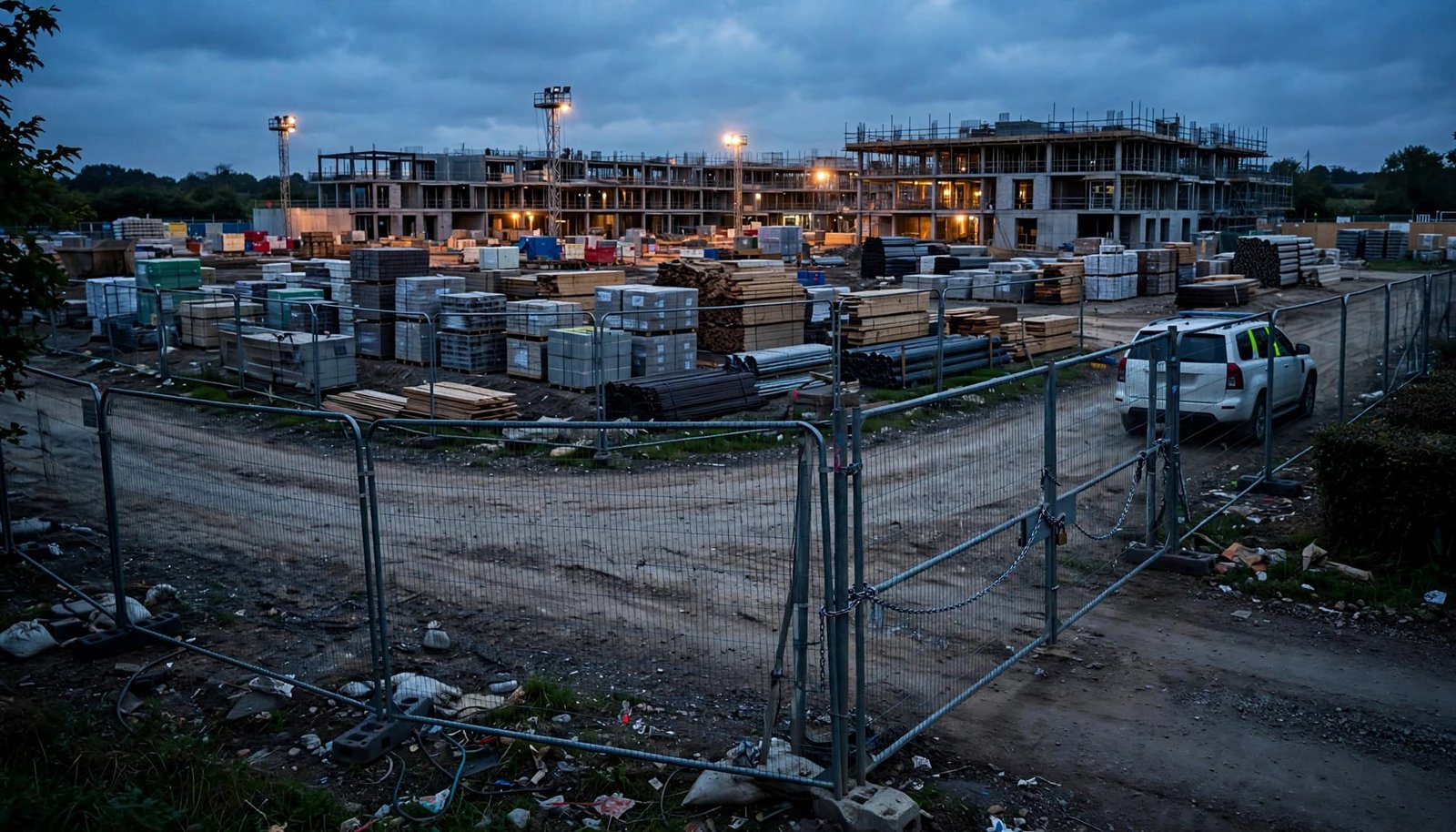
Construction risk changes with the works, delivery programme and condition of the boundary. A patrol plan suitable during early groundworks may become inadequate when valuable materials or fitted equipment arrive.
Review the schedule against the current programme. The original tender scope cannot describe every later stage accurately.
Link attendance to changing assets and access
Record the arrival of plant, fuel, cables, boilers and other attractive materials. Consider where they are stored, how they are secured and whether their arrival changes the consequences of unauthorised access.
New scaffolding, temporary openings and utility works can alter entry routes. Plot handovers can also create a mixed environment containing contractors, residents and incomplete areas.
The principal contractor should provide current drawings and access instructions. Patrol officers should not have to discover a relocated gate during an alarm response.
Where exposure rises substantially, stronger storage, temporary guarding or improved detection may be more appropriate than adding visits alone.
Inspect boundaries after operational changes
Temporary fencing and hoarding need attention after deliveries, groundworks and alterations. Inspection routes should follow the present boundary rather than a previously approved line.
Record defects by location and assign a repair owner. Additional patrols may provide interim observation, but they cannot restore the physical resistance of a damaged fence.
The relationship between patrols, materials storage, perimeter controls and response arrangements belongs in the construction site security plan. Treat these as connected responsibilities.
Include site safety restrictions. An officer attending after dark needs approved routes and clear limits around excavations, unfinished structures and restricted work areas.
Specify what each patrol visit must cover
A frequency only becomes useful when the inspection itself is defined. Write instructions that identify the locations, expected conditions and actions required when something differs.
Separate mandatory checks from observations made along the route. Otherwise, a general instruction to “patrol the site” can produce inconsistent inspections.
Use named locations and observable conditions
Identify gates, shutters, doors, fence sections, compounds and vulnerable windows using the site’s own reference system. Match those references to a current plan.
Describe the expected condition in practical terms. An officer should be able to record whether a gate is secured, a door shows damage or a service route is obstructed.
Include suspicious vehicles, lighting faults and signs of attempted access where these relate to identified risks. Avoid filling instructions with checks that no longer serve a purpose.
Internal inspections require written authority, working access credentials and clear boundaries. An external-only patrol should never be reported as an internal building inspection.

Define action when a check fails
Every important check needs a corresponding response. State what happens when a gate cannot be secured, a vulnerable door is open or an unexpected person remains on site.
Assign authority for temporary measures, maintenance call-outs and escalation. Officers need to know which decisions they can make and which require approval.
Keep emergency routes available. Security instructions should not require officers to obstruct fire exits or prevent legitimate emergency access.
Record any area that could not be inspected and explain why. A locked internal door, blocked route or unsafe condition should produce a clear exception, not a completed checkpoint.
Separate routine patrols from alarm response
Scheduled visits and alarm attendance perform different functions. Routine patrols inspect agreed conditions; alarm response is triggered by an activation or reported concern.
Combining them can strengthen coverage, but the operating plan must describe both. A future scheduled visit should not become the default response to an urgent alert.
Give every alert a defined response
Record who receives intruder alarms, CCTV alerts and reports from staff. State how the recipient assesses the information and requests attendance or emergency assistance.
Provide current site references, access instructions and escalation contacts. A responder needs to identify the correct building, enter authorised areas and locate the reported zone.
Keyholding arrangements should cover controlled custody, usable keys and current codes. Possessing a key does not establish that every relevant door can be opened.
Include a fallback when the main contact is unavailable. A response process that stops at an unanswered telephone leaves the decision unresolved.
Protect routine coverage when incidents intervene
An alarm attendance may take longer than a normal visit. Officers may need to preserve a scene, await assistance or remain whilst temporary security is arranged.
The service plan should explain how other scheduled visits are managed during that disruption. Record delayed, reassigned or incomplete attendance rather than silently compressing later inspections.
Distinguish an agreed response arrangement from a guaranteed immediate arrival. Travel, location, access and competing incidents affect what mobile resources can deliver.
Where the consequence of delay is unacceptable, consider an on-site presence or stronger detection and physical protection. More routine visits do not remove the time needed to respond between them.
Keep patrol duties within safe working limits
A patrol schedule must be deliverable without exposing officers or occupants to avoidable risk. Longer routes, isolated buildings and night working require suitable arrangements, not simply additional tasks.
Set safe access routes, communication requirements and escalation limits before patrols begin. These conditions affect both visit duration and the type of service required.
Match licensing and competence to the activity
The licensing requirement follows the work being carried out. Guarding premises against unauthorised access or protecting property can involve licensable activity under the SIA framework.
The official SIA licensing guidance distinguishes activities and the circumstances in which a licence is required. Write the service scope around those duties rather than treating “mobile patrol” as a complete role description.
Licensing does not replace site induction. Officers still need instructions covering hazards, access restrictions, emergency arrangements and the limits of their authority.
Allocate specialist duties only where the necessary training and arrangements exist. A general patrol brief should not quietly acquire traffic management, technical maintenance or investigative responsibilities.
Define lone-working and confrontation limits
Set arrangements for welfare contact, loss of communication and overdue completion. Identify areas where a lone officer should not enter or continue without support.
An officer finding signs of an active intrusion needs a clear escalation procedure. The schedule should not depend on pursuing intruders or confronting a group without assistance.
Avoid sending employees into uncertain situations simply because they live nearby. Keyholding and response arrangements should identify who is trained and authorised to attend.
Weather, flooding, failed lighting and damaged access routes can also make an inspection unsafe. Record the limitation, protect people and arrange an appropriate response.
Use patrols alongside physical and electronic security
Mobile security patrols provide human observation and follow-up at intervals. Locks, barriers, alarms, lighting and surveillance provide different functions during the periods between visits.
Assign each control a clear purpose. Equipment should either restrict access, detect activity, support assessment or help the response.
Maintain resistance and detection between visits
Repair weak doors, unreliable locks and damaged fencing rather than relying indefinitely on extra attendance. Physical controls can delay access continuously when correctly used and maintained.
Alarms and monitored cameras can draw attention to activity between patrols. Their value depends on suitable coverage, reliable operation and clear response instructions.
The police guidance on protecting business premises against burglary includes attention to CCTV coverage of vulnerable areas. A camera list alone does not establish that those areas are visible after dark.
Lighting should support safe inspection and usable images. Consider glare, shadows and failed fittings, rather than assuming a brightly lit frontage covers the whole site.
Connect information to decisions
Give responders the information needed to distinguish expected activity from a concern. Relevant records may include authorised contractors, remaining vehicles, access events and the location of an alarm activation.
Network-connected cameras and access systems require managed permissions, updates and fault reporting. Installed equipment can become ineffective through poor configuration or unresolved failures.
A patrol report should identify a camera obstruction or access-control fault when observed, but technical investigation needs an assigned owner. Security officers should not be expected to repair systems without authority or competence.
Increasing patrol frequency can shorten some inspection gaps. It cannot make an unmonitored alarm or broken lock perform its intended function.
Require evidence of checks and action
A visit record should establish where the officer attended, what was inspected and what followed. A single arrival timestamp answers only the first question.
Agree the reporting requirements before setting the schedule. Managers need enough information to assess delivery without collecting unnecessary material.
Distinguish attendance from completed inspection
GPS records can support evidence that a device attended a location. Checkpoint scans can support evidence that particular points were reached.
Neither establishes, by itself, that a door was tested, damage assessed or a reported defect escalated. Those actions need suitable records.
Require location-specific exceptions and clear descriptions. “Rear pedestrian gate unsecured, duty manager notified” provides a usable starting point. “Site checked” leaves the condition and response unclear.
Photographs can support damage reports where appropriate and safe. Avoid routine images of identifiable people or sensitive areas when they are unnecessary for the task.
A completed report should also record any omitted inspection and the reason. Exceptions are part of an accurate service record.
Track issues beyond the original visit
Give defects a reference, responsible owner and status. Subsequent patrols should distinguish a new problem from an unresolved issue already awaiting action.
The facilities manager should receive maintenance matters, whilst urgent security concerns should follow the escalation procedure immediately. Sending everything into one unread report folder defeats that distinction.
Record action taken, not merely notification sent. A message may establish that someone was contacted without establishing that the property was secured.
Keep retention and access arrangements proportionate to the records. Patrol reports, photographs and access information should remain available to authorised people without becoming widely accessible.
Review the schedule against incidents and defects
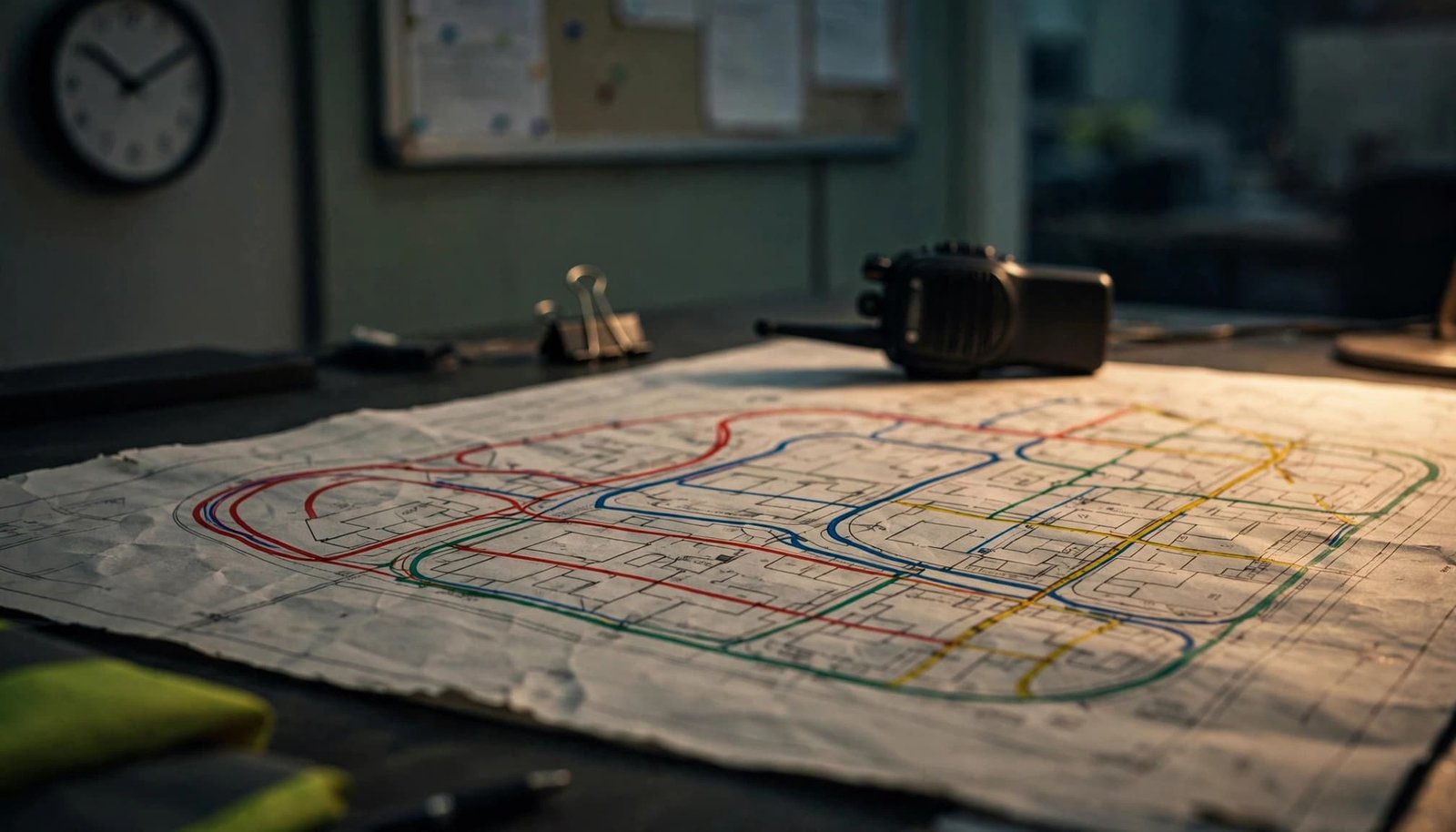
A patrol schedule should remain open to adjustment. Attendance records show service delivery, but incidents, near misses and unresolved weaknesses show whether the arrangement addresses current exposure.
Review operational reports weekly and compare patrol coverage with incident patterns each month. Bring the review forward after significant changes or serious concerns.
Look for patterns in location and timing
Compare when incidents occurred, when they were discovered and which areas were inspected. Separate confirmed times from estimates so the review does not create false precision.
Repeated problems along one boundary may justify a changed route, different timing or stronger physical protection. Repeated issues immediately after closure may indicate a failed handover.
Include near misses and failed checks. An unsecured gate found before a loss still reveals a weakness requiring action.
Consider reporting changes when interpreting trends. More detailed inspections may identify more defects without meaning that the underlying condition has suddenly deteriorated.
Change the control that is failing
Additional visits are one possible response, not the automatic response. Repairing a gate, changing delivery procedures or improving monitored coverage may address the cause more effectively.
Where patrol duties or working conditions change, update the associated safety assessment. The HSE’s assessment templates and examples provide a structure for recording workplace hazards, controls and further actions.
Record the reason for a scheduling change and the evidence that will be reviewed afterwards. Assign an owner and a review date.
Reduced coverage also needs justification. A quiet period may support a change when exposure and other controls permit it, but absence of reported crime alone is weak evidence.
Compare cost, scope and responsibility together
The cheapest visit may cover less ground, allow less inspection time or exclude duties assumed to be included. Compare the service scope before comparing the total charge.
Patrol costs depend on frequency, travel, visit duration, access complexity, reporting requirements and response arrangements. A meaningful comparison needs the same operating requirements.
Separate routine and contingent work
Define what the routine service includes and which activities are charged separately. Distinguish inspections, lock-up duties, internal access, alarm attendance and extended incident cover.
State how closures, additional visits and temporary changes are authorised. The property manager should know who can request extra attendance and how that decision is recorded.
Avoid reducing inspection time simply to fit a preferred price. A shorter visit is appropriate only when its scope remains achievable.
Across a property portfolio, assess each site before combining routes. Geographical convenience can improve delivery, but it should not dictate the same coverage for properties with different risks.
Identify when patrol-only coverage is inadequate
A site needing continuous gatehouse control, visitor handling or immediate support requires a person available for those duties. Periodic attendance leaves that requirement unmet between visits.
The comparison between mobile patrols and manned guarding turns on that distinction. Choose the model by the required function and response, not by whichever option appears stronger on a tender heading.
A blended arrangement can retain staffed coverage during active operations and use patrols during lower-contact periods. It still needs a clear handover and defined responsibility.
Put the agreed scope, access arrangements, reporting and change process into the operating plan. Price should relate to a service that can be delivered and assessed.
Frequently asked questions about patrol frequency
Is a nightly patrol enough for a business?
A nightly visit may suit some inspection requirements, but frequency alone cannot establish adequacy. The answer depends on the site assessment, visit timing, inspection scope and protection between attendances.
Consider the longest unattended period and the consequences of delayed discovery. Where people need immediate support or access requires continuous control, a nightly inspection cannot fulfil that function.
Should patrol times be completely random?
Some duties need predictable timing because they support an operational event, such as lock-up or opening. Other inspections can vary within agreed coverage windows.
Randomisation should not remove mandatory checks or allow excessive gaps. Set the coverage requirement first, then vary attendance within limits that remain suitable for the premises. Record what happened when operational disruption prevented that arrangement.
Do alarm call-outs replace scheduled patrols?
Alarm response and routine inspections address different needs. An alarm can prompt attendance after a detected activation, whilst patrols can identify visible damage, unsecured areas or other conditions covered by their instructions.
The appropriate combination depends on detection coverage and the inspection purpose. An alarm arrangement does not establish that unmonitored compounds, damaged fencing or vacant areas receive routine physical checks.
How often should the patrol schedule be reviewed?
Review reports weekly and assess the schedule against incidents and unresolved defects each month. Significant operational changes should prompt an earlier assessment.
Relevant changes include altered opening hours, new tenants, valuable deliveries, building works, repeated trespass and failed security equipment. Assign the review to a named manager so findings lead to decisions rather than accumulating in reports.
Can several properties share a mobile patrol route?
Yes, where travel, inspection requirements and coverage windows allow a workable route. Each property still needs its own risk assessment, access instructions and escalation arrangements.
Shared routing should not hide delays or reduce inspections below their agreed scope. Include arrangements for alarm attendance and extended incidents, since disruption at one location can affect the remaining scheduled visits.
Set a schedule that matches the work required
A suitable patrol schedule follows the site’s risks, operating pattern and required response. Visit numbers matter only when the inspections are defined and the gaps are understood.
Combine fixed operational checks with varied inspections where appropriate. Keep physical protection, detection and response arrangements working between visits.
Assign a manager to review the evidence and close defects. The measure of coverage is completed checks and resolved risks, not a timetable filled with attendance promises.


0 Comments