

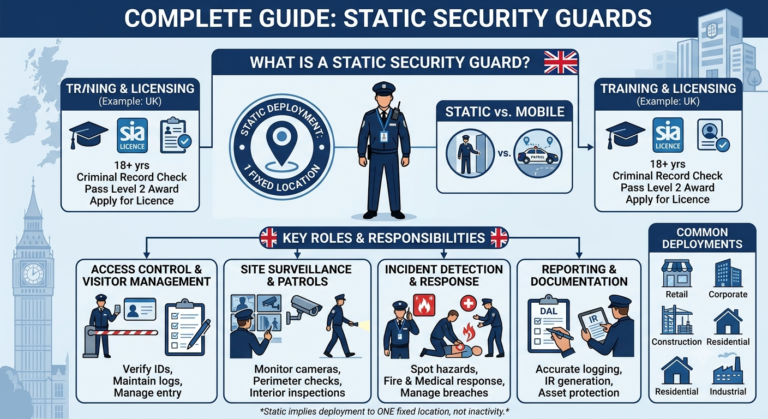
Understanding Static Security Guards
Static security guards play a crucial role in the security landscape, serving as a primary line of defense in various environments. Unlike mobile security personnel, who patrol and monitor large areas, static security guards are stationed at specific locations to provide a stable presence. This can include settings such as commercial buildings, residential complexes, events, and other properties requiring dedicated security.
The fundamental responsibilities of static security guards revolve around maintaining safety and order. They are tasked with monitoring the surrounding area for suspicious activities, controlling access to premises, and ensuring that security protocols are strictly adhered to. Their presence alone can serve as a deterrent to potential intruders or unwarranted behavior. In essence, they act as the eyes and ears of the security team, prepared to respond to incidents as they arise.
In comparison to other types of security personnel, such as patrol officers or event security teams, static guards offer a familiar and consistent presence. This regularity helps in building rapport with employees, residents, or guests, fostering a sense of community and safety. Furthermore, static guards are often trained to handle various situations that may occur on the premises, from verbal de-escalation to emergency response, thus enhancing the overall security framework.
The importance of static security guards extends beyond mere presence. They are integral in enforcing rules and regulations, enhancing the functionality of security measures in place within a given setting. Their ability to respond to alarm systems, manage visitor logs, and conduct routine inspections contributes significantly to the overall safety structure. With the diverse range of responsibilities they assume, static security guards are essential for effective security management, ensuring that peace and safety are maintained wherever they serve.
Key Responsibilities of Static Security Guards
Static security guards play a crucial role in maintaining safety and security at various facilities, including corporate offices, retail environments, and public venues. Their primary duties encompass a range of responsibilities that contribute to the overall protection of both personnel and property.
One of the key responsibilities of static security guards is monitoring premises. This involves observing activities and behaviors within the assigned area to identify any unusual or suspicious behavior. Guards are often stationed at entry and exit points to monitor who comes and goes, ensuring that only authorized individuals have access to the premises. This vigilance helps prevent unauthorized incidents and maintains safety.
Another significant duty is controlling access. Static security guards usually check identification and issue visitor passes while ensuring compliance with facility regulations. By establishing a controlled environment, they not only deter potential security breaches but also provide a sense of security to employees and visitors alike.
Responding to incidents is a critical aspect of a static guard’s role. They are trained to act swiftly and effectively in various situations, whether it involves dealing with a disturbance, medical emergencies, or suspicious activities. Their ability to respond appropriately can mitigate risks and ensure the safety of all individuals on-site.
Moreover, conducting regular patrols is essential. Static security guards routinely inspect designated areas, checking for vulnerabilities and ensuring that security measures are upheld. These patrols can vary in frequency and are typically guided by established security protocols, which aim to maintain high visibility and discourage potential threats.
In summary, the responsibilities of static security guards are fundamental to the security infrastructure of various establishments. Through vigilant monitoring, strict access control, prompt incident response, and thorough patrols, they ensure a secure environment that fosters safety and peace of mind for all stakeholders involved.
The Importance of Training and Certification
Proper training and certification are crucial components in the role of static security guards. The primary responsibility of these professionals is to ensure the safety and security of property, assets, and individuals. Without adequate training, the effectiveness of a security guard can be significantly compromised, making training a vital aspect of their preparation for the job.
Qualification for static security guards generally requires them to meet specific educational and skills-based criteria. Many employers prefer guards who have completed a high school education or its equivalent, but gaining additional qualifications through training programs can provide a considerable edge in the job market. Typical training requirements often include coursework in security procedures, emergency response, and communication skills. Beyond basic knowledge, hands-on training is essential, as it equips guards with the ability to respond swiftly and appropriately to real-life scenarios.
Various training programs exist to cater to the diverse needs of static security personnel. These may range from short-term courses to comprehensive programs that lead to certification. Common training topics include first aid and CPR, conflict resolution, risk assessment, and legal aspects of security. Many of these programs are offered through accredited organizations, which ensures that guards receive standardized and recognized training that meets industry standards.
Obtaining certification brings significant benefits for static security guards. Certified guards may have increased career prospects, as many employers prioritize candidates who can demonstrate that they have met specific industry standards. Furthermore, certification can lead to higher wages and greater responsibilities within their roles. Ultimately, investing time and resources into training and certification not only enhances the skill set of static security guards but also boosts their confidence and efficiency on the job.
Choosing the Right Static Security Company
Selecting a static security company is a critical decision for businesses aiming to protect their assets and ensure safety. Several factors should be considered to ensure that a company meets the unique needs of a business effectively. One fundamental aspect is the company’s reputation. A well-regarded security firm will typically have positive feedback from previous clients and a history of reliability. Checking for client testimonials and case studies can provide insight into the security provider’s operations and effectiveness.
Experience also plays a significant role in choosing the right static security company. Companies that have been in the industry for a longer period often have refined their processes, expanded their knowledge of security best practices, and developed stronger relationships with their clients. Inquiring about the firm’s experience with businesses of similar size and nature can reveal how adept they are in addressing specific security challenges.
Licensing is another crucial factor to assess. A reputable static security company should hold the necessary licenses and certifications required by state and local regulations. This provides assurance that the firm adheres to legal standards and operates within the frameworks set out for the security industry. Additionally, it is advisable to verify if the company conducts background checks and ongoing training for its security personnel.
Lastly, evaluating customer reviews can provide valuable insight into the quality of service a security company offers. Websites and platforms that specialize in reviews can reveal patterns in customer satisfaction and possible red flags. Understanding past client experiences will aid businesses in making a more informed decision when selecting a static security provider. Weighing these factors carefully—reputation, experience, licensing, and customer feedback—will empower businesses to choose a security company that aligns with their safety and security objectives.
The Role of Technology in Static Security
The incorporation of technology in static security has transformed the operational landscape, significantly enhancing the effectiveness of security guards. Surveillance systems, communication equipment, and incident reporting tools are now integral components that empower static security personnel in their duties.
Firstly, surveillance systems play a pivotal role in the functionality of static security. Advanced cameras equipped with high-resolution imaging, night vision, and remote access capabilities allow guards to monitor premises in real-time. These systems provide a comprehensive view of the location, enabling security personnel to detect suspicious activities quickly and respond promptly. With video analytics software, potential threats can be identified before they escalate, thus preventing security incidents and ensuring the safety of the environment they are tasked with protecting.
Moreover, communication equipment is essential for maintaining effective coordination among security guards and other first responders. With the advent of two-way radios, mobile devices, and even dedicated security applications, guards can communicate instantaneously. This rapid sharing of information is vital during emergencies, allowing for a unified response to incidents that may require prompt attention. Advanced communication tools not only enhance response times but also foster a culture of teamwork and support among static security personnel.
In addition to surveillance and communication, the use of incident reporting tools has become crucial in streamlining the way security information is documented and shared. Technological advancements have led to the development of mobile applications that allow guards to log incidents in real time. This immediacy helps in creating accurate records, which can be vital for investigations or future reference. Having detailed documentation also aids in identifying patterns in security breaches, enabling organizations to implement proactive measures to prevent future occurrences.
Through the integration of these technologies, static security guards are not only more effective in their roles but also play a key part in fostering a secure environment. As technology continues to evolve, the capabilities of static guards will further enhance, ultimately contributing to better safety and security outcomes for the communities they serve.
Cost Considerations for Hiring Static Security Guards
When assessing the cost of hiring static security guards, multiple factors come into play, which can significantly impact your budget. Understanding these cost considerations is crucial for businesses and individuals looking to secure their premises effectively.
One of the primary factors affecting the overall expense is the hourly rate of security guards. Rates can vary based on location, the guard’s experience and training, and the specific duties required. In metropolitan areas, for instance, rates might be higher due to increased demand and living costs. Additionally, specialized security services, such as those requiring advanced training in areas like crowd control or event security, may also command higher fees.
Contract options present another significant consideration. Engaging security guards on a contract basis can often result in reduced rates compared to hiring on an ad-hoc basis. Long-term contracts can provide fixed rates, ensuring predictability in budgeting. Most security companies offer flexible contract lengths, which can range from short-term arrangements for events to longer commitments for ongoing security needs.
Potential cost-saving measures should not be overlooked. For example, businesses can reduce overall costs by bundling services or negotiating package deals that include both manpower and equipment, such as surveillance cameras or alarm systems. Another option might be to assess the appropriate level of security needed – a full-time guard might not be necessary for every location or situation. A thorough risk assessment can help determine the optimal security solution, ensuring resources are allocated efficiently and effectively.
Finally, establishing a clear scope of work with the security provider can prevent unexpected expenses. Setting up specific duties and expectations can lead to better management of resources and aid in maintaining the desired levels of protection without overspending.
Common Challenges Faced by Static Security Guards
Static security guards play a vital role in ensuring safety and security across various settings, whether it be commercial, residential, or public spaces. However, like any profession, they encounter unique challenges and risks during their duty. Understanding these obstacles is essential for enhancing their effectiveness and safety.
One of the most significant challenges faced by static security guards is handling difficult clients or situations. Guards are often the first points of contact during disputes or disturbances, requiring them to remain calm and employ effective conflict resolution skills. This can be particularly challenging when emotions run high, and the security guard must navigate potentially volatile interactions while adhering to established protocols.
Emergencies pose another formidable challenge for static security personnel. Whether it’s a medical emergency, fire, or a security breach, guards must be prepared to respond swiftly and efficiently. This includes conducting evacuations, administering first aid, or reporting incidents to law enforcement. The ability to maintain composure and act decisively can significantly influence the outcome of such situations.
Moreover, managing fatigue is a prevalent concern for static security guards, especially during long shifts or overnight patrols. Extended periods of watchfulness can lead to decreased alertness and increased vulnerability to errors. It is crucial for guards to implement strategies to alleviate fatigue, such as taking short breaks and staying hydrated, to ensure they remain vigilant and effective in their roles.
In addition to these immediate challenges, static security guards must also cope with the psychological demands of their job. The nature of their work can lead to stress and uncertainty, especially in high-risk environments. Regular training and access to mental health resources can provide them with techniques to manage stress and maintain their well-being.
By being aware of these common challenges, static security guards can better prepare themselves to confront the obstacles they may face on the job, ensuring a safer environment for the public they serve.
Case Studies: Effectiveness of Static Security Guards
Static security guards play a crucial role in maintaining safety and preventing incidents across various industries. A review of numerous case studies highlights the effectiveness of these professionals in diverse settings, showcasing how their presence can deter criminal activity and foster a safe environment.
In the retail industry, for instance, a well-known chain experienced a significant decrease in shoplifting incidents after employing static security guards at strategic locations throughout their stores. The presence of uniformed personnel not only served as a visual deterrent but also allowed for immediate response to suspicious behavior. Following the implementation of this security measure, shoplifting declined by over 40%, demonstrating the tangible benefits of static guard presence in retail.
Another compelling example comes from the corporate sector, where a financial institution engaged static security guards to monitor access to their premises. Prior to this, there were multiple unauthorized access attempts that raised serious concerns about data security. After placing guards at entrances, the frequency of potential breaches dropped dramatically, leading to heightened trust among clients and stakeholders. This case exemplifies how static security personnel contribute to safeguarding sensitive information and maintaining corporate integrity.
The residential sector also reports positive outcomes from static security guards. In a gated community, residents noted a marked increase in security after guards were stationed at the entrance around the clock. This move led to a reduction in criminal activities, such as burglaries and vandalism, fostering a sense of safety and community well-being. The feedback from residents highlighted their growing confidence in the efficacy of static guards in protecting their homes and families.
These case studies illustrate that the deployment of static security guards can effectively mitigate risks and enhance safety across a multitude of environments. Their ability to prevent incidents not only secures property but also instills peace of mind among employees, customers, and residents alike. Such evidence underscores the growing importance of static security in today’s security landscape.
Future Trends in Static Security
The landscape of static security is evolving rapidly, influenced by advancements in technology and the corresponding changes in threat dynamics. One prominent trend is the integration of technology with traditional security practices. Static security guards are increasingly utilizing tools such as surveillance drones and artificial intelligence (AI) to enhance their operational effectiveness. These technologies allow for real-time monitoring and quicker response times to potential incidents, thereby ensuring a more proactive security approach.
Moreover, the shift towards digitalization has led to the adoption of high-tech security systems that complement the presence of static guards. These systems include biometric access controls, smart alarms, and integrated video surveillance setups that provide comprehensive monitoring solutions. By blending human oversight with machine efficiency, organizations are likely to create a multi-layered security framework that is both robust and adaptable.
An increase in threat diversity has also necessitated ongoing training and professional development for static security personnel. As new challenges emerge, including cyber threats and more sophisticated criminal activities, static guards must be equipped with specific skills to address these issues effectively. This could involve training that includes understanding digital security measures alongside physical protection strategies to keep pace with the changing security environment.
Furthermore, as societal attitudes towards safety evolve, we may see a growing emphasis placed on customer interaction and community engagement within static security roles. Security personnel could be increasingly viewed as ambassadors of safety, requiring them to develop interpersonal skills to better communicate with both clients and the public. This holistic approach to static security ensures that personnel not only safeguard premises but also foster a sense of security and trust among those they protect.
In conclusion, the future of static security is shaped by technology, diverse threats, and the evolving role of security personnel. By embracing these trends, organizations can improve their security frameworks, ensuring a safer environment for all stakeholders involved.


0 Comments