

Understanding Professional Security Services
Professional security services in the UK are essential for safeguarding individuals, properties, and assets against a range of threats. These services encompass various strategies and solutions designed to ensure safety and protection in commercial, residential, and public environments. The provision of security services has evolved significantly over the years, adapting to the changing landscape of risks and vulnerabilities.
One of the most common forms of security service is manned guarding. This involves employing trained personnel to oversee facilities and respond to incidents as they arise. Manned guards play a crucial role in deterring criminal activities through their visible presence and also act as a first line of response in emergencies. Security personnel are often trained in conflict resolution, emergency procedures, and basic first aid, enhancing their ability to manage various situations effectively.
Another vital component of professional security services is security patrols. These patrols are typically conducted on foot or by vehicle, covering designated areas to monitor for suspicious behavior or security breaches. Regular patrols serve not only as a deterrent to potential criminals but also provide a sense of safety to employees, customers, and the general public. The frequency and timing of patrols can be customized based on the specific needs of the property or area being secured.
In recent years, electronic surveillance has also gained prominence among security services. The use of CCTV systems, motion detectors, and alarm systems provides an advanced layer of security, enabling real-time monitoring and quick response to incidents. With the integration of modern technology, security systems can now offer features such as remote access, motion alerts, and automated video recording, improving the overall security efficiency.
Overall, the professional security services available in the UK are diverse and tailored to meet the unique requirements of different settings. Whether through manned guarding, patrols, or electronic security measures, these services form a comprehensive approach to maintaining safety and security in various environments.
The Importance of Security Services
In today’s world, the need for reliable and effective security services has grown significantly. Professional security services play a crucial role in safeguarding the interests of both businesses and individuals across the UK. As crime rates fluctuate, the demand for preventive measures increases, making security services indispensable in numerous sectors.
One primary function of these services is crime prevention. By deploying trained security personnel and state-of-the-art surveillance technologies, security services can deter potential criminal activities before they happen. This visible presence not only minimizes the likelihood of incidents such as theft and vandalism but also contributes to an overall sense of safety in the community. Businesses particularly benefit from this aspect, as a secure environment fosters trust among customers and employees alike.
Furthermore, protecting assets is a central tenet of professional security services. Businesses invest substantial resources into their inventory, equipment, and facilities, making it essential to ensure these assets are well-protected. Security services can offer tailored solutions, including security audits and risk assessments, to identify vulnerabilities and mitigate risks. This proactive approach is critical to securing not only physical assets but also sensitive information that can be targeted through cyber-attacks.
In addition to crime prevention and asset protection, enhancing the safety of premises is another vital aspect of security services. By implementing measures such as access control, visitor management, and emergency response protocols, security professionals help create a secure environment. Whether it’s a corporate office, a retail space, or an industrial facility, the presence of security personnel enhances the overall safety of the premises, reassuring employees and patrons alike.
In conclusion, the importance of professional security services cannot be overstated. They provide essential support for crime prevention, asset protection, and safety enhancement across various sectors in the UK. By investing in such services, individuals and businesses alike can ensure a safer and more secure environment for all.
Regulatory Framework Governing Security Services in the UK
The security industry in the UK operates under a stringent regulatory framework designed to ensure that services are delivered safely and effectively. This framework is primarily governed by a combination of legislation, licensing requirements, and the oversight of the Security Industry Authority (SIA). Understanding these components is essential for anyone involved in or considering the use of professional security services.
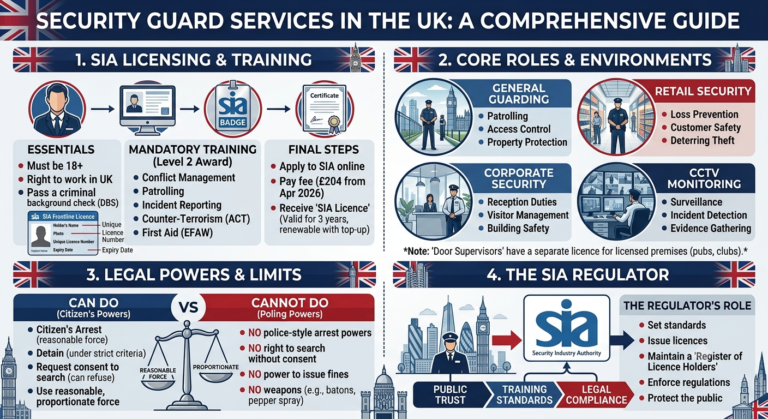
One of the key pieces of legislation governing the security industry is the Private Security Industry Act 2001. This act established the SIA, which is responsible for licensing individuals working within the security sector, including security guards, door supervisors, and CCTV operatives. The act aims to improve standards across the industry and protects the interests of the public by ensuring only qualified personnel provide security services.
The Security Industry Authority plays a crucial role in regulating the industry. It sets out the licensing requirements that must be met by individuals seeking to work in the sector. These requirements include background checks, training courses, and adherence to specific codes of conduct. The SIA also conducts inspections and maintains a register of licensed individuals and organizations, ensuring compliance with regulatory standards.
In addition to individual licensing, businesses providing security services must also comply with various legal obligations. This includes registration with the SIA, maintaining liability insurance, and following guidelines set forth in the Data Protection Act, especially when handling personal data in security operations. Compliance with these laws not only fosters professionalism within the industry but also enhances public trust in security services.
Moreover, the industry is subject to various other regulations and legislation that impact its operation, such as health and safety laws, employment law, and consumer protection regulations. Collectively, these laws form a comprehensive framework that governs the conduct and delivery of security services across the UK.
Choosing the Right Security Service Provider
When it comes to ensuring the safety and security of your premises, selecting the right security service provider is crucial. A reliable provider not only enhances security but also provides peace of mind for you and your stakeholders. Several factors must be considered to find a reputable security service.
Firstly, the reputation of the security provider is paramount. A company that has built a solid reputation over the years often has proven expertise in handling various security challenges. Conducting thorough research, such as reading online reviews and checking ratings on independent platforms, can help gauge the provider’s credibility. Additionally, recommendations from other businesses or personal contacts can be invaluable.
Experience in the industry is another critical factor. An established security service provider with years of experience will likely be better equipped to manage complex security scenarios. Look for providers that have worked in similar environments or have a background in managing security for similar businesses in terms of scale and operational dynamics.
Moreover, assessing the range of services offered is essential. A versatile security company should provide comprehensive services, including but not limited to, manned guarding, CCTV surveillance, access control, and alarm systems. This versatility indicates that the provider can tailor solutions according to your specific needs, which is essential in today’s multifaceted security landscape.
Lastly, client testimonials offer valuable insights into the effectiveness of a security service provider. Look for case studies or references from previous clients to evaluate their experiences. Positive feedback about the responsiveness, professionalism, and quality of service can serve as a strong indicator of what to expect.
In conclusion, choosing the right security service provider involves meticulous consideration of their reputation, experience, service range, and client feedback. By taking these factors into account, you can ensure that your security needs are met with professionalism and expertise.
Technology in Professional Security Services
The integration of technology in professional security services plays a crucial role in enhancing safety measures across various environments. Innovations such as closed-circuit television (CCTV), advanced alarm systems, and access control systems significantly contribute to the effectiveness of security measures. These technological advancements not only improve the monitoring capabilities but also streamline the response to incidents.
CCTV systems are one of the most significant developments in security technology. They provide real-time surveillance and can deter criminal activity through visual monitoring. Modern CCTV technology incorporates features such as high-definition video recording, night vision, and remote accessibility, allowing security personnel to monitor premises from virtually anywhere. The data collected via CCTV can be vital for investigations, providing clear evidence in the event of an incident.
Alongside CCTV, alarm systems serve as a critical component of security services. These systems have evolved from simple audible alarms to sophisticated solutions that can send alerts directly to security companies and law enforcement agencies. Innovations include smart alarm systems that can be accessed via mobile devices, providing users with real-time alerts and control. Furthermore, integration with other security technologies enhances response times and facilitates the proactive management of potential threats.
Access control systems also play a pivotal role in safeguarding premises by regulating entry to sensitive areas. These systems utilize methods such as keycards, biometric scans, or mobile authentication to ensure that only authorized personnel can access certain locations. By implementing state-of-the-art access control, organizations can track entry points and bolster security effectiveness.
In conclusion, technology is fundamentally reshaping professional security services. Innovations like CCTV, alarm systems, and access control mechanisms not only enhance monitoring and response capabilities but also ensure a safer environment for both individuals and organizations. As technology continues to advance, its role in security services will undoubtedly become increasingly vital.
Training and Qualifications for Security Personnel
Security personnel in the UK are required to undergo rigorous training and acquire specific qualifications to ensure an effective delivery of security services. The training programs available are designed to equip individuals with the necessary skills and knowledge needed to respond to various security challenges.
One fundamental requirement for security personnel is the **Security Industry Authority (SIA)** license. Holding an SIA license is mandatory for individuals engaging in security-related roles such as security guards, door supervisors, and CCTV operators. To obtain this license, candidates must complete an accredited training course, which typically covers areas such as legislation, security procedures, emergency response, and conflict management.
In addition to the SIA license, various other certifications can enhance a security professional’s qualifications. These may include courses focused on first aid, fire safety, and health and safety management. Such certifications not only improve an individual’s employability but also ensure that they can handle emergencies effectively. Furthermore, specialized training in areas such as risk assessment and threat analysis can be beneficial for personnel working in more advanced security roles.
Skill sets are another critical aspect of training for security personnel. Effective communication, problem-solving, and decision-making skills are essential, as security professionals must often respond to situations rapidly while maintaining a calm demeanor. Additionally, physical fitness is crucial, as security work can sometimes require physically demanding tasks including patrolling and managing crowds.
Continuous professional development is vital in the field of security services. Regular refresher courses and new skills training ensure that personnel remain aware of the latest security practices and technologies. This ongoing education helps them adapt to evolving security threats and maintain high standards of service.
In conclusion, the training and qualifications required for security personnel in the UK are comprehensive and multifaceted. From obtaining necessary licenses to enhancing skills through specialized courses, a well-trained security professional is critical for effective security service delivery.
Challenges in the Security Industry
The security services industry in the UK faces a multitude of challenges, which can significantly impact operational efficiency and service delivery. Among these challenges, evolving crime trends present a particularly pressing concern. As criminal tactics become increasingly sophisticated, security providers must adapt their strategies to effectively address new types of threats. Cybercrime, for instance, has surged dramatically, necessitating that security firms not only protect physical premises but also manage and secure digital assets. This dual focus requires continuous training and investment in advanced technologies to keep up with ever-changing threats.
Regulatory changes also pose significant hurdles for security service providers in the UK. The landscape of regulations governing the security industry is dynamic, with agencies often updating compliance requirements to adapt to emerging risks and societal expectations. Security companies must stay informed and agile to ensure that they adhere to these regulations. Failing to comply can lead to substantial penalties and hinder the overall reputation of the service. Therefore, effective compliance management is essential, requiring firms to allocate resources for training personnel and implementing updated policies and procedures.
Furthermore, the demand for enhanced service quality is a critical issue facing the security industry. Clients are increasingly expecting comprehensive solutions that not only ensure security but also promote customer satisfaction and operational efficiency. As a result, security firms need to embrace innovative practices, such as incorporating advanced surveillance technologies and improving customer service protocols. Balancing cost-effectiveness with high-quality service delivery remains a formidable challenge, requiring security providers to strategically allocate resources while enhancing their skill set.
In conclusion, the challenges confronting the security services industry in the UK are multifaceted. From adapting to evolving crime trends and navigating regulatory frameworks to meeting client expectations for high-quality service, security firms must remain proactive and resilient to succeed in a competitive landscape.
Future Trends in Security Services
The landscape of professional security services in the UK is undergoing a significant transformation driven by various technological advancements and changing social dynamics. One of the most notable trends is the rise of cybersecurity, which has become an essential component of any comprehensive security strategy. As cyber threats continue to evolve in sophistication, organizations are increasingly prioritizing the protection of their digital assets. This shift not only emphasizes the need for robust cybersecurity measures but also necessitates the integration of IT security with physical security.
In addition to cybersecurity, artificial intelligence (AI) is emerging as a pivotal player in the future of security services. The adoption of AI technologies is enhancing surveillance systems, allowing for more efficient monitoring and faster threat detection. AI-driven analytics can process vast amounts of data in real time, providing security personnel with actionable insights. This integration of technology facilitates a proactive rather than reactive approach in managing security threats, positioning enterprises to mitigate risks more effectively.
Furthermore, there is a growing demand for holistic security solutions that encompass various aspects, including physical security, cybersecurity, and personnel security. Organizations are beginning to recognize the importance of a cohesive security strategy that integrates these elements to create a resilient framework. As a result, security service providers are being called upon to offer comprehensive packages that address all potential vulnerabilities, thereby enhancing overall safety and security.
The professional security sector must also adapt to the evolving regulatory landscape and public expectations regarding privacy and personal data protection. The implementation of stringent regulations compels security service providers to ensure compliance while maintaining effective security measures.
In conclusion, the future of professional security services in the UK will likely be characterized by a strong emphasis on technological integration, particularly in cybersecurity and artificial intelligence, along with a shift towards holistic security solutions. By embracing these trends, security firms can effectively respond to the ever-changing security environment.
Conclusion
In summary, the significance of professional security services in the UK cannot be overstated. They play a vital role in safeguarding individuals and businesses from a multitude of potential threats, ranging from theft and vandalism to more sophisticated cyberattacks. This blog post has delved into various facets of security services, highlighting the importance of tailored security solutions that meet the unique needs of different environments.
One of the major points emphasized is the necessity for businesses to engage professional security services, which can provide not only physical protection but also strategic consultation that addresses specific vulnerabilities. The integration of technology with traditional security measures has become increasingly crucial, allowing for improved monitoring and response capabilities. Companies that adopt a layered approach to their security strategy are better positioned to deter criminal activity and respond effectively in emergencies.
Moreover, the human element remains indispensable in the realm of security. Trained security personnel are essential for implementing and managing security protocols effectively. The professionalism, vigilance, and training of security personnel significantly enhance the overall security framework. As discussed, employing qualified security teams not only adds a layer of protection but also instills a sense of safety among staff and clients.
Additionally, the legal implications of security services must not be overlooked. Understanding the regulatory landscape and ensuring compliance with relevant laws is critical for businesses to operate without risk. This blog post has outlined how professional security services can help navigate these complexities, ensuring that businesses maintain legal and ethical standards.
In conclusion, investing in professional security services is a proactive step towards safeguarding assets and sustaining business operations in the UK. As the landscape of security threats continues to evolve, so too must the strategies employed by organizations. By leveraging the expertise of skilled security providers, businesses can create a safe and secure environment, ultimately fostering trust and loyalty among customers and stakeholders alike.


0 Comments