

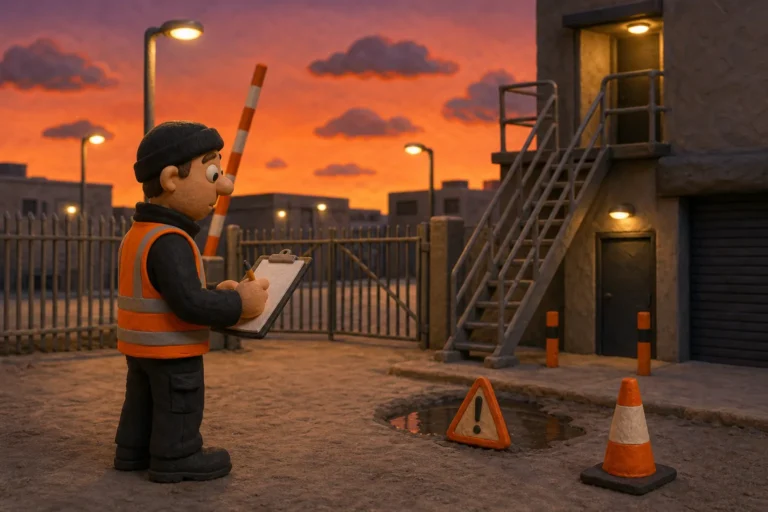
A lone working risk assessment must reflect what people really do, not what a template assumes. UK employers have a duty to assess work that may harm staff, yet accountability is often left vague. Follow these five steps to build an assessment that names the hazard, the person at risk, the control, and the owner.
Step 1: Define the Lone Working Activities and Identify Hazards
Start your lone working risk assessment by listing each task carried out without close or direct supervision. Include fixed posts, mobile visits, overnight work, home working, driving between sites, and work in empty buildings.
Write down what happens during a normal shift. Then look at the less common tasks. A security officer may patrol alone most nights, but the greater risk may arise during an alarm response, a confrontation, or a power failure.
Walk through the work area with the worker. Ask what changes at night, what happens when access fails, and where help can be reached. Check lighting, stairways, machinery, traffic routes, weather, remote areas, animals, hazardous substances, and the risk of violence.
A lone working guidance document can help structure that review. Use it as a prompt, not as a finished assessment for your business.
Describe hazards in plain terms. “Working alone” is not the hazard by itself. The hazard might be an assault during a late patrol, delayed first aid after a fall, or loss of contact in a basement.
A risk assessment example makes an important point: a sample must be adapted to the actual work. Copying a form and adding the company name won’t show that the task was properly assessed.
For sites that need a visible security presence, Nexus Security Serviceses Ltd can help review patrol routes, access points, and out of hours activity. Its team works across retail, corporate, and construction settings, where lone patrols often need clear escalation rules.

Step 2: Identify Who Might Be Harmed and Assess the Risk
Next, decide who could be harmed and how. A good lone working risk assessment looks beyond the person doing the task. It considers visitors, contractors, members of the public, colleagues who respond to an incident, and anyone else affected by the work.
Record the worker group beside each hazard. A night security guard may face violence or delayed help. A cleaner may face chemicals or a slip on a wet floor. A maintenance worker may face electrical hazards, falling objects, or isolation in a plant room.
Consider individual factors. New staff may need closer support. A young worker may lack experience. A worker with a medical condition may need a different emergency plan. Pregnancy, fatigue, language needs, and a lack of local knowledge can also change the level of risk.
Ask four direct questions for every hazard:
- What could happen?
- Who could be affected?
- How serious could the harm be?
- How likely is it under the current arrangements?
Do not let a low chance hide a serious outcome. A rare incident may still need strong controls if help would take a long time to arrive. Record the existing precautions, then judge whether they work in the place and at the time the task happens.
Where a lone worker visits another organisation’s premises, confirm the host site’s risks before work starts. Share the relevant controls. Do not assume that the worker’s employer knows every hazard at a client site.
Keep the risk rating simple enough for staff to use. A scoring system can help rank actions, but the number does not make the assessment valid. The decision must explain why the work can continue alone, what must change, and when another person is required.
For events, a wider crowd risk may sit beside the lone worker issue. An event risk assessment template can help managers record crowd movement, access points, and emergency arrangements before assigning solo duties.
Step 3: Select Prevention and Risk Control Measures
Use the findings to reduce the risk before relying on a lone worker device or personal protective equipment. The best control may be to remove lone working from the task altogether.
Start with the work design. Can the visit happen during staffed hours? Can the person meet at a controlled site? Can two workers attend? Can a hazardous task be delayed until help is present? Changing the task often gives better protection than asking an individual to manage danger alone.
Then set controls for risks that remain. These may include:
- A check in and check out process with a named person responsible for action.
- A clear route plan for mobile work.
- Reliable communication in the areas where work takes place.
- An agreed missed check response, with times and escalation steps.
- Safe access, lighting, keys, and visitor controls.
- First aid arrangements that match the distance and likely injury.
- A rule that stops work when conditions change.
Test each control against the actual shift. A phone is of little use in a basement with no signal. A sign in sheet does not protect someone if nobody checks it. CCTV may record an incident without providing immediate help.
For mobile security work, route checks and scheduled patrol support can reduce the time a worker spends isolated. Nexus Security Serviceses Ltd provides mobile patrol security, so its planning can be considered where a site needs a response layer alongside an individual guard.
At a construction site, combine access control with patrols and a clear alarm response plan. The overnight security guidance for construction sites is relevant when empty compounds, poor lighting, and isolated work areas raise the risk.
Assign every control to a named role. “Management” is too vague. Write “site manager checks the missed check process each Friday” or “the control room starts escalation after the agreed time.” This closes one of the common gaps in checklist based assessments: the control exists on paper, but nobody owns it.
Step 4: Check Worker Fitness, Competence, Training and Supervision
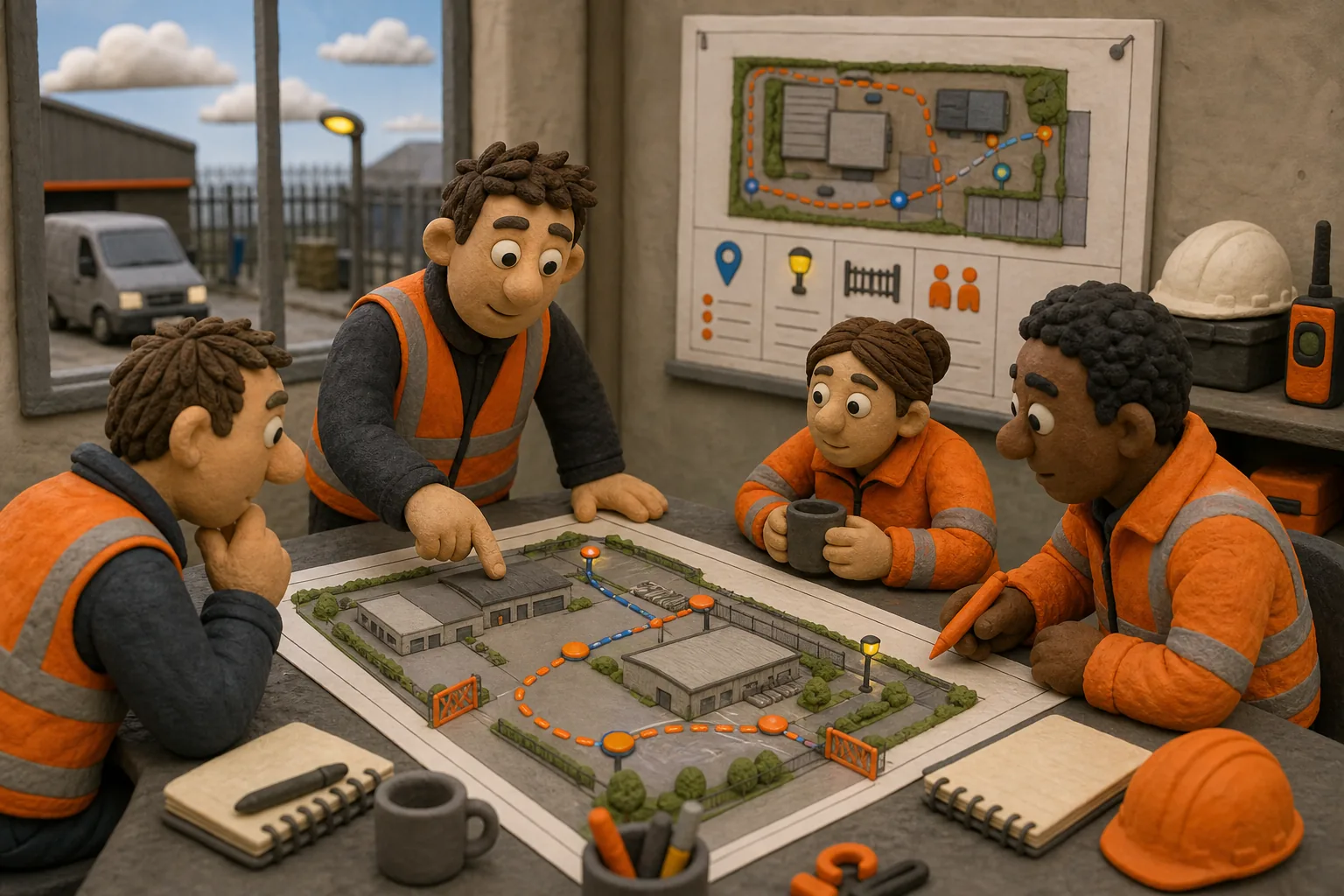
A lone working risk assessment must check whether the person can do the task safely without close supervision. Fitness means more than physical strength. It includes alertness, judgement, confidence, and the ability to follow the emergency plan.
Ask whether the worker has the right training for the task. A person assigned to a public facing security post may need conflict management, personal safety, incident reporting, and clear limits on intervention. Someone working near plant or electrical systems needs task specific competence instead.
Give workers a way to raise concerns without being treated as difficult. If a guard reports a route as unsafe, the manager should record the concern, review the control, and explain the decision. Staff who feel unable to report near misses will leave gaps in the assessment.
Training should include the equipment used for lone work. Make workers practise the check in process, the emergency call route, and the steps after a missed response. A short briefing is not enough if the worker has never tested the system.
Supervision does not always mean someone standing beside the worker. It can include planned site visits, regular contact, review of incident logs, and checks that conditions have not changed. The level should match the risk. A lone worker in a secure office may need less contact than someone visiting unknown addresses at night.
Make the supervisor’s duty clear. They should know who is working, where the person is expected to be, what a missed check means, and when to send help. Nexus Security Serviceses Ltd can support organisations that need trained security personnel, but the client still needs to define the site’s rules and response authority.
Review competence after an incident, a long absence, a change of task, or the introduction of new equipment. A worker who was suitable for a daytime post may need more support before moving to an isolated night shift.
Step 5: Record, Communicate and Review the Assessment
Record the significant findings in a format that workers can use. A lone working risk assessment should show the activity, hazard, people exposed, current controls, further action, responsible owner, deadline, and review date.
Write actions as tasks, not wishes. “Improve communication” is weak. “Facilities manager tests radio coverage in the rear stairwell by Friday” gives someone a clear job and a way to check completion.
Give the final assessment to the people who do the work. Talk through the parts that affect them. Explain when lone working is not allowed, who approves a change, and what happens after a missed check. Keep a short version near the task if workers need quick prompts during a shift.
Link the assessment to the organisation’s lone working policy. That policy should explain roles, reporting, incident response, welfare support, and the point at which work must stop. It should also tell staff how to report a new hazard.
Keep evidence of consultation. Note who took part, what they raised, and what changed as a result. This helps show that the assessment reflects real work rather than a desk based exercise.
Review the document after an incident, near miss, complaint, site change, new equipment, or change in staffing. Set a routine review as well, even when nothing has gone wrong. The HSE’s general risk assessment guidance warns that a template is only a starting point, so the review must test whether controls still fit the workplace.
Use simple measures during review. Check missed check records, response times, reported hazards, training dates, and outstanding actions. If the same issue appears more than once, change the control rather than rewriting the description.
For larger sites, a construction site security checklist can help managers link access control, patrol records, and site checks to the wider assessment. Keep ownership with the named site lead, not with the form itself.
Frequently Asked Questions
What is a lone working risk assessment?
A lone working risk assessment is a written review of work done without close or direct supervision. It identifies the hazards, who may be harmed, how serious the risk may be, and which controls are needed. It should also name the person responsible for each action and explain when the assessment must be reviewed.
Who should complete a lone working risk assessment?
The employer is responsible for making sure the assessment is suitable and sufficient, but workers should help complete it. Managers know the task and its resources. Workers know what happens on the ground. A competent health and safety adviser can support the process where the work is complex or high risk.
How often should a lone working risk assessment be reviewed?
Review it when work changes, after an incident or near miss, when new equipment is introduced, or when staff report a new hazard. Set a planned review date as well. A lone working risk assessment can become unsafe when routes, buildings, staffing, or emergency arrangements change.
What hazards should be included in a lone working risk assessment?
Include hazards linked to the task and the setting, such as violence, falls, machinery, traffic, fire, hazardous substances, poor lighting, extreme weather, fatigue, and delayed emergency help. Consider the shift time and location too. A risk that is manageable during the day may be far harder to control overnight.
Can employees work alone in high risk jobs?
Some high risk work should not be done alone. The decision depends on the task, site, worker competence, available controls, and time needed to reach help. If the remaining risk cannot be reduced enough, change the task or provide another worker. Do not let a completed form become permission to accept unsafe work.
Conclusion
Build the assessment around real tasks, clear controls, and named owners. Start by walking through one lone working activity with the worker who performs it, then record the hazards and test the emergency plan on site. If your organisation needs help with patrols, guarding, or site response, Nexus Security Serviceses Ltd can review the operational risks with you.


0 Comments