

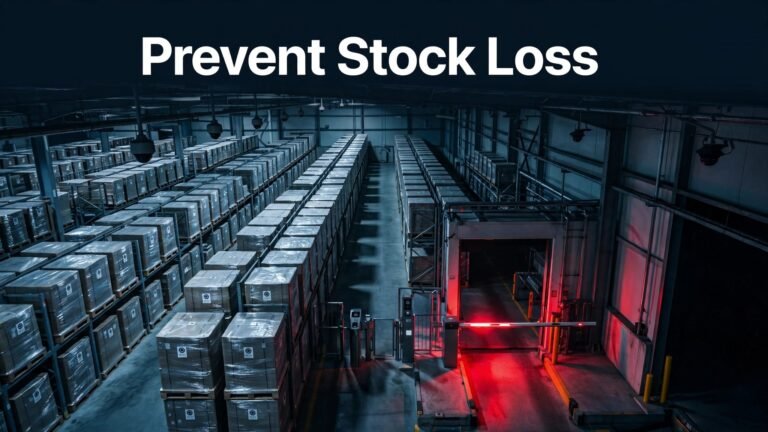
Stock loss rarely comes down to one dramatic break-in. More often, it is a chain of ordinary gaps: an unescorted visitor, a shared fob, a loading bay left open, or a discrepancy nobody checks until month-end.
Effective warehouse security measures join physical protection, access records, stock control and clear staff procedures. The right arrangement depends on the facility, workforce, stock value, operating hours and applicable law. Start with the risks you actually have, not a decorative list of equipment.
Key Takeaways
- Treat internal threats and external risks as separate problems, then build controls that address both.
- Restrict access by role, record who enters sensitive areas, and remove permissions promptly when roles change.
- Use stock counts, RFID inventory tracking and warehouse management system records to find discrepancies early.
- Position CCTV around decision points, such as gates, loading bays, dispatch areas and high-value storage.
- Investigate losses consistently, preserve evidence, and correct the failed control rather than only dealing with the immediate incident.
Start warehouse security measures with a risk assessment
Security risk assessments should follow the movement of goods. Trace stock from the delivery gate to goods-in, storage, picking, packing, dispatch and collection. At each stage, ask who can touch it, who can alter a record, where a discrepancy could be concealed, and whether internal threats or process weaknesses are exposed.
The result should be a short risk register with an owner, control, review date and escalation route. Home Office premises security guidance is a sensible reference point when documenting physical vulnerabilities and site responsibilities.
Separate internal threats from external risks
External risks include burglary, unauthorised entry, vehicle crime and cargo theft around collection points. These are usually addressed through perimeter security, controlled gates, alarms and visible monitoring.
Internal threats are different. They can involve unauthorised stock movements, false adjustments, collusion at dispatch, misuse of credentials or simple process failures. Staff shouldn’t be treated with suspicion as a default. The better standard is a process where no one person can move high-value stock and amend its record without a trace.
Map stock, records and decision points
Mark high-value, fast-moving and easily concealed goods. Also mark locations where paperwork changes hands, including returns benches, quarantine areas, damaged stock zones and despatch desks.
A stock loss event is easier to investigate when physical movement, system activity and access records can be compared. If those three sources tell different stories, you have a clear starting point.
Build a layered defense around the site
Physical security should slow unauthorised access and make it visible. It shouldn’t create hazards for legitimate staff, drivers or emergency responders. The HSE guide to warehousing and storage remains relevant when changes affect traffic routes, loading activity, doors and safe movement on site.
Protect the perimeter and the building fabric
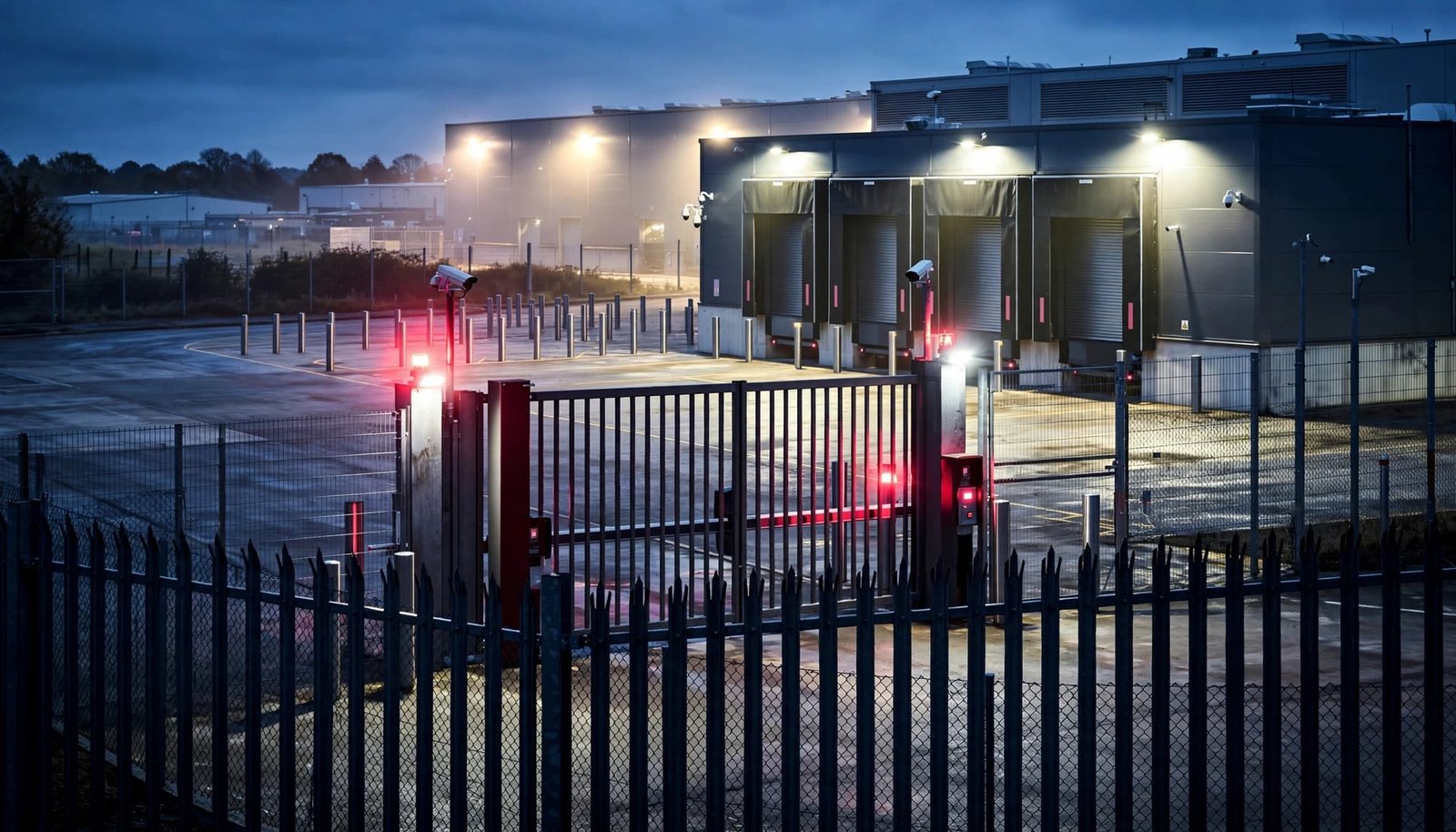
Check fencing, gates, security lighting, shutters, roof access, windows and side doors after dark as well as during the working day. A fence with damaged panels, poor security lighting and an unlocked pedestrian gate isn’t a serious boundary.
Keep shrubs low near entrances, repair failed security lighting promptly, and check coverage around gates, side doors and loading areas. Control vehicle access through a defined gate. Reinforced doors, steel security doors and shutters are appropriate where the assessed risk supports them. Intrusion detection systems are also a risk-based option, but their response must be tested. Confirm the named response owner, who receives the call and who can attend safely. Trained security guards may support monitoring or patrols at larger, isolated or higher-risk sites. They should complement access controls, lighting and alarm procedures, not replace them.
Secure loading bays and high-value zones
Loading bays are operationally busy and often difficult to supervise. Use marked waiting areas for drivers, keep dock doors closed when not in use, and match collection references to the planned consignment before goods leave.
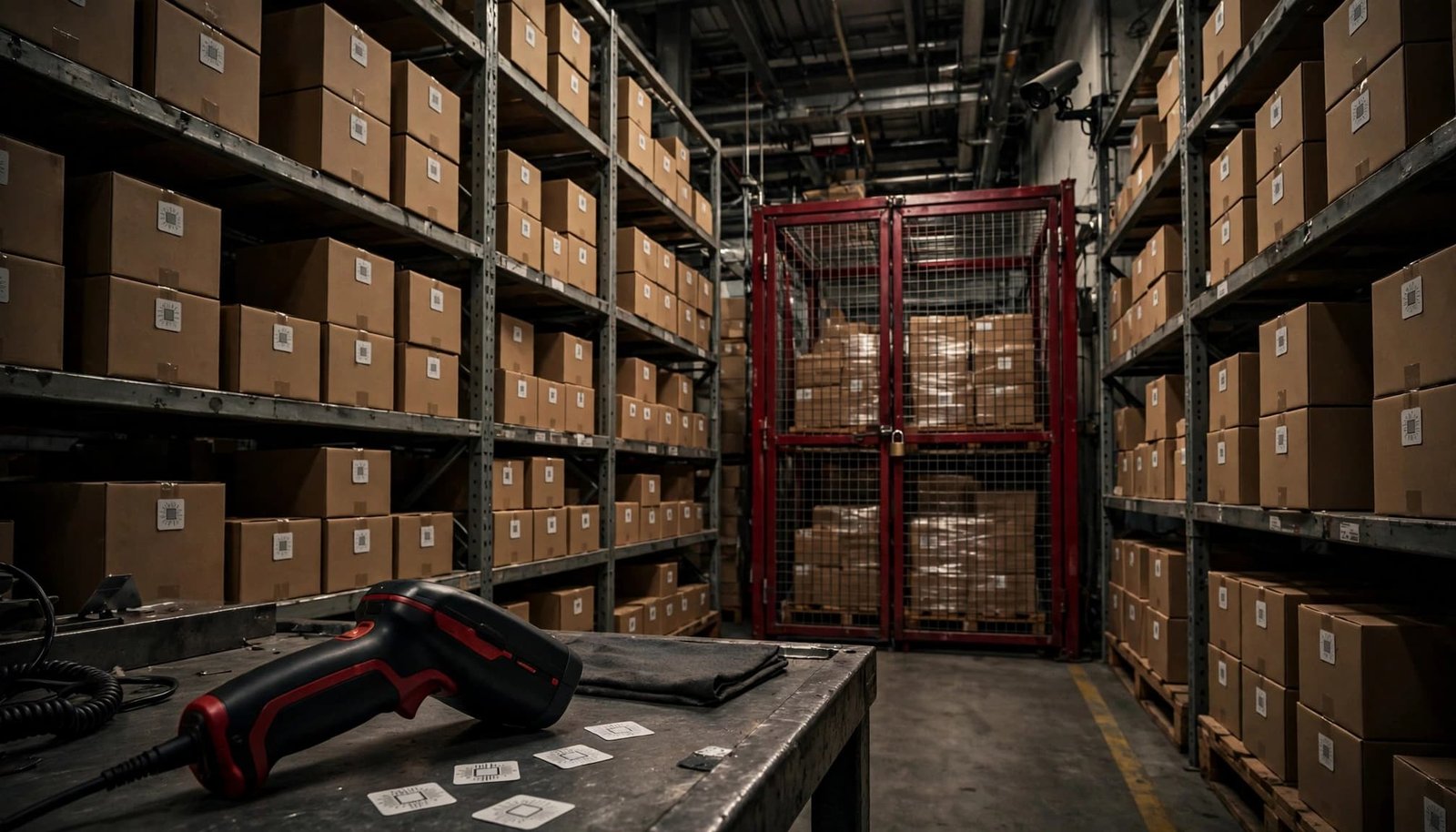
Security cages are useful for compact, valuable items, but only if keys or credentials are limited and access is recorded. A cage left open for convenience becomes ordinary shelving with bars around it.
Dispatch is a control point, not merely the final warehouse task. The goods, vehicle, paperwork and system record should agree before the vehicle departs.
Use access control systems to limit and record entry
Keys are easy to copy and hard to audit. Individual cards, fobs, mobile credentials or biometric scanners give managers a clearer record of who entered a space and when. Biometric scanners can reduce credential sharing, but they process sensitive personal data and require a proportionate lawful basis.
The purpose is not to collect data for its own sake. It is to prevent unauthorized access to sensitive areas and provide a usable audit trail when stock goes missing.
Give each person the minimum access needed
Set permissions by job role. A picker may need access to storage aisles, while a finance colleague does not. A temporary worker may need daytime access for one zone, not an unrestricted credential that works across the estate.
Review permissions when shifts, responsibilities or employment status change. Disable lost cards immediately. Remove leavers from every relevant system, including alarms, CCTV platforms, the warehouse management system and gate controls.
Control visitors, contractors and drivers
Visitor management should record arrival, host, reason for the visit and departure. Issue temporary credentials with an expiry time, and require escorting where the visitor has no operational reason to enter storage or dispatch areas.
Security data also needs protection through proportionate cybersecurity measures. The ICO guide to data security sets out the expectation for appropriate technical and organisational measures. Limit administrator accounts, use strong authentication, log permission changes and protect access records.
Place CCTV surveillance where it answers real questions
Security cameras only add value when they answer a defined operational question. They should show who opened a cage, transferred a carton or entered through a side door.
Cover movements that matter
Prioritise entrances, pedestrian gates, loading bays, dispatch lanes, high-value cages, returns areas and stock adjustment stations. Check the picture in daylight, darkness and normal night-time conditions, including with security lighting on and off. Forklifts, pallet stacks and open doors can quickly create blind spots.
Cloud-based video platforms can give authorised managers remote access and make footage easier to retrieve. They still need reliable connectivity, controlled accounts, cybersecurity measures and a clear process for checking alerts. A notification nobody owns is only noise.
Use surveillance lawfully and proportionately
CCTV footage and access logs can identify people, so UK GDPR and the Data Protection Act 2018 apply. Cameras need a clear purpose, visible signage and restricted access to live and recorded footage. Audio recording should normally be disabled unless there is an exceptional, documented reason.
The ICO’s guidance on secure handling of personal data is a practical baseline, while UK Government Security’s B3 data security principle reinforces the need for controlled accounts, audit logs and sensible data handling. Set a justified retention period, review it, and preserve relevant footage promptly after an incident.
Make inventory controls expose shrinkage early
Inventory shrinkage becomes expensive when it stays invisible. Annual stocktakes have their place, but they are too late to explain a pattern that began months earlier.
Use cycle counts for high-risk lines and compare results by location, shift, supplier, customer return type and stock movement reason. The aim is a small, explainable variance, not a spreadsheet that looks tidy.
Combine RFID inventory tracking with physical counts
RFID inventory tracking can record movement more quickly than manual scanning in the right environment. It can flag an item that passes a reader at an unusual time or leaves a controlled area without the expected transaction.
Tags do not replace discipline. Test read points with real pallet loads, metal racking and normal vehicle movement before relying on alerts. Keep a clear exception process for damaged tags, returns and mixed pallets.
Reconcile records before discrepancies spread
Require a second check for stock write-offs, location changes, unusual adjustments and despatch amendments. The warehouse management system should record the user, time, reason and approval where the transaction carries material risk.
Investigate repeat variances by SKU or location. A recurring mismatch may be theft, but it can also expose poor labelling, inaccurate goods-in processes or a flawed unit-of-measure setup. Correcting the cause matters more than forcing the count to balance.
Reduce internal risk through recruitment and training
Background checks should be proportionate to the role and carried out consistently. Confirm identity, right to work and employment history where appropriate. Follow your organisation’s policy for references or further screening. Don’t assume one check makes a person trustworthy forever.
Make responsibilities clear on day one
Induction should explain restricted zones, personal-device rules, visitor procedures, stock-adjustment authority and how to report a concern. Use real warehouse scenarios rather than vague warnings.
Supervisors need the same clarity. They should know when a shortage requires recounting, when it needs a manager’s review, and when security footage or access logs should be protected.
Give staff a safe route to report concerns
Staff often see weak controls before managers do. Give them a confidential route to raise concerns, protect them from retaliation, and deal with reports promptly. GOV.UK’s whistleblowing guidance explains the basic protections and reporting expectations for employees.
Refresh training after process changes, seasonal recruitment and incidents. A short, specific briefing is more useful than a yearly presentation nobody remembers.
Investigate loss consistently and measure what changes
When a discrepancy is detected, preserve the facts before forming a view. Stop related stock movements where proportionate, secure CCTV footage, retain access logs and save relevant warehouse management system records. For forced entry or serious incidents threatening people or operations, follow emergency response plans that identify escalation routes while preserving this evidence.
Follow an evidence-led investigation process
Start with a defined time window, product list and locations. Recount the stock independently, compare receiving and dispatch records, then review access and video evidence only for people and periods relevant to the case.
Keep records factual. Don’t accuse an employee based on a stock variance alone. Involve HR, senior management, insurers or police where the evidence and circumstances justify it, while following your disciplinary and data-protection procedures.
Track performance, not camera numbers
Review security performance monthly. Use the results to update the site’s risk register and reassess controls through security risk assessments. Useful measures include unexplained stock variance by value, repeated adjustment reasons, time taken to disable leaver access, unresolved alarm or security lighting faults, camera retrieval time and completion of cycle counts.
These measures support practical loss prevention, not just a scorecard of camera numbers. Recurring variances and unresolved control failures can create supply chain losses across locations or product lines.
A small business doesn’t need to buy every system at once. Start with locks, lighting, controlled access, stock reconciliation and a workable incident process to support business continuity after a loss. Add monitoring or RFID where it solves a proven weakness.
Frequently Asked Questions
What are the most effective controls against employee theft?
Individual access credentials, separation of duties, approvals for unusual adjustments, regular cycle counts and a clear reporting route work well together. No single measure is enough, because loss can occur through physical movement, record changes or both.
Should a warehouse use biometric access control?
Biometrics can reduce credential sharing, but they involve sensitive personal data and need a lawful, proportionate basis. Consider cards or mobile credentials first where they meet the risk, then document the reason for any biometric system.
How often should warehouse security be reviewed?
Review after a theft, layout change, new stock category, change of operating hours or major staffing shift. A planned quarterly review is sensible for most sites, with more frequent checks for high-value or fast-moving stock.
Can CCTV prevent stock loss on its own?
No. CCTV can deter some behaviour, create evidence and help investigate incidents. It cannot correct weak despatch checks, shared access credentials or poor stock records.
A Security Plan That Works in Daily Operations
The strongest warehouse security measures are those people can follow during a busy shift. They make access deliberate, stock movements traceable and exceptions visible before losses grow.
Start with ordinary weak points: gates, loading bays, shared credentials, stock adjustments and unreviewed alerts. Consistent controls protect goods, staff and the evidence needed when something goes wrong, while supporting business continuity.


0 Comments