

A smart event can still have an ordinary security failure: a queue blocking an exit, an unbriefed steward, a door left open for a delivery, or a radio channel nobody is monitoring.
Event security planning isn’t a document produced the week before doors open. It’s the practical link between your event schedule, venue layout, people, technology and emergency arrangements.
A 120-person leadership conference in a hotel needs proportionate conference security. A 2,000-person product launch at an exhibition venue needs a different approach to corporate event security. Both need clear ownership and tested procedures to support health and safety and wider safety and security.
Key takeaways
- Start with the real event, its audience, site, timings and likely pressure points, not a generic template.
- Give each security task one named owner, with clear authority to act and escalate.
- Treat entry, crowd movement, fire exits, medical support and deliveries as one connected operation.
- Plan for technology failure as carefully as physical access control.
- Keep the security plan live. Change it when the guest list, weather forecast, venue layout or threat picture changes.
Start with a risk-led event security plan
A good security plan begins before contracts, floor plans and staffing rotas become fixed. The organiser, venue manager and security lead should agree what the event is trying to protect: people first, then property, information, reputation and continuity, with venue security supporting these priorities.
The HSE event safety guidance is a useful starting point because it treats planning, management and review as connected duties, rather than separate paperwork exercises.
Define the event as it will actually run
Write down the details that change the risk profile: attendee numbers, registration method, VIP attendance, public access, alcohol, evening programming, demonstrations, deliveries, contractors and the venue’s surrounding streets.
A corporate awards dinner may look controlled on paper, yet the risks change when guests arrive in coaches, queue in bad weather and leave together after midnight. A conference with badge scanning may have limited public access, but it may also hold commercially sensitive presentations and high-value equipment.
Map the full event journey. Include car parks, taxi ranks, loading bays, smoking areas, reception, meeting rooms, kitchens, back corridors and temporary structures. Security problems rarely respect the neat boundary of the main hall.
Assess threats, weak points and consequences
Use a simple event risk assessment that records the threat, current threat level, vulnerability, likely impact, existing controls and the action still required. Avoid invented scoring systems that look precise but have no practical meaning.
Consider terrorism preparedness, unauthorised entry, theft, protest activity, disruptive behaviour, fire, medical incidents, lost children or vulnerable adults, severe weather and transport disruption. The latest National Risk Register is useful context for risks such as cyber incidents, extreme weather and wider disruption.
A risk register only helps if it changes the event plan. “Crowd congestion” is not a control. A timed entry window, barrier layout and trained queue manager are controls.
Build a security team with named authority
Security personnel need more than a position on a rota. They need to know who makes decisions, who receives reports and when an issue moves from routine management to an incident.
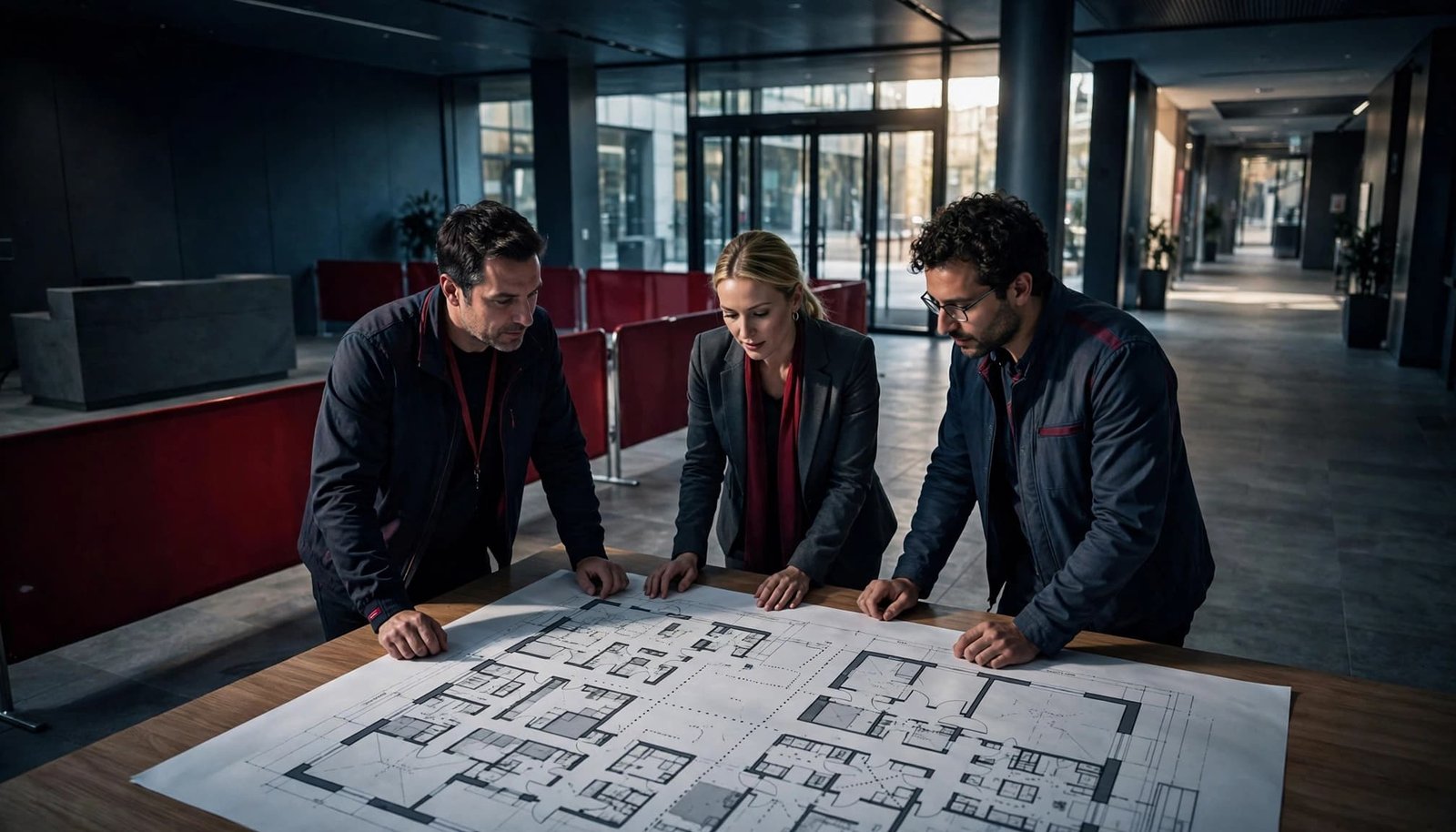
For a medium-sized conference, one event security manager should hold the operational picture. That person works with the event organiser and venue duty manager, rather than sitting outside the decision-making chain.
Give each role a practical remit
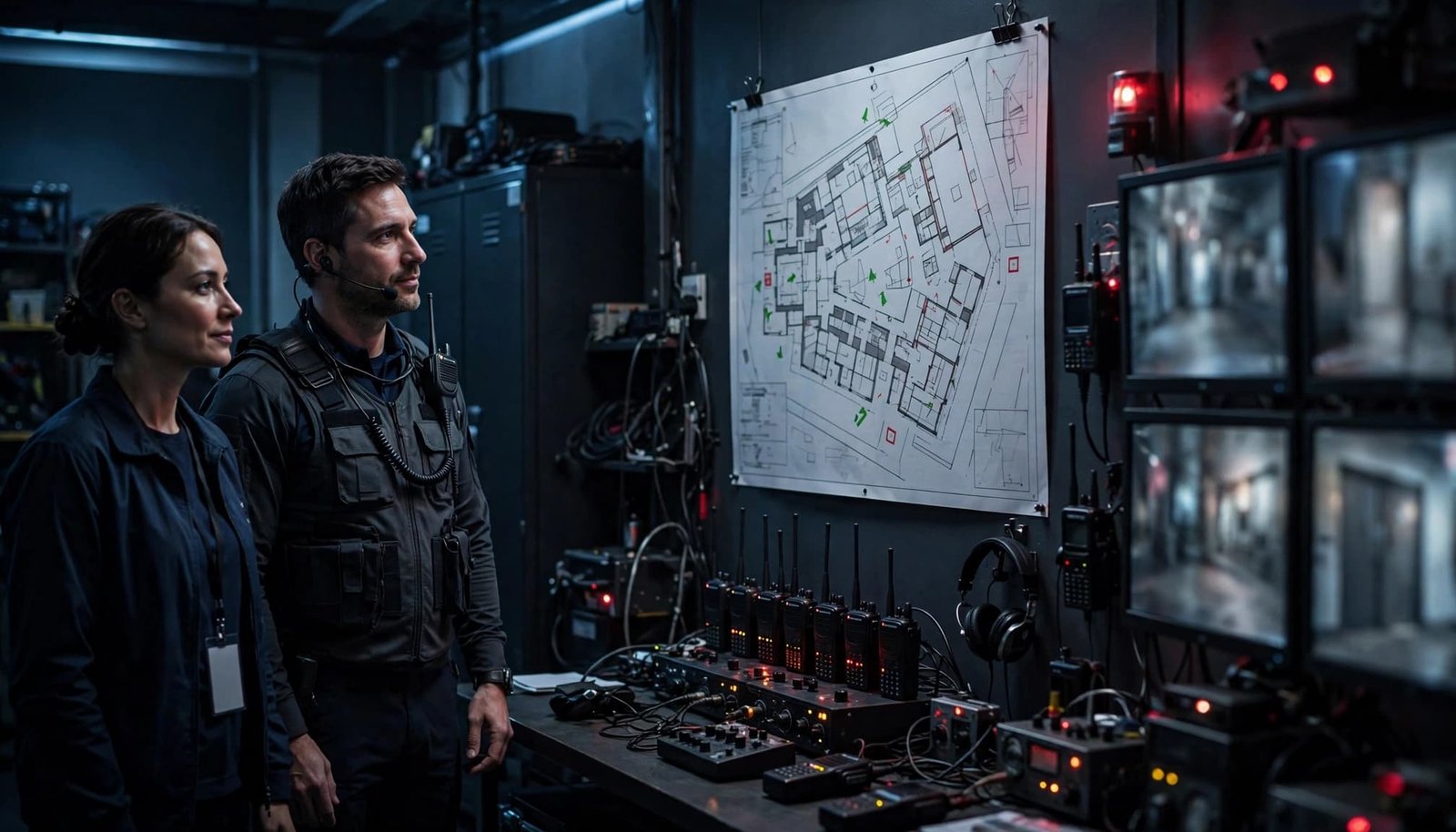
The control lead records incidents, monitors radio traffic and keeps a decision log. Entry staff check accreditation and manage refusals. Perimeter staff oversee delivery points, side entrances and contractor access. Crowd-management staff watch pinch points and intervene before queues become unsafe.
Medical provision also needs a named liaison. They should know where first-aid staff are based, how to summon them without broadcasting confidential details, and how ambulance crews would reach the patient.
A concise briefing sheet should cover reporting lines, radio call signs, emergency phrases, security awareness training, welfare arrangements, search policy, body-worn camera rules where used, and the process for handing over at shift changes.
Check competence, not just numbers
A large team is no substitute for a capable one. Match staff skills to the work: calm guest-facing communication at registration, confident access control at restricted doors, and experienced supervisors where alcohol, conflict or high-profile guests are involved.
Document compliance and competency checks by matching each duty with the required training and licensing.
Do not assume every event worker needs private-security licensing. Stewards may have a legitimate role without a licence, whilst duties such as guarding licensed premises or searching people can change the position. Use GOV.UK guidance to check whether event staff need an SIA licence.
Control entry, exits and the event perimeter
Access control should feel orderly, not theatrical. Guests should understand where to go and what they need, while security staff can spot exceptions without creating unnecessary friction.
The event security plan should show all entrances and exits, including staff doors, fire exits, loading bays, parking access and routes between public and back-of-house areas.
Set clear entry rules before invitations go out
Decide who can enter, what proof is accepted and how exceptions are handled. A named guest list, photo identification for restricted areas, colour-coded passes and a separate contractor sign-in point can work well, provided staff know what each measure means.
Don’t rely on a badge alone. Staff need a simple challenge process for someone in the wrong place, an unbadged guest following a crowd through a door or a pass that appears altered. Without clear challenges, these situations create a vulnerability at the entrance.
Where bag searches are justified, state the policy in advance and brief staff on consent, refusals, prohibited items and respectful handling. The point is controlled access, not a decorative security gesture.
Keep routes moving and exits available
Queue barriers need enough space for wheelchair users, prams, emergency access and normal pedestrian movement. Never place registration desks, display stands, catering equipment or promotional furniture where they narrow an evacuation route.
Delivery vehicles and contractors need booked slots, a holding area and a check-in process. Unplanned access through a side gate is often where control becomes vague.
For larger events, walk every route at the busiest expected time. Observe how people turn corners, gather near coffee stations and move towards cloakrooms. That’s where crowd management becomes real.
Plan for cyber-physical threats as well
Conference operations now depend on booking platforms, badge printers, electronic gates, CCTV, Wi-Fi, radios and other communication systems.
A failure in any one of them can affect physical security.
This does not mean treating every corporate event as a cyber incident waiting to happen. It means recognising that an overridden gate or compromised registration account can put people in the wrong place.
Ask what vulnerability would be created if a registration account, electronic gate or supplier connection failed.
Protect systems that control access
List every system that affects entry, communication or safety. Record who administers it, where credentials are held, which supplier supports it and how access is removed after the event.
Use individual accounts where possible. Don’t share a gate-control password across agency staff, venue teams and contractors. Ask the venue what is connected to guest Wi-Fi, whether CCTV is remotely accessible and who can change door permissions.
CCTV and visitor logs can be useful, but they involve personal data. The ICO’s CCTV and video-surveillance guidance covers lawful use, signage, retention, access and management.
Prepare manual fallbacks
If badge scanners fail, staff need a printed checked-in list, a manual sign-in process and a way to identify re-entry. This contingency planning should also cover radio failure, with agreed runners, meeting points and a backup contact method. If electronic doors default open or locked, the venue must confirm what happens and who can override them safely.
Keep emergency paper copies secure. A printed VIP list left at an unattended reception desk is not a fallback, it’s another exposure.
Write emergency protocols people can use
Effective emergency planning depends on emergency protocols that are short enough to use under pressure. They must also be detailed enough to guide action. Staff shouldn’t have to interpret vague instructions such as “act appropriately”.
Build separate response cards for fire, medical emergencies, suspicious items, aggressive behaviour, unauthorised access, severe weather, evacuation and sheltering. Each card should state who calls 999, who meets responders, who makes announcements and who accounts for staff.
Fire, medical incidents and evacuation
The responsible person for a non-domestic premises has fire-safety duties. Event organisers must understand the venue’s arrangements and any event-specific changes, particularly where temporary structures, staging, cooking or altered room layouts are involved. GOV.UK sets out workplace fire-safety responsibilities.
Confirm assembly points, accessible evacuation support, door-opening arrangements and the route emergency vehicles use. A full evacuation may not be the right response to every incident. Venue procedures and emergency-services advice should guide the decision.
Know the location of first aid facilities and preserve dignity during a medical incident. Send trained help, clear a route, protect the person’s privacy and keep speculation off the radio channel.
Communicate with the right people early
The HSE advises organisers to liaise with venue management, emergency services and the Safety Advisory Group where appropriate. A local-authority Safety Advisory Group is more likely to be relevant for large, complex or public-facing events, but early contact is better than a late surprise.
For larger or more complex events, connect the response cards to a major incident plan. Include the site plan, attendance estimate, event timetable, vehicle plan, emergency contacts and known risk factors.
Share the likely threat level with the police, fire and ambulance services. Renew liaison if it changes. Give them accurate information, not an overproduced security plan with no operational value.
Meet UK requirements without treating them as a checklist
Requirements vary by venue, event size, location, audience, activities and risk profile. They may include health and safety duties, security requirements, venue rules and licensing conditions.
Keep the event security plan aligned with the venue’s fire risk assessment, emergency plan, insurance conditions and any licence requirements. If temporary structures, road closures or amplified entertainment are involved, check local authorities’ requirements and traffic management arrangements well before the event date.
Prepare for Martyn’s Law properly
The Terrorism (Protection of Premises) Act 2025, often called Martyn’s Law, received Royal Assent on 3 April 2025. As at September 2026, it remains in its implementation period and there is no legal requirement to comply until commencement.
It is still sensible to prepare. The Act covers qualifying premises and events that can reasonably accommodate 200 or more people. Read the official Martyn’s Law implementation guidance, then review how your event would identify risks, considering the current threat level, communicate an incident and support evacuation or lockdown procedures.
Preparation should be proportionate. Practical safety and security measures, supported by trained people and clear communication, are preferable to an overproduced security plan or expensive controls selected without a risk assessment.
Keep records that can be checked
Store approved versions of the risk assessment, staffing plan, incident log, briefings, training records, site plans and decision log. Record why a control was chosen or rejected, especially where the venue has constraints.
This protects attendees and gives the organiser an honest record of how the event was managed. It also stops useful lessons disappearing when the event team changes.
Keep event security planning live
The plan isn’t finished when it’s signed off. Review it after a site visit, supplier changes or rising registrations. Revisit it when a VIP is added, severe weather is forecast, the threat level changes or a new vulnerability is identified.
Use each review to refresh the plan and contingency planning, including fallback arrangements for changing conditions. Hold a final operational briefing before doors open. Confirm staff numbers, emergency contacts, medical arrangements, access rules, evacuation routes and who can pause entry or stop the event.
Afterwards, run a short debrief within a few days. Capture what happened, what nearly happened and what staff found unclear. Update the plan before the next event, whilst the details are still fresh rather than remembered politely.
Frequently asked questions
What must an event security plan include?
Include the event profile, risk assessment, site plan, staffing structure, access control, crowd management, emergency protocols, communications plan, medical provision, evacuation routes and post-event review process. Add data-protection controls where CCTV, badge scanning or attendee records are used.
How many security staff does a corporate event need?
There is no universal ratio. Numbers depend on attendance, venue layout, entry points, programme, alcohol, public access, VIPs, timings and the risk assessment. Assess the actual duties and coverage required, then appoint enough competent people to carry them out.
How should organisers deal with protest or unauthorised access?
Plan a calm, lawful response. Brief staff on observation, reporting, de-escalation, protected routes, media handling and when to involve police. Do not give staff vague instructions to remove people. Their authority, the venue’s rules and escalation process must be clear.
A plan that works when the room is busy
The test of a security plan is not how polished it looks in a folder. It’s whether staff can use it when queues build, a guest becomes unwell or an access point stops working.
Treat practical security planning as hands-on coordination: the right people, clear routes, honest risk decisions and procedures that still make sense under pressure.


0 Comments